

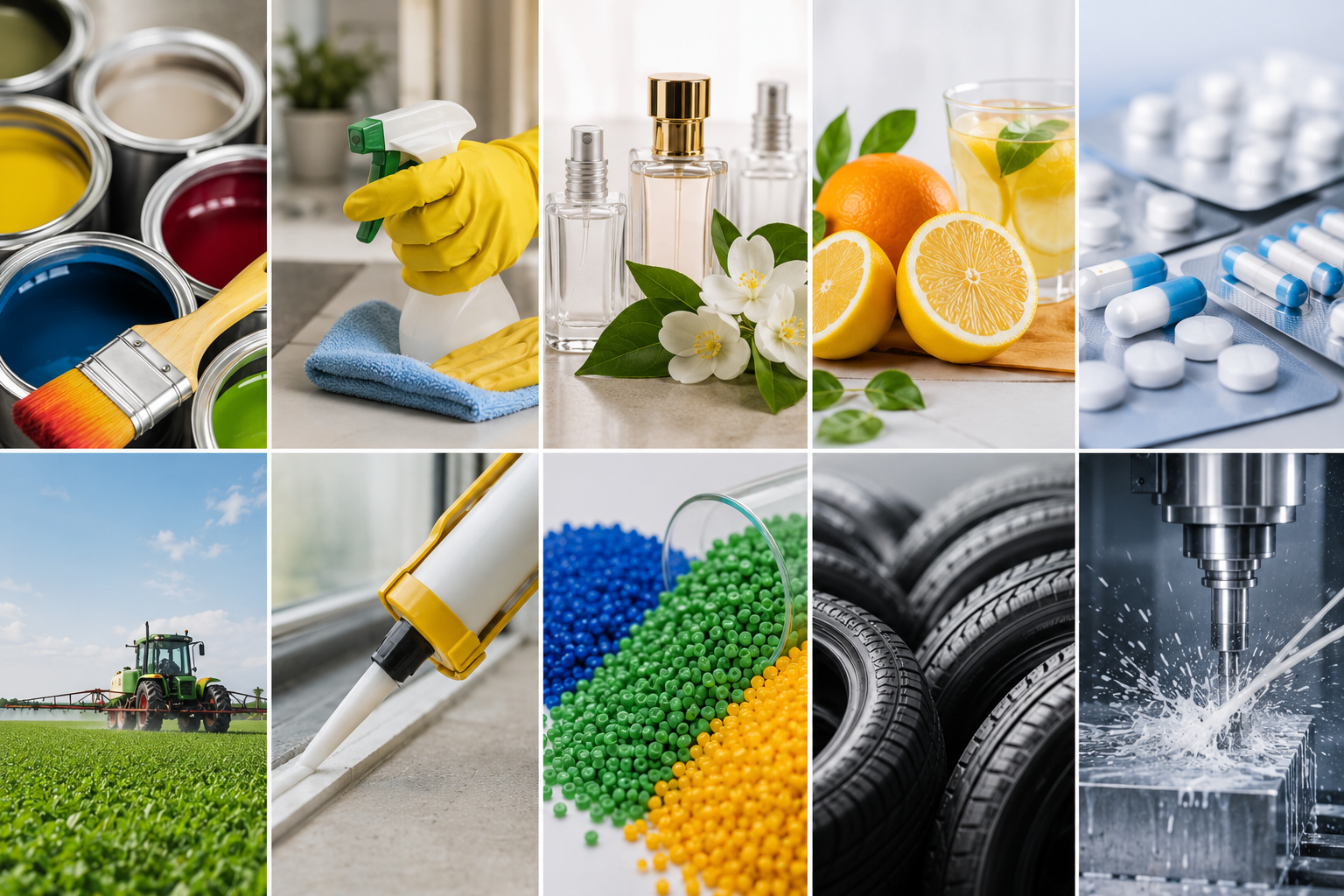
Table of Contents:
1. Overview of the European D-Limonene Market
2. D-Limonene in Industrial Cleaning Products
3. Applications in Paints, Coatings and Solvents
4. Use in Flavor and Fragrance Manufacturing
5. Role in Cosmetics and Personal Care Products
6. Emerging Industrial Applications and Innovations
7. Future Growth Opportunities in Europe
The European D-Limonene Market has emerged as one of the fastest-growing segments within the bio-based chemicals industry. As sustainability, environmental awareness, and consumer preference for natural ingredients continue to shape purchasing decisions, D-Limonene has gained significant attention across multiple industries, including food and beverages, personal care, pharmaceuticals, industrial cleaning, and fragrances.
Derived primarily from citrus fruit peels, especially oranges and lemons, D-Limonene is a naturally occurring terpene known for its pleasant citrus aroma, biodegradability, and powerful solvent properties. The increasing demand for eco-friendly alternatives to petroleum-based chemicals is driving the expansion of the European D-Limonene Market. Europe, with its strict environmental regulations and growing focus on green chemistry, has become a key regional market for D-Limonene adoption.
1) Overview of the European D-Limonene Market

D-Limonene is a colorless liquid hydrocarbon extracted from citrus peel oils. It is widely used as a flavoring agent, fragrance ingredient, cleaning solvent, and industrial degreaser. Due to its natural origin and low toxicity, D-Limonene is increasingly replacing synthetic solvents in various applications.
The compound is recognized for its:
- Excellent solvent capabilities
- Biodegradable nature
- Pleasant citrus fragrance
- Antimicrobial properties
- Compatibility with sustainable product formulations
These characteristics have made natural D-Limonene an essential ingredient across several European industries.
European D-Limonene Market Size and Growth
The European D-Limonene Market is experiencing steady growth due to rising demand for natural and sustainable ingredients. The broader global D-Limonene industry is projected to grow at a healthy CAGR over the coming years, supported by expanding applications in cleaning products, cosmetics, pharmaceuticals, and food processing.
Europe represents a substantial share of global consumption because of:
- Growing environmental regulations
- Strong consumer preference for natural products
- Expansion of green manufacturing practices
- Increasing demand for bio-based solvents
- Rapid development of sustainable personal care products
Countries such as Germany, France, Italy, the United Kingdom, Spain, and the Netherlands are among the leading consumers of D-Limonene in Europe.
Key Drivers of the European D-Limonene Market
Rising Demand for Bio-Based Solvents
One of the primary growth factors for the European D-Limonene Market is the increasing demand for bio-based solvents. Industries are actively replacing petroleum-derived chemicals with environmentally friendly alternatives to meet sustainability goals and regulatory requirements.
D-Limonene offers superior cleaning efficiency while reducing environmental impact, making it a preferred ingredient in industrial cleaning formulations.
Growing Personal Care and Cosmetics Industry
The European beauty and cosmetics sector continues to expand, creating strong demand for D-Limonene in personal care products. It is widely used in:
- Perfumes
- Skincare products
- Haircare formulations
- Aromatherapy products
- Natural cosmetics
Consumers increasingly seek products formulated with plant-based ingredients, boosting the adoption of natural citrus extracts and D-Limonene.
Expansion of Green Cleaning Products
Environmental concerns have accelerated demand for eco-friendly cleaning products across Europe. D-Limonene's strong degreasing properties and natural origin make it an ideal ingredient for household and industrial cleaners.
Many European manufacturers are incorporating D-Limonene-based cleaners to comply with sustainability standards and consumer expectations.
Increasing Food and Beverage Applications
The food industry uses food-grade D-Limonene as a flavoring ingredient in beverages, confectionery, dairy products, and baked goods. The trend toward clean-label and natural food ingredients has increased the utilization of D-Limonene across European food manufacturing facilities.
Major Applications of D-Limonene in Europe
Personal Care Products
The personal care segment represents a significant share of the European D-Limonene Market. Manufacturers use D-Limonene as a fragrance component and natural solvent in premium beauty products.
Industrial Cleaning
Industrial cleaning remains one of the most important application sectors. D-Limonene is highly effective in removing oils, grease, adhesives, and residues from machinery and equipment.
Food and Beverage Industry
The growing preference for natural flavors has increased demand for D-Limonene in food applications. It provides citrus flavor profiles while supporting clean-label product development.
Pharmaceuticals
The pharmaceutical industry is exploring D-Limonene applications due to its antioxidant, anti-inflammatory, and bioactive properties. Ongoing research continues to uncover additional therapeutic opportunities.
Fragrances and Air Care Products
The fresh citrus scent of D-Limonene makes it a popular ingredient in perfumes, air fresheners, candles, and household fragrance products. The European fragrance industry continues to drive significant consumption.
Market Challenges
Despite strong growth prospects, the European D-Limonene Market faces several challenges:
Raw Material Supply Fluctuations
Since D-Limonene is extracted from citrus fruits, production depends heavily on citrus harvest yields. Weather conditions, agricultural diseases, and supply chain disruptions can impact availability.
Price Volatility
Changes in citrus production levels directly affect D-Limonene pricing. Manufacturers often face cost fluctuations resulting from seasonal supply variations.
Competition from Synthetic Alternatives
Although natural products are gaining popularity, synthetic solvents often remain less expensive. Manufacturers must balance sustainability objectives with production costs.
Competitive Landscape
The European D-Limonene industry includes a mix of global chemical companies, specialty ingredient suppliers, and citrus-processing firms. Key market participants focus on:
- Sustainable extraction technologies
- Product quality improvement
- Strategic partnerships
- Capacity expansion
- Research and development
Many companies are investing in advanced extraction methods to improve yield, purity, and environmental performance.
Future Trends in the European D-Limonene Market
Several emerging trends are expected to shape the future of the market:
Growth of Circular Economy Initiatives
European industries increasingly utilize citrus peel waste as a valuable raw material source, supporting circular economy objectives and reducing waste generation.
Sustainable Packaging Innovations
Researchers are exploring the use of D-Limonene in biodegradable packaging materials and eco-friendly coatings, creating new growth opportunities.
Expansion of Green Chemistry
The transition toward green chemistry principles across Europe will continue driving demand for renewable and biodegradable ingredients such as D-Limonene.
Rising Demand for Natural Consumer Products
Consumer preference for organic, natural, and environmentally responsible products is expected to support long-term market expansion.
2) D-Limonene in Industrial Cleaning Products

The growing demand for environmentally friendly cleaning solutions has significantly increased the adoption of D-Limonene in Industrial Cleaning Products. As industries across Europe and the world move toward sustainable manufacturing practices, businesses are actively seeking alternatives to harsh petroleum-based solvents. Among the most effective and eco-friendly options available today is D-Limonene, a naturally derived citrus solvent known for its exceptional cleaning performance and biodegradability.
Extracted primarily from orange and lemon peels, D-Limonene has become a preferred ingredient in various industrial cleaning products, offering powerful degreasing capabilities while minimizing environmental impact. The shift toward green cleaning solutions, bio-based solvents, and sustainable industrial cleaners has positioned D-Limonene as a key component in modern industrial maintenance and cleaning operations.
Why Industrial Cleaning Products Need Sustainable Alternatives
Traditional industrial cleaning products often contain volatile organic compounds (VOCs), chlorinated solvents, and petroleum-based chemicals that can negatively impact both human health and the environment.
Several industries are now facing increasing pressure to:
- Reduce chemical emissions
- Improve workplace safety
- Meet environmental regulations
- Support sustainability goals
- Lower hazardous waste generation
As a result, manufacturers are increasingly incorporating natural cleaning solvents, eco-friendly degreasers, and D-Limonene-based cleaning products into their operations.
How D-Limonene Works as an Industrial Cleaning Agent
The effectiveness of D-Limonene in industrial cleaning products lies in its strong solvency power. It penetrates and dissolves oils, grease, waxes, adhesives, tar, ink, and various organic contaminants.
Unlike water-based cleaners that may struggle with heavy residues, D-Limonene degreasers break down stubborn deposits quickly and efficiently.
D-Limonene Removes:
- Industrial grease
- Machine oils
- Lubricants
- Asphalt residues
- Adhesives
- Paint residues
- Printing inks
- Gum deposits
- Wax coatings
- Carbon buildup
Its versatility makes industrial D-Limonene cleaners suitable for multiple sectors.
Major Applications of D-Limonene in Industrial Cleaning Products
Heavy Equipment Cleaning
Manufacturing plants rely on D-Limonene cleaning solutions for maintaining machinery and production equipment. The solvent effectively removes accumulated grease, oil, and contaminants without causing excessive corrosion.
Benefits include:
- Improved machine performance
- Reduced maintenance downtime
- Enhanced equipment lifespan
- Safer cleaning operations
Automotive Industry Cleaning
The automotive sector extensively uses D-Limonene degreasers for cleaning engines, vehicle components, and production equipment.
Common applications include:
- Engine cleaning
- Brake component cleaning
- Metal part degreasing
- Assembly line maintenance
- Adhesive residue removal
The growing demand for environmentally friendly automotive cleaners continues to drive D-Limonene adoption.
Manufacturing Facilities
Manufacturing environments generate substantial amounts of grease, oil, and residue that require regular cleaning.
Industrial cleaning products containing D-Limonene help manufacturers maintain:
- Production machinery
- Conveyor systems
- Storage tanks
- Processing equipment
- Facility floors
Its strong cleaning action ensures optimal operational efficiency.
Printing Industry
The printing sector utilizes D-Limonene solvents for removing inks, cleaning printing presses, and maintaining production equipment.
The solvent effectively dissolves:
- Ink residues
- Printing adhesives
- Coatings
- Solvent deposits
This makes D-Limonene-based cleaners valuable in commercial printing operations.
Food Processing Facilities
Food manufacturers increasingly prefer food-safe industrial cleaning solutions that support regulatory compliance while delivering high cleaning performance.
D-Limonene helps remove:
- Food oils
- Grease deposits
- Organic residues
- Packaging adhesives
Its natural origin aligns well with sustainability initiatives within the food industry.
Environmental Benefits of D-Limonene in Industrial Cleaning Products
One of the strongest advantages of D-Limonene industrial cleaners is their environmental profile.
Biodegradability
Unlike many synthetic solvents, D-Limonene naturally breaks down in the environment, reducing long-term ecological impact.
Renewable Resource
D-Limonene is extracted from citrus processing byproducts, supporting waste reduction and circular economy initiatives.
Reduced Dependence on Petroleum Chemicals
Using bio-based cleaning solvents decreases reliance on fossil fuel-derived chemicals and contributes to more sustainable industrial practices.
Lower Hazardous Waste Generation
Many facilities experience reduced hazardous waste disposal costs when switching to D-Limonene cleaning products.
Workplace Safety Advantages
Employee health and safety remain top priorities in industrial operations.
Compared to many conventional solvents, D-Limonene-based industrial cleaners offer several workplace benefits:
Improved Air Quality
The replacement of high-VOC solvents with natural citrus solvents can contribute to healthier indoor air quality.
Reduced Chemical Exposure
Workers handling eco-friendly industrial cleaning products may experience lower exposure to aggressive chemical compounds commonly found in traditional cleaners.
Pleasant Working Environment
Unlike harsh chemical odors, D-Limonene provides a fresh citrus scent that enhances workplace comfort.
Growing Demand for Green Industrial Cleaning Solutions
The global movement toward sustainability is accelerating demand for:
- Green industrial cleaning products
- Bio-based solvents
- Eco-friendly degreasers
- Natural industrial cleaners
- Sustainable cleaning chemicals
- Low-VOC cleaning products
Government regulations across Europe and North America increasingly encourage the use of environmentally responsible cleaning solutions, further strengthening the market for D-Limonene industrial applications.
Challenges Associated with D-Limonene Industrial Cleaners
Despite numerous advantages, certain challenges remain.
Raw Material Availability
Since D-Limonene is derived from citrus fruits, supply depends on agricultural production and citrus harvest volumes.
Price Fluctuations
Changes in citrus production can influence the cost of D-Limonene solvents, creating occasional pricing volatility.
Storage Requirements
Like many natural solvents, D-Limonene requires proper storage and handling procedures to maintain product stability and performance.
However, these challenges are generally outweighed by the long-term environmental and operational benefits.
Future Trends in D-Limonene Industrial Cleaning Products
Several trends are expected to drive future growth:
Expansion of Green Manufacturing
Companies are increasingly integrating sustainable industrial cleaning solutions into environmental management programs.
Growth of Circular Economy Practices
The utilization of citrus waste to produce D-Limonene solvents aligns perfectly with circular economy principles.
Innovation in Cleaning Formulations
Manufacturers continue developing advanced D-Limonene-based industrial cleaners with improved efficiency, stability, and application flexibility.
Increased Regulatory Support
Stricter environmental regulations will continue encouraging the transition toward eco-friendly industrial cleaning products.
3) Applications in Paints, Coatings and Solvents

The growing emphasis on sustainability and environmentally responsible manufacturing has significantly increased the use of D-Limonene in Paints, Coatings and Solvents. As industries seek alternatives to traditional petroleum-based chemicals, D-Limonene has emerged as a highly effective, renewable, and biodegradable solution for a wide range of industrial applications.
Derived naturally from citrus fruit peels, particularly oranges and lemons, D-Limonene solvent offers exceptional cleaning, dissolving, and formulation properties. Its ability to replace harsh synthetic solvents while maintaining high performance has made it increasingly popular in the paints and coatings industry, as well as in the production of eco-friendly solvents, industrial coatings, and green chemical formulations.
Today, manufacturers worldwide are incorporating bio-based solvents, natural paint additives, and sustainable coating ingredients into their products to meet environmental regulations and growing consumer demand for greener alternatives.
Why the Paints and Coatings Industry is Shifting Toward D-Limonene
The global coatings industry is undergoing a major transformation driven by environmental regulations and sustainability goals. Manufacturers are actively reducing reliance on volatile organic compounds (VOCs) and hazardous solvents.
As a result, demand for:
- Low-VOC coatings
- Eco-friendly paint solvents
- Green coating additives
- Bio-based paint ingredients
- Sustainable industrial coatings
- Natural solvent systems
continues to rise.
D-Limonene in paints and coatings provides an effective solution by delivering excellent performance while supporting environmental compliance.
D-Limonene as a Solvent in Paint Formulations
One of the most important applications of D-Limonene solvent is its use in paint formulations. Solvents play a critical role in controlling paint viscosity, improving application characteristics, and ensuring proper film formation.
Benefits of D-Limonene in Paint Formulations
Superior Solvency
D-Limonene solvents effectively dissolve:
- Resins
- Oils
- Waxes
- Polymers
- Pigment dispersions
This makes them suitable for various paint manufacturing processes.
Reduced VOC Emissions
The use of bio-based solvents in paints helps manufacturers reduce overall VOC emissions and meet increasingly strict environmental standards.
Improved Sustainability
Since D-Limonene is derived from renewable citrus resources, it supports sustainable manufacturing initiatives and reduces dependence on fossil fuels.
Enhanced Product Appeal
Consumers increasingly prefer environmentally friendly products, making eco-friendly paints formulated with D-Limonene more attractive in the marketplace.
Applications of D-Limonene in Coatings
The coatings industry is one of the fastest-growing sectors for D-Limonene applications.
Industrial Coatings
Industrial coatings require high-performance solvents capable of dissolving complex resin systems and ensuring uniform application.
D-Limonene-based coating formulations provide:
- Improved coating consistency
- Enhanced surface wetting
- Better resin compatibility
- Effective viscosity control
Industries benefiting from these coatings include:
- Automotive manufacturing
- Aerospace
- Construction
- Marine coatings
- Metal fabrication
Wood Coatings
Wood finishing products increasingly utilize natural solvents for coatings due to growing environmental concerns.
D-Limonene helps manufacturers produce:
- Wood stains
- Protective varnishes
- Furniture coatings
- Decorative finishes
while reducing reliance on petroleum-derived chemicals.
Protective Coatings
Protective coatings used in industrial environments require durable formulations with excellent adhesion and corrosion resistance.
D-Limonene solvents assist in creating high-performance coatings that maintain effectiveness while improving environmental sustainability.
D-Limonene in Paint Thinners and Removers
Another major application of D-Limonene in solvents is its use in paint thinners and paint removers.
Traditional paint removers often contain aggressive chemicals that pose risks to workers and the environment. D-Limonene offers a safer alternative without compromising effectiveness.
Benefits in Paint Removal Applications
- Dissolves dried paint effectively
- Removes adhesives and residues
- Lowers toxicity levels
- Reduces harsh chemical odors
- Supports safer working conditions
As a result, many manufacturers now offer D-Limonene paint removers and citrus-based paint stripping products.
Use of D-Limonene in Resin Manufacturing
Resins are essential components in paints and coatings. D-Limonene serves as an effective processing aid during resin production and formulation.
Applications include:
- Alkyd resin systems
- Epoxy formulations
- Acrylic coatings
- Polyurethane coatings
Its strong solvency characteristics help maintain formulation stability and improve processing efficiency.
Environmental Benefits of D-Limonene in Paints and Coatings
One of the strongest drivers behind the adoption of D-Limonene in paints, coatings and solvents is its environmental profile.
Renewable Resource Utilization
D-Limonene is extracted from citrus peel waste generated during juice production. This supports circular economy initiatives and reduces agricultural waste.
Biodegradability
Unlike many conventional solvents, D-Limonene-based products naturally degrade in the environment, reducing long-term ecological impact.
Reduced Carbon Footprint
The use of renewable solvents contributes to lower greenhouse gas emissions compared to petroleum-derived alternatives.
Compliance with Environmental Regulations
Governments worldwide continue implementing stricter environmental policies. Manufacturers utilizing green solvent technologies are often better positioned to comply with evolving regulations.
Advantages for Paint and Coating Manufacturers
Improved Market Competitiveness
Companies offering eco-friendly coatings and sustainable paint products can attract environmentally conscious customers.
Regulatory Compliance
The incorporation of low-VOC solvents helps manufacturers meet environmental standards in Europe, North America, and Asia-Pacific markets.
Product Differentiation
Products formulated with natural citrus solvents can be marketed as environmentally responsible alternatives to traditional coatings.
Enhanced Brand Reputation
Sustainability initiatives increasingly influence purchasing decisions. The use of D-Limonene-based ingredients can strengthen corporate environmental credentials.
Challenges in Using D-Limonene for Paints and Coatings
Despite its many benefits, several challenges must be considered.
Raw Material Availability
Since D-Limonene depends on citrus production, supply fluctuations may impact availability and pricing.
Formulation Adjustments
Manufacturers transitioning from conventional solvents may need to optimize formulations to achieve desired performance characteristics.
Cost Considerations
Although demand continues to increase, bio-based solvents can sometimes have higher initial costs than traditional alternatives.
However, long-term sustainability benefits often outweigh these challenges.
Emerging Trends in D-Limonene Paint and Coating Applications
Growth of Green Building Materials
The construction sector increasingly demands environmentally friendly coatings, driving adoption of D-Limonene-based formulations.
Expansion of Sustainable Manufacturing
Industrial manufacturers continue replacing petroleum-based solvents with renewable solvent solutions to achieve sustainability targets.
Development of Low-Emission Products
The trend toward low-VOC paints and coatings is expected to create substantial opportunities for D-Limonene suppliers.
Circular Economy Integration
Utilizing citrus waste as a raw material aligns with global circular economy initiatives and supports resource efficiency.
Future Outlook
The future of D-Limonene in Paints, Coatings and Solvents appears highly promising. Growing environmental awareness, stricter regulations, and increasing demand for sustainable products are expected to accelerate market adoption.
Key growth areas include:
- Eco-friendly paint formulations
- Bio-based coating technologies
- Natural industrial solvents
- Low-VOC coating systems
- Green construction materials
- Sustainable manufacturing solutions
As innovation continues, D-Limonene is likely to become an increasingly important ingredient in next-generation coating and solvent technologies.
4) Use in Flavor and Fragrance Manufacturing

The growing consumer preference for natural ingredients has significantly transformed the global flavor and fragrance industry. Among the most valuable naturally derived compounds used today is D-Limonene, a citrus-based terpene widely recognized for its refreshing aroma, flavor-enhancing properties, and sustainable origin. The use of D-Limonene in flavor and fragrance manufacturing has expanded rapidly as manufacturers seek renewable, clean-label, and environmentally friendly alternatives to synthetic ingredients.
Derived primarily from the peels of oranges, lemons, and other citrus fruits, D-Limonene serves as a key ingredient in numerous applications, including food flavorings, beverages, perfumes, cosmetics, air fresheners, household products, and personal care formulations. Its distinctive citrus scent and taste make it one of the most widely used natural flavor and fragrance ingredients in the global market.
As demand for natural fragrances, clean-label food products, and plant-based ingredients continues to rise, D-Limonene has become an essential component in modern flavor and fragrance manufacturing.
Importance of D-Limonene in Flavor Manufacturing
The food and beverage industry continuously seeks ingredients that improve taste while meeting consumer demands for natural products. D-Limonene flavoring agent plays a critical role in creating fresh citrus notes and enhancing overall product appeal.
Citrus Flavor Enhancement
One of the primary uses of D-Limonene in food flavors is its ability to provide authentic citrus taste profiles. Manufacturers use it to enhance:
- Orange-flavored beverages
- Lemon drinks
- Soft drinks
- Energy drinks
- Confectionery products
- Chewing gums
- Bakery products
- Dairy products
The compound delivers a fresh and natural citrus character that consumers increasingly prefer over artificial flavorings.
Clean-Label Food Products
Consumer awareness regarding food ingredients has increased dramatically. Many shoppers actively seek products containing recognizable and natural ingredients.
The use of natural D-Limonene flavoring supports clean-label initiatives by helping manufacturers reduce dependence on synthetic flavor chemicals.
Beverage Industry Applications
The beverage sector represents one of the largest consumers of D-Limonene flavor ingredients.
Applications include:
- Carbonated beverages
- Fruit juices
- Sports drinks
- Functional beverages
- Flavored water
- Alcoholic beverages
Its natural citrus profile improves product taste and enhances consumer acceptance.
Role of D-Limonene in Fragrance Manufacturing
Beyond flavor applications, D-Limonene in fragrance manufacturing is equally important. The compound serves as both a fragrance ingredient and a formulation component in numerous aromatic products.
Natural Citrus Fragrance
The fresh citrus scent of D-Limonene makes it highly desirable in fragrance formulations.
Manufacturers utilize D-Limonene fragrance ingredients in:
- Perfumes
- Body sprays
- Deodorants
- Cologne products
- Aromatherapy oils
- Scented candles
Its bright and uplifting aroma contributes to a wide variety of fragrance profiles.
Personal Care Products
The growing market for natural personal care products has increased demand for D-Limonene.
Common applications include:
- Shampoos
- Conditioners
- Body washes
- Soaps
- Moisturizers
- Facial cleansers
- Hair care products
Its pleasant scent enhances product appeal while supporting natural ingredient positioning.
Household Fragrance Products
Manufacturers of household products rely heavily on D-Limonene fragrance compounds.
Popular applications include:
- Air fresheners
- Room sprays
- Fabric refreshers
- Surface cleaners
- Laundry detergents
- Dishwashing products
The fresh citrus aroma is widely associated with cleanliness and freshness, making it highly attractive to consumers.
Benefits of Using D-Limonene in Flavor and Fragrance Manufacturing
Natural and Renewable Source
One of the greatest advantages of D-Limonene production is its renewable origin. The compound is extracted from citrus processing byproducts, helping reduce agricultural waste and support circular economy initiatives.
Consumer Preference for Natural Ingredients
Modern consumers increasingly prefer products formulated with natural flavors, natural fragrances, and plant-derived ingredients.
Brands utilizing D-Limonene-based formulations can better align with evolving market preferences.
Sustainability Benefits
The use of bio-based flavor ingredients and renewable fragrance compounds supports sustainability goals across the manufacturing sector.
Environmental benefits include:
- Reduced dependence on petrochemicals
- Lower environmental impact
- Improved resource efficiency
- Enhanced waste utilization
Versatility Across Industries
Few ingredients offer the versatility of D-Limonene.
Industries utilizing D-Limonene applications include:
- Food and beverage
- Cosmetics
- Personal care
- Household products
- Pharmaceuticals
- Industrial cleaning
This broad functionality contributes to its growing global demand.
D-Limonene in Essential Oil and Aroma Manufacturing
The essential oil industry frequently incorporates D-Limonene into fragrance blends and aromatic formulations.
Aromatherapy Applications
The uplifting citrus scent of D-Limonene makes it a popular ingredient in:
- Aromatherapy oils
- Massage oils
- Wellness products
- Spa treatments
Many consumers associate citrus aromas with energy, positivity, and freshness.
Essential Oil Blending
Fragrance manufacturers use D-Limonene essential oil components to create balanced and appealing scent profiles.
Its compatibility with floral, herbal, woody, and fruity notes provides extensive formulation flexibility.
Market Trends Driving Demand for D-Limonene
Several key trends are fueling growth in the D-Limonene flavor and fragrance market.
Rising Demand for Natural Flavors
Food manufacturers increasingly replace synthetic additives with natural flavor ingredients to meet clean-label requirements.
Growth of Natural Fragrances
Consumers are showing stronger preference for natural fragrance products, driving increased use of D-Limonene across personal care and home care applications.
Expansion of Sustainable Manufacturing
Companies are prioritizing environmentally responsible sourcing and production practices, boosting demand for renewable fragrance ingredients and bio-based flavor compounds.
Regulatory Support
Regulatory agencies worldwide increasingly encourage the use of safer, naturally derived ingredients, supporting the long-term growth of D-Limonene manufacturing applications.
Challenges in Flavor and Fragrance Manufacturing
While D-Limonene offers numerous advantages, manufacturers must address certain challenges.
Supply Chain Dependence
Because D-Limonene is derived from citrus fruits, supply can fluctuate due to agricultural conditions and citrus production volumes.
Raw Material Price Volatility
Changes in citrus harvest yields may influence pricing and availability.
Quality Consistency
Manufacturers must maintain strict quality standards to ensure consistent flavor and fragrance performance across batches.
Despite these challenges, demand for D-Limonene continues to expand globally.
Future Outlook for D-Limonene in Flavor and Fragrance Manufacturing
The future of D-Limonene in flavor and fragrance manufacturing remains highly promising.
Key growth drivers include:
- Rising demand for natural food flavors
- Increased adoption of natural fragrance ingredients
- Expansion of clean-label products
- Growth of sustainable cosmetics
- Development of bio-based consumer goods
- Strong consumer preference for plant-derived ingredients
As global industries continue transitioning toward environmentally responsible production methods, D-Limonene is expected to remain one of the most important natural compounds in flavor and fragrance innovation.
5) Role in Cosmetics and Personal Care Products

The global beauty and wellness industry is undergoing a major transformation as consumers increasingly seek natural cosmetics, clean beauty products, and plant-based personal care ingredients. Among the many naturally derived compounds gaining popularity, D-Limonene has emerged as one of the most valuable ingredients in modern cosmetic formulations. The growing role of D-Limonene in cosmetics and personal care products reflects the industry's shift toward sustainable, eco-friendly, and naturally sourced ingredients.
Derived from the peels of citrus fruits such as oranges, lemons, and grapefruits, D-Limonene is a naturally occurring terpene known for its refreshing citrus aroma, solvent properties, and formulation versatility. Today, it is widely used in skincare products, hair care formulations, fragrances, body care products, natural cosmetics, and various personal care applications.
As consumer demand for organic beauty products, natural skincare ingredients, and sustainable cosmetic formulations continues to rise, D-Limonene has become a key ingredient in the development of innovative beauty and wellness products.
Why D-Limonene is Important in Cosmetics
The modern cosmetics industry is increasingly focused on creating products that combine performance, safety, and sustainability. D-Limonene in cosmetics supports these goals by offering multiple benefits within a single ingredient.
Natural Fragrance Enhancement
One of the most important uses of D-Limonene in cosmetic products is as a natural fragrance component.
Its fresh citrus scent enhances the sensory appeal of products such as:
- Face creams
- Body lotions
- Shampoos
- Conditioners
- Soaps
- Perfumes
- Body sprays
- Deodorants
Consumers often associate citrus aromas with freshness, cleanliness, and vitality, making D-Limonene fragrance ingredient highly desirable in personal care formulations.
Plant-Based Cosmetic Formulations
The growing popularity of vegan cosmetics, organic beauty products, and natural skincare solutions has increased demand for plant-derived ingredients.
Since D-Limonene is sourced from citrus fruits, it aligns perfectly with clean-label and plant-based product strategies.
Applications of D-Limonene in Skincare Products
The skincare industry represents one of the largest application areas for D-Limonene in skincare products.
Facial Cleansers
Many facial cleansers contain D-Limonene to provide a refreshing fragrance while improving the overall sensory experience.
Common products include:
- Facial washes
- Cleansing gels
- Makeup removers
- Micellar cleansers
- Exfoliating cleansers
Moisturizers and Creams
Manufacturers frequently incorporate D-Limonene in moisturizers and creams to enhance product fragrance and improve formulation aesthetics.
Its citrus scent helps create premium skincare experiences that appeal to consumers seeking freshness and natural ingredients.
Serums and Beauty Treatments
Many advanced skincare products utilize natural cosmetic ingredients like D-Limonene as part of sophisticated botanical formulations.
These products often target consumers interested in clean beauty and sustainable skincare.
Role of D-Limonene in Hair Care Products
The hair care industry is another major consumer of D-Limonene personal care ingredients.
Shampoos
Shampoo manufacturers commonly use D-Limonene in shampoos to provide a pleasant citrus fragrance and improve product appeal.
Benefits include:
- Fresh scent profile
- Enhanced consumer experience
- Compatibility with botanical ingredients
- Support for natural product positioning
Conditioners
Hair conditioners often contain D-Limonene as part of fragrance systems that create long-lasting freshness.
Hair Styling Products
Applications include:
- Hair sprays
- Styling creams
- Hair serums
- Leave-in conditioners
- Scalp treatments
The versatility of D-Limonene in hair care formulations contributes to its widespread industry adoption.
D-Limonene in Fragrances and Perfumes
One of the most established uses of D-Limonene in cosmetics and personal care products is within fragrance manufacturing.
Perfume Formulations
The citrus notes of D-Limonene provide freshness and brightness to fragrance compositions.
It is commonly used in:
- Luxury perfumes
- Eau de toilette
- Cologne products
- Fine fragrances
- Body mists
Aromatherapy Products
The uplifting scent of citrus is widely appreciated in wellness products.
Applications include:
- Essential oil blends
- Aromatherapy oils
- Massage oils
- Spa products
- Wellness treatments
The growing demand for natural fragrance ingredients continues to support D-Limonene consumption.
Use of D-Limonene in Body Care Products
Body care manufacturers increasingly rely on D-Limonene cosmetic formulations to enhance product performance and consumer appeal.
Body Washes
The fresh citrus aroma improves the user experience and supports premium product positioning.
Soaps
Natural and organic soap manufacturers frequently use D-Limonene fragrance compounds to create refreshing scent profiles.
Deodorants
Many natural deodorants incorporate D-Limonene as a fragrance component that complements botanical formulations.
Hand Care Products
Applications include:
- Hand creams
- Hand washes
- Sanitizing gels
- Hand lotions
These products benefit from the clean and invigorating scent associated with citrus ingredients.
Benefits of D-Limonene in Cosmetics and Personal Care Products
Natural Ingredient Appeal
Consumers increasingly prefer products containing natural cosmetic ingredients rather than synthetic chemicals.
D-Limonene helps manufacturers meet growing demand for:
- Clean beauty products
- Organic cosmetics
- Natural personal care products
- Plant-based beauty solutions
Sustainability
Because D-Limonene is derived from citrus peel waste, it contributes to sustainable resource utilization and supports circular economy initiatives.
Biodegradability
Unlike many synthetic fragrance compounds, D-Limonene is biodegradable, reducing environmental impact.
Versatility
Few cosmetic ingredients offer the same level of multifunctionality as D-Limonene.
It serves as:
- Fragrance ingredient
- Solvent
- Formulation enhancer
- Natural additive
- Botanical ingredient
This versatility increases its value across numerous product categories.
Market Trends Driving D-Limonene Demand
Several important trends are accelerating the use of D-Limonene in cosmetics and personal care products.
Growth of Clean Beauty
The global clean beauty movement is encouraging manufacturers to replace synthetic ingredients with natural cosmetic alternatives.
Increasing Demand for Natural Fragrances
Consumers are actively seeking products formulated with natural fragrance ingredients rather than artificial scents.
Expansion of Organic Cosmetics
The organic beauty sector continues to grow rapidly, creating additional demand for plant-based ingredients like D-Limonene.
Sustainable Product Development
Companies are increasingly adopting eco-friendly cosmetic ingredients to improve sustainability credentials and meet environmental objectives.
Challenges Associated with D-Limonene in Cosmetics
Despite its many benefits, manufacturers must carefully manage certain considerations.
Ingredient Stability
Proper formulation techniques are required to maintain product quality and performance.
Supply Chain Dependence
Availability depends largely on citrus production and agricultural conditions.
Regulatory Compliance
Manufacturers must comply with cosmetic regulations and ingredient disclosure requirements in various global markets.
However, these challenges are generally manageable and do not significantly hinder market growth.
Future Outlook
The future of D-Limonene in cosmetics and personal care products remains highly promising.
Several factors are expected to drive continued expansion:
- Rising demand for natural skincare ingredients
- Growth of clean beauty products
- Increasing popularity of organic cosmetics
- Expansion of natural fragrance formulations
- Strong consumer interest in sustainable personal care products
- Development of innovative plant-based beauty solutions
As the beauty industry continues embracing sustainability and natural ingredient sourcing, D-Limonene is expected to play an increasingly important role in product innovation.
6) Emerging Industrial Applications and Innovations

The global shift toward sustainable chemistry has created new opportunities for D-Limonene across multiple industrial sectors. Once mainly recognized as a citrus fragrance ingredient and natural solvent, D-Limonene is now gaining attention as a high-value compound in emerging industrial applications and innovations. Its renewable origin, strong solvency power, biodegradability, and versatility make it an important ingredient in the future of green chemistry, bio-based solvents, and sustainable industrial solutions.
As industries reduce dependence on petroleum-based chemicals, D-Limonene industrial applications are expanding into advanced manufacturing, renewable materials, specialty chemicals, adhesives, coatings, pharmaceuticals, bioplastics, and environmental technologies. This growing demand reflects a wider movement toward eco-friendly industrial ingredients, natural chemical alternatives, and circular economy solutions.
Why D-Limonene is Important for Industrial Innovation
The demand for sustainable industrial chemicals is increasing rapidly as manufacturers face stricter environmental regulations and growing pressure to reduce carbon emissions. D-Limonene provides a practical solution because it combines performance with sustainability.
Companies are using D-Limonene-based solutions to replace or reduce synthetic solvents, petroleum-derived chemicals, and harsh industrial ingredients. This makes it especially important in industries looking for renewable solvents, green manufacturing materials, and bio-based chemical ingredients.
Emerging Applications of D-Limonene in Industrial Solvents
One of the strongest growth areas for D-Limonene is its use in industrial solvent applications. Due to its powerful ability to dissolve oils, greases, resins, waxes, adhesives, and organic residues, it is increasingly used in advanced solvent formulations.
Green Solvent Formulations
D-Limonene solvents are used in environmentally responsible products designed for:
- Degreasing machinery
- Removing adhesives
- Cleaning industrial equipment
- Dissolving resins
- Removing tar, wax, and oil residues
- Replacing petroleum-based solvents
The demand for green solvents and bio-based industrial cleaners continues to grow as companies seek safer and more sustainable alternatives.
D-Limonene in Advanced Coatings and Surface Treatments
The coatings industry is exploring new ways to use D-Limonene in industrial coatings. It can support resin dissolution, improve formulation performance, and reduce reliance on traditional solvents.
Applications include:
- Eco-friendly coatings
- Low-VOC coatings
- Protective coatings
- Wood coatings
- Metal surface treatments
- Industrial finishing products
As demand for sustainable coatings increases, D-Limonene-based formulations are expected to become more important in coating innovation.
Role of D-Limonene in Adhesives and Sealants
Another growing area is the use of D-Limonene in adhesives and sealants. Its solvency power helps dissolve tackifiers, resins, and polymers used in adhesive systems.
D-Limonene may be used in:
- Pressure-sensitive adhesives
- Label adhesives
- Packaging adhesives
- Construction sealants
- Industrial bonding products
- Adhesive removers
The development of bio-based adhesives and sustainable sealants is creating new opportunities for D-Limonene industrial innovation.
D-Limonene in Bioplastics and Renewable Materials
One of the most exciting emerging areas is the use of D-Limonene in bioplastics and renewable polymer systems. Researchers and manufacturers are exploring D-Limonene as a bio-based building block, additive, or processing aid in sustainable materials.
Potential applications include:
- Bio-based plastics
- Biodegradable packaging
- Renewable polymers
- Sustainable composites
- Eco-friendly packaging materials
The ability to use citrus byproducts in advanced material development supports the growth of circular economy manufacturing.
D-Limonene in Pharmaceutical and Biomedical Innovation
The pharmaceutical sector is also exploring D-Limonene applications due to its natural origin and bioactive properties. While its use must meet strict safety and regulatory requirements, D-Limonene is being studied for potential roles in drug delivery, wellness formulations, and therapeutic product development.
Possible innovation areas include:
- Pharmaceutical formulations
- Drug delivery systems
- Nutraceutical products
- Functional health ingredients
- Bioactive terpene research
The growing interest in natural bioactive compounds is expected to support further research into D-Limonene.
D-Limonene in Agricultural Applications
Agriculture is another promising area for D-Limonene industrial use. Because it is plant-derived and biodegradable, it is being explored in agricultural formulations and crop protection products.
Potential uses include:
- Natural pest control products
- Agricultural cleaning solutions
- Equipment degreasers
- Bio-based formulation carriers
- Plant-derived agricultural ingredients
The demand for sustainable agriculture solutions and natural crop protection ingredients may strengthen D-Limonene’s role in this sector.
D-Limonene in Environmental Technologies
Environmental applications are becoming increasingly important as industries search for cleaner solutions. D-Limonene can be used in technologies that support waste reduction, pollution control, and sustainable processing.
Emerging uses include:
- Soil remediation support
- Oil residue removal
- Industrial waste cleaning
- Green degreasing systems
- Pollution reduction products
Its biodegradability and natural origin make D-Limonene environmental applications attractive for companies focused on sustainability.
Innovation in D-Limonene Extraction and Processing
The future of the D-Limonene market also depends on innovation in extraction and purification technologies. Since D-Limonene is mainly obtained from citrus peel waste, improved processing methods can increase yield, purity, and cost efficiency.
Important innovation areas include:
- Advanced citrus peel extraction
- Steam distillation improvements
- Cold-press extraction optimization
- Waste-to-value processing
- High-purity D-Limonene production
- Sustainable refining technologies
These innovations help strengthen the supply of high-quality D-Limonene for industrial use.
Sustainability Benefits of D-Limonene
The rise of D-Limonene industrial innovations is closely linked to sustainability.
Major environmental benefits include:
Renewable Sourcing
D-Limonene is derived from citrus peel byproducts, helping convert agricultural waste into a valuable industrial raw material.
Biodegradability
Unlike many petroleum-based solvents, D-Limonene-based products can break down more naturally in the environment.
Reduced Petrochemical Dependence
Using bio-based solvents helps industries reduce reliance on fossil fuel-derived chemicals.
Circular Economy Support
The use of citrus waste in chemical manufacturing supports circular economy practices and resource efficiency.
Market Trends Driving New D-Limonene Applications
Several trends are accelerating the growth of emerging D-Limonene applications:
- Rising demand for green chemistry
- Growth of bio-based chemicals
- Increasing use of sustainable solvents
- Expansion of natural industrial ingredients
- Stronger environmental regulations
- Consumer preference for eco-friendly products
- Innovation in renewable materials
- Growth of circular economy manufacturing
These trends are expected to create new opportunities for D-Limonene manufacturers, suppliers, and industrial users.
Challenges in Emerging D-Limonene Applications
Although the future is promising, some challenges remain.
Raw Material Availability
Because D-Limonene production depends on citrus fruit processing, supply may be affected by harvest conditions, weather changes, and agricultural output.
Price Volatility
Fluctuations in citrus production can influence the cost of D-Limonene raw materials.
Formulation Compatibility
Some industrial applications require careful formulation testing to ensure stability, performance, and regulatory compliance.
Competition from Synthetic Chemicals
Petroleum-based solvents and synthetic alternatives may still be cheaper in certain applications, making cost competitiveness an important factor.
Future Outlook
The future of D-Limonene in industrial applications is highly promising. As industries continue moving toward renewable, biodegradable, and low-impact materials, D-Limonene is expected to play a larger role in advanced chemical formulations.
Future growth is likely to come from:
- Bio-based solvent innovation
- Sustainable coatings
- Eco-friendly adhesives
- Bioplastics development
- Green industrial cleaners
- Natural agricultural products
- Advanced material science
- Circular economy technologies
With continued research and investment, D-Limonene innovations may expand far beyond traditional fragrance and cleaning applications.
7) Future Growth Opportunities in Europe

The European D-Limonene Market is entering a period of significant transformation and expansion as industries increasingly adopt sustainable, renewable, and environmentally responsible materials. As a naturally derived compound extracted from citrus fruit peels, D-Limonene has emerged as one of the most promising bio-based chemicals in Europe. Its applications across industrial cleaning, food and beverages, cosmetics, pharmaceuticals, coatings, flavor and fragrance manufacturing, and green solvents continue to expand.
Growing environmental awareness, stringent regulations on volatile organic compounds (VOCs), and increasing demand for natural ingredients are creating substantial growth opportunities in the European D-Limonene Market. As Europe accelerates its transition toward a circular economy and sustainable industrial production, D-Limonene is expected to play a crucial role in shaping the future of multiple industries.
Overview of the European D-Limonene Market
The Europe D-Limonene industry has witnessed consistent growth due to rising demand for renewable solvents, natural flavor ingredients, eco-friendly cleaning products, and sustainable cosmetic ingredients. European manufacturers are actively seeking alternatives to petroleum-based chemicals, making D-Limonene an attractive solution.
Major markets driving demand include:
- Germany
- France
- United Kingdom
- Italy
- Spain
- Netherlands
- Belgium
- Nordic countries
These countries are investing heavily in green chemistry, sustainable manufacturing, and bio-based industrial solutions, creating a favorable environment for D-Limonene adoption.
Key Factors Driving Future Market Growth
Rising Demand for Sustainable Chemicals
One of the strongest growth drivers is the increasing demand for sustainable chemicals and bio-based ingredients.
European industries are actively replacing:
- Petroleum-based solvents
- Synthetic fragrance compounds
- Traditional degreasers
- High-VOC cleaning agents
- Non-renewable industrial chemicals
with D-Limonene-based alternatives that offer strong performance while reducing environmental impact.
The shift toward green chemistry solutions will continue creating significant opportunities for D-Limonene manufacturers and suppliers.
Expansion of Circular Economy Initiatives
The European Union has placed strong emphasis on circular economy practices and waste reduction strategies.
Since D-Limonene is derived from citrus peel waste generated during juice production, it aligns perfectly with circular economy objectives by:
- Reducing agricultural waste
- Increasing resource efficiency
- Supporting waste valorization
- Promoting sustainable production systems
This alignment is expected to strengthen future demand across European industries.
Growth Opportunities in Industrial Cleaning Applications
The market for D-Limonene industrial cleaning products continues to expand rapidly.
Demand for Green Cleaning Products
European businesses increasingly prioritize:
- Eco-friendly industrial cleaners
- Biodegradable degreasers
- Natural cleaning solvents
- Low-toxicity cleaning products
- Sustainable maintenance solutions
D-Limonene's powerful solvent properties make it highly effective in removing grease, oils, adhesives, and industrial contaminants.
As environmental regulations become stricter, the adoption of D-Limonene cleaning formulations is expected to increase significantly.
Opportunities in Paints, Coatings, and Solvents
The European paints and coatings industry is undergoing major changes as manufacturers seek alternatives to conventional solvents.
Growth of Low-VOC Coatings
Demand for:
- Low-VOC paints
- Sustainable coatings
- Green solvent technologies
- Eco-friendly paint formulations
continues to rise throughout Europe.
D-Limonene solvents offer excellent solvency while helping manufacturers meet environmental standards and sustainability goals.
Expansion of Bio-Based Solvents
The market for bio-based solvents in Europe is expected to grow substantially as industries transition away from petroleum-derived chemicals.
This trend creates long-term growth opportunities for D-Limonene solvent manufacturers.
Increasing Demand in Flavor and Fragrance Manufacturing
Europe is home to some of the world's largest flavor and fragrance manufacturers.
Natural Flavor Ingredients
Consumers increasingly prefer:
- Natural food flavors
- Clean-label ingredients
- Plant-based flavoring compounds
- Organic food additives
As a result, demand for D-Limonene flavor ingredients is expected to rise across the food and beverage industry.
Natural Fragrance Solutions
The fragrance industry is experiencing growing demand for:
- Natural fragrance ingredients
- Botanical aroma compounds
- Sustainable perfume ingredients
- Plant-based fragrance solutions
D-Limonene's fresh citrus scent positions it as a valuable ingredient in future fragrance innovations.
Growth Potential in Cosmetics and Personal Care Products
The European cosmetics market is one of the largest in the world and offers substantial opportunities for D-Limonene.
Expansion of Clean Beauty
The rise of:
- Clean beauty products
- Natural skincare ingredients
- Organic cosmetics
- Sustainable personal care products
is driving increased use of D-Limonene in cosmetic formulations.
Consumer Preference for Natural Ingredients
European consumers are becoming increasingly selective about product ingredients.
Products featuring:
- Natural fragrance compounds
- Plant-derived ingredients
- Bio-based cosmetic materials
are gaining market share, creating favorable conditions for D-Limonene adoption.
Emerging Opportunities in Bioplastics and Renewable Materials
One of the most promising future growth areas involves the use of D-Limonene in bioplastics and renewable materials.
Sustainable Packaging Development
The European packaging industry is actively searching for alternatives to traditional plastics.
Potential applications include:
- Biodegradable packaging
- Bio-based polymers
- Renewable plastic additives
- Sustainable composite materials
As investment in sustainable materials increases, D-Limonene may become an important raw material for next-generation packaging technologies.
Pharmaceutical and Healthcare Applications
The pharmaceutical industry continues to explore innovative uses for D-Limonene.
Research and Development Activities
Ongoing research is investigating D-Limonene's potential role in:
- Pharmaceutical formulations
- Drug delivery systems
- Nutraceutical products
- Functional health ingredients
The growing interest in natural bioactive compounds creates additional long-term growth opportunities.
Technological Innovations Driving Market Expansion
Advanced Extraction Technologies
Future growth will be supported by innovations in:
- Citrus oil extraction
- Purification technologies
- Sustainable processing methods
- High-purity D-Limonene production
These advancements can improve efficiency and reduce production costs.
Green Manufacturing Technologies
Manufacturers are increasingly integrating green manufacturing processes that utilize renewable raw materials.
The adoption of D-Limonene-based industrial technologies is expected to accelerate as companies pursue sustainability targets.
Impact of European Environmental Regulations
The European Union continues to implement policies encouraging the use of sustainable chemicals.
Key regulations support:
- Reduced VOC emissions
- Safer chemical alternatives
- Renewable resource utilization
- Circular economy adoption
These regulatory frameworks are expected to strengthen demand for D-Limonene-based products across multiple sectors.
Investment Opportunities in the European D-Limonene Market
Growing demand is creating attractive investment opportunities in:
Production Facilities
Investment in D-Limonene production plants can help meet rising market demand.
Research and Development
Companies investing in:
- New applications
- Product innovation
- Sustainable formulations
- Bio-based chemical technologies
may gain significant competitive advantages.
Supply Chain Expansion
Expanding citrus waste collection and processing infrastructure can improve raw material availability and support market growth.
Challenges to Future Growth
Despite strong opportunities, several challenges remain:
Raw Material Supply Dependence
D-Limonene production relies on citrus harvests, making supply vulnerable to:
- Weather conditions
- Crop diseases
- Agricultural disruptions
Market Competition
Competition from synthetic solvents and alternative bio-based chemicals may influence pricing and market dynamics.
Regulatory Compliance Costs
Manufacturers must continue investing in compliance and product development to meet evolving regulations.
However, these challenges are unlikely to outweigh the long-term growth potential.
Future Outlook
The future of the European D-Limonene Market appears exceptionally promising. Rising environmental awareness, strong regulatory support, technological innovation, and increasing demand for natural ingredients are expected to drive substantial market expansion.
Major future growth segments include:
- Bio-based solvents
- Green industrial cleaning products
- Natural flavors and fragrances
- Clean beauty ingredients
- Sustainable coatings
- Bioplastics
- Renewable packaging materials
- Green chemistry solutions
- Industrial sustainability technologies
These sectors will likely remain the primary drivers of D-Limonene demand across Europe.


