

Table of Contents:
1. What Is D-Limonene?
2. Natural Occurrence in Plants and Citrus Fruits
3. Biological Functions of D-Limonene in Nature
4. Unique Properties That Differentiate D-Limonene
5. Industrial and Commercial Significance
6. Sustainability and Renewable Sourcing
7. Future Importance in Global Markets
D-Limonene is a naturally occurring compound found in the peels of citrus fruits such as oranges, lemons, limes, and grapefruits. Known for its refreshing citrus aroma, D-Limonene has gained significant attention in the health, wellness, pharmaceutical, and industrial sectors due to its potential therapeutic properties and versatile applications.
From supporting digestive health to serving as a powerful natural solvent, D-Limonene has become a popular ingredient in dietary supplements, cleaning products, cosmetics, and alternative medicine. But what exactly is D-Limonene, and why is it becoming increasingly popular?
1) What Is D-Limonene?

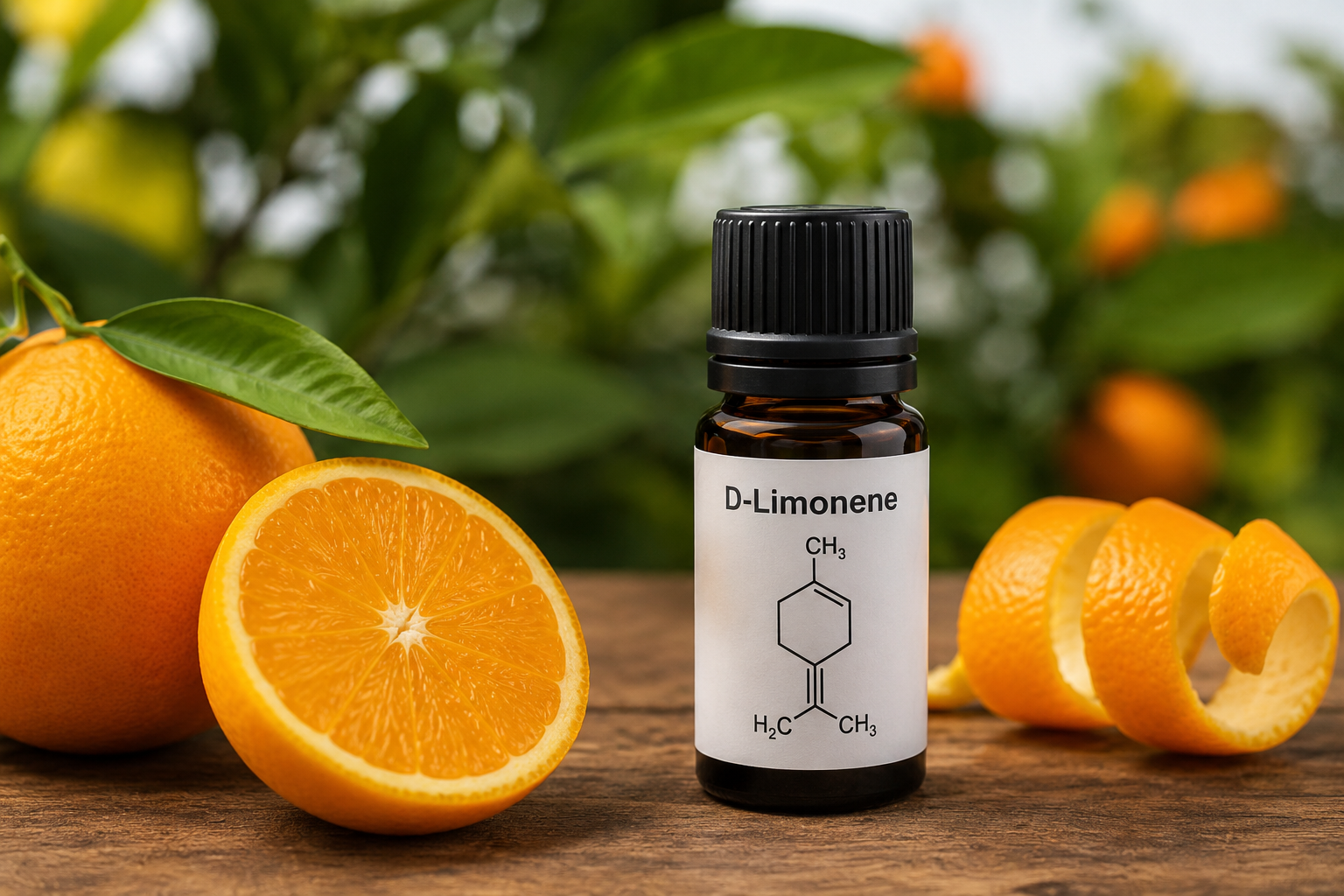
D-Limonene is a naturally occurring terpene found predominantly in citrus fruit rinds. Terpenes are aromatic compounds produced by plants that contribute to their distinctive scents and flavors.
Chemically, D-Limonene is a cyclic monoterpene with the molecular formula C₁₀H₁₆. It is responsible for the characteristic fresh scent of oranges and other citrus fruits.
The "D" in D-Limonene refers to its specific molecular structure, which differs from its counterpart, L-Limonene. The D-form is the most abundant and commercially valuable version due to its pleasant citrus fragrance and numerous beneficial properties.
Natural Sources of D-Limonene
D-Limonene is commonly found in:
- Orange peels
- Lemon peels
- Lime peels
- Grapefruit peels
- Tangerines
- Mandarins
- Citrus essential oils
Sweet orange peel oil typically contains over 90% D-Limonene, making it one of the richest natural sources available.
How Does D-Limonene Work?
Researchers believe D-Limonene works through several biological mechanisms:
1. Antioxidant Activity
D-Limonene helps neutralize harmful free radicals, reducing oxidative stress that may contribute to aging and chronic diseases.
2. Anti-Inflammatory Effects
Studies suggest that D-Limonene may help regulate inflammatory pathways in the body, potentially reducing inflammation-related symptoms.
3. Gastrointestinal Support
One of the most popular uses of D-Limonene is for digestive wellness. It may help support normal stomach function and promote digestive comfort.
4. Cellular Protection
Emerging research indicates that D-Limonene may support healthy cellular processes and contribute to overall wellness.
Health Benefits of D-Limonene
Supports Digestive Health
One of the primary reasons people take D-Limonene supplements is to support digestive health.
Many users report benefits for:
- Occasional heartburn
- Acid reflux discomfort
- Indigestion
- Digestive upset
Research suggests that D-Limonene may help maintain a healthy digestive environment by supporting normal gastric function.
Powerful Antioxidant Properties
D-Limonene antioxidant benefits may help protect cells from oxidative damage caused by environmental toxins, poor diet, and stress.
Antioxidants play an important role in:
- Supporting immune function
- Healthy aging
- Cellular protection
- Overall wellness
Supports Healthy Inflammatory Response
Studies indicate that D-Limonene may help maintain a healthy inflammatory response, which is essential for long-term health and comfort.
May Support Immune Health
Preliminary research suggests that D-Limonene may positively influence immune system function by supporting natural defense mechanisms.
Promotes Skin Health
Due to its antioxidant and cleansing properties, D-Limonene is often included in skincare products designed to promote healthy-looking skin.
D-Limonene for Acid Reflux
One of the most searched topics related to D-Limonene is its potential role in managing occasional acid reflux symptoms.
Many dietary supplements containing D-Limonene for acid reflux claim to:
- Support esophageal comfort
- Promote healthy digestion
- Help maintain normal stomach function
Some studies suggest that D-Limonene may coat the lining of the digestive tract and support normal digestive processes.
Is D-Limonene Safe?
The U.S. Food and Drug Administration (FDA) recognize D-Limonene as Generally Recognized As Safe (GRAS) when used in approved food applications.
However, individuals who are pregnant, nursing, taking medications, or managing health conditions should seek medical advice before using D-Limonene supplements.
2) Natural Occurrence in Plants and Citrus Fruits

Oranges: The Richest Source of D-Limonene
Among all citrus fruits, oranges are considered one of the richest natural sources of D-Limonene.
The peel of sweet oranges contains exceptionally high concentrations of orange peel oil, which may consist of over 90% D-Limonene.
Because of this high concentration, orange peels are the primary commercial source for producing:
- D-Limonene supplements
- D-Limonene essential oil
- Natural citrus extracts
- Eco-friendly solvents
The strong citrus aroma released when peeling an orange is largely due to the presence of D-Limonene.
Lemons
Lemons are another abundant source of D-Limonene.
The outer peel contains specialized oil glands that store aromatic compounds, including:
- D-Limonene
- Citral
- Beta-pinene
- Gamma-terpinene
These compounds work together to create the characteristic fresh lemon scent that consumers associate with cleanliness and freshness.
Limes
Lime peels contain significant amounts of D-Limonene and other beneficial phytochemicals.
The essential oil extracted from lime peels is commonly used in:
- Aromatherapy
- Natural fragrances
- Household cleaners
- Cosmetic formulations
The concentration of D-Limonene in lime peel can vary depending on the variety and growing conditions.
Grapefruits
Grapefruit peels are rich in D-Limonene and other citrus terpenes.
These compounds contribute to:
- The fruit's distinctive aroma
- Natural plant protection mechanisms
- Commercial essential oil production
Many grapefruit essential oils contain substantial levels of D-Limonene, making them valuable in natural wellness products.
Tangerines and Mandarins
Tangerines and mandarins also contain considerable amounts of D-Limonene, particularly in their peels.
These fruits are frequently used in:
- Flavoring industries
- Perfume manufacturing
- Aromatherapy blends
- Nutritional supplements
The sweet and refreshing scent of these fruits is largely attributed to their naturally occurring D-Limonene content.
Occurrence of D-Limonene in Other Plants
Although citrus fruits are the most recognized sources, D-Limonene naturally occurs in many non-citrus plants as well.
Examples include:
Mint
Several mint species contain measurable amounts of D-Limonene alongside menthol and other aromatic compounds.
Rosemary
Rosemary essential oil contains various terpenes, including small amounts of D-Limonene, contributing to its herbal fragrance.
Juniper
Juniper berries naturally produce D-Limonene as part of their complex essential oil profile.
Pine Trees
Many pine species contain D-Limonene within their resin and essential oils.
Cannabis Plants
Certain cannabis strains produce D-Limonene terpene profiles, which contribute to their citrus-like aroma and flavor characteristics.
3) Biological Functions of D-Limonene in Nature

D-Limonene is one of the most abundant natural terpenes found in plants, especially in citrus fruits such as oranges, lemons, limes, grapefruits, mandarins, and tangerines. Known for its fresh citrus aroma, D-Limonene is more than just a fragrant compound. In nature, it plays several important biological roles that help plants survive, reproduce, and defend themselves.
D-Limonene as a Natural Plant Defense Compound
One of the most important biological functions of D-Limonene is defense.
Protection Against Insects
D-Limonene may help repel or deter insects that feed on plant leaves, flowers, fruits, or peels. The strong citrus scent can discourage certain pests from attacking the plant.
In citrus fruits, the highest concentration of D-Limonene is usually found in the peel. This makes sense because the peel protects the fruit and seeds inside. When insects damage the peel, D-Limonene-rich citrus oil is released, creating a chemical barrier.
Defense Against Herbivores
Some animals may avoid plants with strong aromatic oils. D-Limonene contributes to the intense scent and taste of citrus peels, which may make them less appealing to herbivores.
Natural Antimicrobial Protection
Another key role of D-Limonene in nature is helping protect plants from microbes. Many plants produce terpenes to defend against fungi, bacteria, and other microorganisms. D-Limonene may contribute to this protective effect as part of a broader mixture of essential oil compounds.
D-Limonene and Plant Communication
Plants use chemical signals to interact with their surroundings. D-Limonene is a type of volatile organic compound, meaning it can easily evaporate and travel through the air.
These airborne compounds may help plants communicate with:
- Nearby plants
- Pollinators
- Pest predators
- Microorganisms
- The surrounding ecosystem
When a plant is damaged, it may release volatile compounds such as D-Limonene. These compounds can act as warning signals or attract natural enemies of pests.
Role of D-Limonene in Pollinator Attraction
Not all biological functions of D-Limonene are defensive. Some are related to reproduction.
The pleasant citrus aroma created by D-Limonene may help attract pollinators such as bees and other insects. Flowers and fruiting plants often use aromatic compounds to guide pollinators toward them.
By contributing to plant fragrance, D-Limonene may support:
- Pollination
- Seed formation
- Fruit development
- Plant reproduction
This makes D-Limonene an important part of natural plant life cycles.
D-Limonene in Citrus Fruit Protection
Citrus fruits are among the richest natural sources of D-Limonene. The compound is especially concentrated in the peel, where it serves several protective purposes.
Protecting the Fruit Peel
The peel acts as the first line of defense for citrus fruits. D-Limonene in citrus peel helps strengthen this defense by contributing to the fruit's chemical protection system.
Protecting the Seeds
By helping protect the fruit from insects and microbes, D-Limonene indirectly protects the seeds inside. This is important because seed survival is essential for plant reproduction.
Reducing Microbial Spoilage
Citrus peel oils containing D-Limonene may help slow microbial growth on the fruit surface, helping preserve the fruit for longer in nature.
D-Limonene and Environmental Stress Response
Plants face many environmental challenges, including heat, drought, UV exposure, and oxidative stress. D-Limonene and other plant terpenes may help plants respond to these stresses.
Oxidative Stress Protection
Environmental stress can increase the production of reactive oxygen species in plants. D-Limonene may contribute to antioxidant defense systems that help protect plant tissues from oxidative damage.
Heat and Sunlight Exposure
Citrus plants often grow in warm, sunny climates. Aromatic compounds in citrus peel oils may help plants adapt to intense environmental conditions.
Ecological Importance of D-Limonene
The ecological role of D-Limonene extends beyond the individual plant. By influencing insects, microbes, and other organisms, D-Limonene helps shape interactions within ecosystems.
Its ecological functions may include:
- Supporting plant survival
- Influencing insect behavior
- Helping regulate plant-microbe interactions
- Contributing to natural biodiversity
- Supporting food chain relationships
These roles show that D-Limonene is not just a fragrance molecule but an active part of natural ecosystems.
D-Limonene and Pest Management in Nature
Because D-Limonene may repel certain insects, it has inspired the development of natural pest-control products.
In nature, plants use D-Limonene as part of their own pest management system. Humans have studied this natural function and applied it in:
- Botanical insect repellents
- Natural pesticides
- Eco-friendly pest control products
- Agricultural crop protection
This demonstrates how understanding the biological functions of D-Limonene in nature can lead to practical, sustainable solutions.
4) Unique Properties That Differentiate D-Limonene

Among the thousands of naturally occurring compounds found in plants, D-Limonene stands out as one of the most versatile and valuable. This naturally occurring citrus terpene is widely recognized for its refreshing aroma, diverse industrial applications, potential health-supporting properties, and environmentally friendly characteristics.
What makes D-Limonene particularly fascinating is the collection of unique properties that differentiate D-Limonene from many other plant-derived compounds. From its exceptional solvent capabilities to its pleasant citrus fragrance and biodegradable nature, D-Limonene has become an important ingredient in industries ranging from healthcare and cosmetics to food processing and green chemistry.
Powerful Citrus Aroma
A Distinctive Natural Fragrance
One of the most recognizable unique properties of D-Limonene is its strong citrus fragrance.
The fresh aroma of oranges, lemons, and other citrus fruits is largely attributed to D-Limonene. This distinctive scent makes it highly desirable for use in:
- Perfumes
- Air fresheners
- Aromatherapy products
- Personal care products
- Household cleaners
Unlike many synthetic fragrance compounds, natural D-Limonene provides an authentic citrus scent that consumers often associate with freshness and cleanliness.
Long-Lasting Aromatic Profile
Another factor that differentiates D-Limonene is its ability to maintain a pleasant aroma over extended periods. This characteristic makes it particularly useful in fragrance formulations.
Exceptional Solvent Properties
Natural Solvent Power
One of the most commercially valuable D-Limonene properties is its effectiveness as a natural solvent.
D-Limonene solvent capabilities allow it to dissolve:
- Oils
- Grease
- Adhesives
- Waxes
- Resins
- Certain industrial residues
Because of this, D-Limonene is widely used as an eco-friendly alternative to petroleum-based solvents.
Environmentally Friendly Alternative
Unlike many conventional solvents, D-Limonene is derived from renewable plant sources. This makes it highly attractive for industries seeking sustainable and environmentally responsible solutions.
Biodegradability
Naturally Decomposes in the Environment
One of the key environmental benefits of D-Limonene is its biodegradability.
Unlike many synthetic chemicals that persist in ecosystems, D-Limonene naturally breaks down through biological processes.
This property contributes to its growing popularity in:
- Green cleaning products
- Sustainable manufacturing
- Environmentally conscious formulations
Reduced Environmental Impact
Because biodegradable D-Limonene breaks down relatively efficiently, it is often considered a more environmentally responsible option compared to many petroleum-derived chemicals.
Renewable Plant-Based Origin
Derived from Citrus Fruit Peels
Another significant advantage of D-Limonene is its renewable origin.
Commercial D-Limonene extraction primarily utilizes citrus peels, which are often byproducts of juice manufacturing.
This means that D-Limonene production helps maximize the value of agricultural resources while reducing waste.
Sustainable Raw Material Source
Because citrus fruits are continually cultivated worldwide, D-Limonene represents a renewable and sustainable resource compared to finite fossil fuel reserves.
High Concentration in Citrus Essential Oils
Abundant Natural Availability
Many plant compounds occur only in trace amounts, making extraction difficult and expensive.
In contrast, D-Limonene exists in exceptionally high concentrations within citrus peel oils.
For example:
- Sweet orange oil may contain more than 90% D-Limonene
- Lemon oil contains substantial amounts of D-Limonene
- Lime oil is another rich source
This abundance helps keep production costs relatively manageable while ensuring a stable supply.
Versatile Industrial Applications
Multi-Industry Utility
One of the most remarkable unique properties that differentiate D-Limonene is its versatility.
Few natural compounds are used across as many industries as D-Limonene.
Applications include:
- Food manufacturing
- Nutritional supplements
- Cosmetics
- Pharmaceuticals
- Agriculture
- Industrial cleaning
- Fragrance production
- Green chemistry
This broad utility distinguishes D-Limonene from many other naturally occurring terpenes.
Potential Health-Supporting Properties
Naturally Occurring Bioactive Compound
Researchers continue to investigate the potential biological activities of D-Limonene.
Studies have explored areas such as:
- Digestive wellness
- Antioxidant activity
- Cellular protection
- Immune system support
- Inflammation management
These characteristics have contributed to the popularity of D-Limonene supplements and wellness products.
Interest in Functional Ingredients
Because D-Limonene combines pleasant sensory properties with potential biological activity, it occupies a unique position among plant-derived compounds.
Low Toxicity Profile
Widely Used in Consumer Products
Another reason D-Limonene stands out is its generally favorable safety profile when used appropriately.
Regulatory agencies have approved its use in various applications, including:
- Food flavorings
- Fragrances
- Cleaning products
- Cosmetic formulations
This broad acceptance supports the widespread commercial use of D-Limonene.
Naturally Occurring in Common Foods
Humans regularly consume small amounts of D-Limonene through citrus fruits and food products containing citrus-derived ingredients.
Unique Chemical Structure
Simple Yet Highly Functional Molecule
The molecular structure of D-Limonene allows it to interact effectively with a variety of substances.
Its chemical characteristics contribute to:
- Solvent capabilities
- Fragrance properties
- Volatility
- Industrial usefulness
This combination of attributes is relatively uncommon among naturally occurring compounds.
5) Industrial and Commercial Significance

The industrial and commercial significance of D-Limonene has grown tremendously over the past few decades. Once known primarily as the compound responsible for the pleasant aroma of citrus fruits, D-Limonene is now recognized as one of the most valuable natural terpenes used across multiple industries worldwide.
Derived primarily from citrus fruit peels, especially oranges, lemons, and limes, D-Limonene has become an essential ingredient in sectors such as food processing, pharmaceuticals, cosmetics, agriculture, cleaning products, and green chemistry. Its unique combination of natural origin, powerful solvent properties, biodegradability, and consumer appeal makes it a preferred alternative to many synthetic chemicals.
D-Limonene in the Cleaning Industry
Natural Cleaning Products
One of the largest commercial markets for D-Limonene is the cleaning industry.
Because of its ability to dissolve grease, oils, waxes, and adhesives, D-Limonene cleaning products have become increasingly popular.
Common applications include:
- Household cleaners
- Industrial degreasers
- Surface cleaners
- Floor cleaning products
- Automotive cleaners
Many manufacturers promote D-Limonene-based cleaners as environmentally friendly alternatives to petroleum-derived solvents.
Eco-Friendly Degreasing Solutions
The excellent solvent capabilities of D-Limonene make it highly effective in removing stubborn residues.
Industries use D-Limonene solvent formulations for:
- Machinery maintenance
- Equipment cleaning
- Manufacturing operations
- Metal processing
Its effectiveness and biodegradability contribute to its growing adoption in industrial environments.
D-Limonene in Green Chemistry
Supporting Sustainable Manufacturing
The role of D-Limonene in green chemistry continues to expand as industries seek sustainable alternatives to traditional chemicals.
Because it originates from renewable citrus resources, D-Limonene helps reduce dependence on non-renewable petroleum-based products.
Key sustainability benefits include:
- Renewable sourcing
- Reduced carbon footprint
- Lower environmental toxicity
- Improved biodegradability
These advantages make D-Limonene a valuable component of modern green manufacturing strategies.
Alternative to Petroleum-Based Solvents
Many conventional industrial solvents present environmental and safety concerns.
D-Limonene serves as an effective replacement in applications requiring:
- Solvent extraction
- Degreasing
- Surface preparation
- Industrial cleaning
This substitution supports corporate sustainability goals and regulatory compliance initiatives.
D-Limonene in the Food Industry
Natural Flavoring Agent
One of the most established commercial uses of D-Limonene is as a natural food flavoring.
Its citrus flavor profile makes it a popular ingredient in:
- Soft drinks
- Candies
- Baked goods
- Nutritional supplements
- Chewing gum
Consumers increasingly prefer products containing natural flavor ingredients, further boosting demand for D-Limonene.
Food Processing Applications
Beyond flavoring, D-Limonene plays a role in various food-processing applications where natural ingredients are preferred.
Its widespread acceptance by regulatory agencies has contributed to its extensive use in food manufacturing.
D-Limonene in the Cosmetic Industry
Fragrance and Personal Care Products
The pleasant citrus aroma of D-Limonene makes it a valuable ingredient in cosmetic formulations.
It is commonly found in:
- Perfumes
- Body sprays
- Lotions
- Creams
- Soaps
- Shampoos
The use of natural citrus fragrance compounds helps manufacturers meet consumer demand for plant-based beauty products.
Clean Beauty and Natural Cosmetics
The global trend toward natural cosmetics and clean beauty products has increased interest in D-Limonene-derived ingredients.
Consumers often view plant-based ingredients as more desirable than synthetic alternatives, contributing to market growth.
D-Limonene in the Pharmaceutical Industry
Pharmaceutical Formulations
The pharmaceutical industry continues to explore the potential applications of D-Limonene.
Researchers have studied D-Limonene for its possible role in:
- Digestive wellness products
- Nutritional supplements
- Delivery systems for active compounds
- Functional health formulations
Its natural origin makes it attractive for supplement and wellness product manufacturers.
Growing Interest in D-Limonene Supplements
The market for D-Limonene supplements has expanded due to increasing consumer interest in natural wellness solutions.
Many products are marketed for:
- Digestive support
- General wellness
- Nutritional supplementation
This growing demand contributes significantly to the commercial value of D-Limonene.
D-Limonene in Agriculture
Natural Pest Management
Agriculture represents another important sector benefiting from the industrial significance of D-Limonene.
Researchers have investigated D-Limonene for use in:
- Botanical insect repellents
- Natural pesticides
- Crop protection products
Its plant-derived origin aligns with sustainable agricultural practices.
Eco-Friendly Crop Protection
As demand for environmentally responsible farming methods increases, D-Limonene-based agricultural products continue to gain attention.
These products may help reduce reliance on certain synthetic chemicals.
D-Limonene in the Fragrance Industry
Citrus Aroma Market
The fragrance industry relies heavily on D-Limonene due to its fresh, uplifting scent.
It is widely used in:
- Perfumes
- Air fresheners
- Aromatherapy products
- Household fragrance products
Its natural aroma profile makes it one of the most commercially valuable citrus fragrance ingredients.
Consumer Preference for Natural Scents
Consumers increasingly seek products containing authentic plant-derived fragrances.
This trend has strengthened the market demand for natural citrus essential oils and D-Limonene-based fragrances.
Economic Importance of D-Limonene
Value from Citrus Byproducts
One of the most remarkable aspects of the commercial significance of D-Limonene is its contribution to waste reduction.
Citrus peel, once considered a low-value byproduct, now serves as a valuable source of D-Limonene extraction.
This creates additional revenue streams for:
- Citrus growers
- Juice manufacturers
- Essential oil producers
The ability to transform waste into high-value commercial products improves economic efficiency.
Global Market Growth
The global market for D-Limonene continues to expand due to growing demand for:
- Sustainable chemicals
- Natural ingredients
- Green cleaning products
- Plant-based cosmetics
- Functional wellness products
As industries move toward sustainability, demand for D-Limonene is expected to increase further.
6) Sustainability and Renewable Sourcing

The growing demand for sustainable ingredients, renewable raw materials, and eco-friendly chemical alternatives has made D-Limonene an increasingly important compound in modern industries. Derived mainly from citrus fruit peels, D-Limonene is a naturally occurring citrus terpene valued for its fresh aroma, powerful solvent properties, and plant-based origin.
The sustainability and renewable sourcing of D-Limonene make it especially attractive for companies seeking greener solutions in cleaning products, cosmetics, food flavorings, pharmaceuticals, agriculture, and industrial manufacturing. Unlike many petroleum-derived chemicals, D-Limonene comes from renewable agricultural resources and is often extracted from citrus byproducts that might otherwise go to waste.
Why Sustainability Matters in D-Limonene Production
Modern consumers and businesses are increasingly concerned about the environmental impact of the ingredients they use. This has created strong demand for sustainable chemicals, bio-based ingredients, and renewable natural compounds.
D-Limonene fits well into this shift because it is:
- Derived from plants
- Produced from citrus peel byproducts
- Renewable through agricultural cultivation
- Biodegradable under suitable conditions
- Useful as an alternative to petroleum-based solvents
These qualities make D-Limonene an important ingredient in the movement toward green chemistry and sustainable manufacturing.
Renewable Sourcing from Citrus Peels
One of the greatest sustainability advantages of D-Limonene is its source.
Commercial D-Limonene extraction primarily uses citrus peels, especially orange peels, which are often generated as byproducts of juice production.
Instead of discarding citrus waste, manufacturers can recover valuable citrus essential oils rich in D-Limonene. This process supports a more circular and resource-efficient supply chain.
Citrus Peel as a Valuable Byproduct
Citrus processing produces large amounts of peel, pulp, and seed residues. These materials can be transformed into valuable products such as:
- D-Limonene
- Citrus essential oil
- Animal feed ingredients
- Pectin
- Natural flavor extracts
- Bio-based materials
This approach helps reduce waste while improving the economic value of citrus crops.
D-Limonene and the Circular Economy
The sustainability of D-Limonene is closely connected to the concept of the circular economy.
In a circular economy, waste materials are reused, repurposed, or converted into valuable products. D-Limonene production is a strong example of this principle because it transforms citrus peel waste into a commercially useful ingredient.
By extracting D-Limonene from citrus peels, manufacturers can:
- Reduce agricultural waste
- Create additional revenue from byproducts
- Lower dependence on fossil-based raw materials
- Support resource-efficient production
- Promote sustainable supply chains
This makes D-Limonene an excellent example of how natural resources can be used more responsibly.
Plant-Based Alternative to Petroleum-Derived Chemicals
Many traditional solvents and industrial chemicals are made from non-renewable petroleum resources. These materials may contribute to pollution, resource depletion, and environmental concerns.
D-Limonene solvent offers a plant-based alternative in many applications.
Because D-Limonene is derived from citrus biomass, it helps reduce reliance on petroleum-based chemicals in products such as:
- Industrial degreasers
- Household cleaners
- Adhesive removers
- Surface cleaners
- Natural formulations
This is one reason D-Limonene is widely used in eco-friendly cleaning products and green chemistry applications.
Biodegradability and Environmental Benefits
Another important sustainability feature of D-Limonene is its ability to break down naturally under appropriate environmental conditions.
Biodegradable D-Limonene is often preferred in products designed to reduce long-term environmental impact.
Key environmental benefits include:
- Lower persistence compared to some synthetic chemicals
- Natural origin from renewable plant sources
- Potential use in biodegradable formulations
- Reduced dependence on harsh petrochemical solvents
Although proper handling and formulation are still important, D-Limonene offers clear advantages for companies seeking more environmentally responsible ingredients.
Economic Benefits of Renewable D-Limonene Sourcing
The renewable sourcing of D-Limonene benefits not only the environment but also the economy.
By turning citrus byproducts into high-value ingredients, the industry creates new opportunities for:
- Citrus growers
- Juice manufacturers
- Essential oil producers
- Natural product brands
- Green chemical companies
This adds value across the supply chain while helping reduce waste.
Challenges in Sustainable D-Limonene Production
Although D-Limonene has strong sustainability advantages, responsible sourcing is still important.
Challenges may include:
- Seasonal variation in citrus supply
- Transportation emissions
- Quality differences between citrus varieties
- Energy use during extraction
- Responsible agricultural practices
To maximize sustainability, manufacturers should prioritize efficient extraction methods, ethical sourcing, waste reduction, and transparent supply chains.
Future of Sustainable D-Limonene
The future of D-Limonene looks promising as industries continue shifting toward bio-based chemicals and renewable ingredients.
Future opportunities may include:
- More efficient citrus waste processing
- Advanced extraction technologies
- Bio-based polymers
- Sustainable packaging materials
- Improved green cleaning formulations
- Expanded agricultural applications
As sustainability becomes a priority worldwide, D-Limonene is expected to remain an important natural ingredient in eco-conscious product development.
7) Future Importance in Global Markets
The future importance of D-Limonene in global markets is becoming increasingly evident as industries worldwide shift toward sustainable materials, renewable ingredients, and eco-friendly chemical solutions. Derived primarily from citrus fruit peels, D-Limonene has evolved from being a simple flavor and fragrance ingredient into a strategically important bio-based chemical with applications across multiple sectors.
As governments, manufacturers, and consumers prioritize sustainability, the demand for D-Limonene, natural terpenes, and renewable solvents is expected to grow significantly. Its unique combination of plant-based sourcing, biodegradability, industrial versatility, and commercial value positions D-Limonene as one of the most promising compounds in the global bio economy.
Global Demand for Sustainable Ingredients
Rise of the Green Economy
One of the primary factors influencing the future market growth of D-Limonene is the global transition toward sustainability.
Consumers increasingly demand:
- Natural ingredients
- Plant-based chemicals
- Eco-friendly products
- Renewable materials
- Sustainable manufacturing practices
Because D-Limonene meets all of these requirements, it is expected to become even more important across global industries.
Increasing Environmental Awareness
Environmental concerns have encouraged companies to replace traditional chemicals with safer and more sustainable alternatives.
As a renewable citrus-derived compound, D-Limonene fits perfectly into this trend.
D-Limonene and the Bio-Based Economy
Supporting the Future of Bio-Based Chemicals
The global bio economy is rapidly expanding as businesses seek alternatives to fossil-based raw materials.
D-Limonene is considered an important bio-based chemical because it is:
- Derived from renewable resources
- Produced from agricultural byproducts
- Biodegradable
- Commercially scalable
- Widely accepted by consumers
As investments in bio-based manufacturing continue to grow, D-Limonene is expected to play an increasingly significant role.
Future Growth in the Cleaning Industry
Rising Demand for Eco-Friendly Cleaning Products
The global market for green cleaning products continues to grow rapidly.
Consumers increasingly prefer products containing:
- Natural ingredients
- Biodegradable compounds
- Plant-based solvents
- Sustainable formulations
Because of its excellent grease-cutting ability, D-Limonene is likely to remain a key ingredient in future cleaning technologies.
Commercial Cleaning Applications
Future opportunities include:
- Industrial degreasers
- Commercial maintenance products
- Automotive cleaners
- Surface disinfectant formulations
- Institutional cleaning solutions
Future Opportunities in Cosmetics and Personal Care
Clean Beauty Market Expansion
The clean beauty industry is one of the fastest-growing consumer sectors globally.
Consumers increasingly seek:
- Natural fragrances
- Botanical ingredients
- Sustainable packaging
- Plant-based formulations
D-Limonene is already widely used in personal care products, and demand is expected to increase as clean beauty trends continue to expand.
Natural Fragrance Solutions
The pleasant citrus aroma of D-Limonene makes it valuable for:
- Perfumes
- Body care products
- Haircare products
- Aromatherapy blends
Its natural origin provides a competitive advantage over synthetic fragrance ingredients.
Future Role in Food and Beverage Markets
Demand for Natural Flavoring Ingredients
Consumers increasingly prefer foods containing recognizable and natural ingredients.
As a natural citrus flavoring, D-Limonene is expected to remain important in:
- Beverages
- Functional foods
- Nutritional supplements
- Confectionery products
- Bakery formulations
The trend toward clean-label products further strengthens its market potential.
Pharmaceutical and Nutraceutical Growth Potential
Expanding Wellness Markets
Global demand for wellness products continues to increase.
Researchers and manufacturers are exploring D-Limonene for use in:
- Dietary supplements
- Functional nutrition products
- Wellness formulations
- Delivery systems for bioactive compounds
As consumer interest in natural health solutions grows, the commercial importance of D-Limonene supplements may continue to
Future Opportunities in Cosmetics and Personal Care
Clean Beauty Market Expansion
The clean beauty industry is one of the fastest-growing consumer sectors globally.
Consumers increasingly seek:
- Natural fragrances
- Botanical ingredients
- Sustainable packaging
- Plant-based formulations
D-Limonene is already widely used in personal care products, and demand is expected to increase as clean beauty trends continue to expand.
Natural Fragrance Solutions
The pleasant citrus aroma of D-Limonene makes it valuable for:
- Perfumes
- Body care products
- Haircare products
- Aromatherapy blends
Its natural origin provides a competitive advantage over synthetic fragrance ingredients.
Future Role in Food and Beverage Markets
Demand for Natural Flavoring Ingredients
Consumers increasingly prefer foods containing recognizable and natural ingredients.
As a natural citrus flavoring, D-Limonene is expected to remain important in:
- Beverages
- Functional foods
- Nutritional supplements
- Confectionery products
- Bakery formulations
The trend toward clean-label products further strengthens its market potential.


