

Table of Contents:
1. Introduction to D-Limonene Terpene
2. Natural Sources and Chemical Composition
3. Aroma Profile and Sensory Characteristics
4. Physical and Chemical Properties of D-Limonene
5. Commercial Applications Across Industries
6. Benefits of Using D-Limonene in Formulations
7. Future Market Trends and Demand
1) Introduction to D-Limonene Terpene

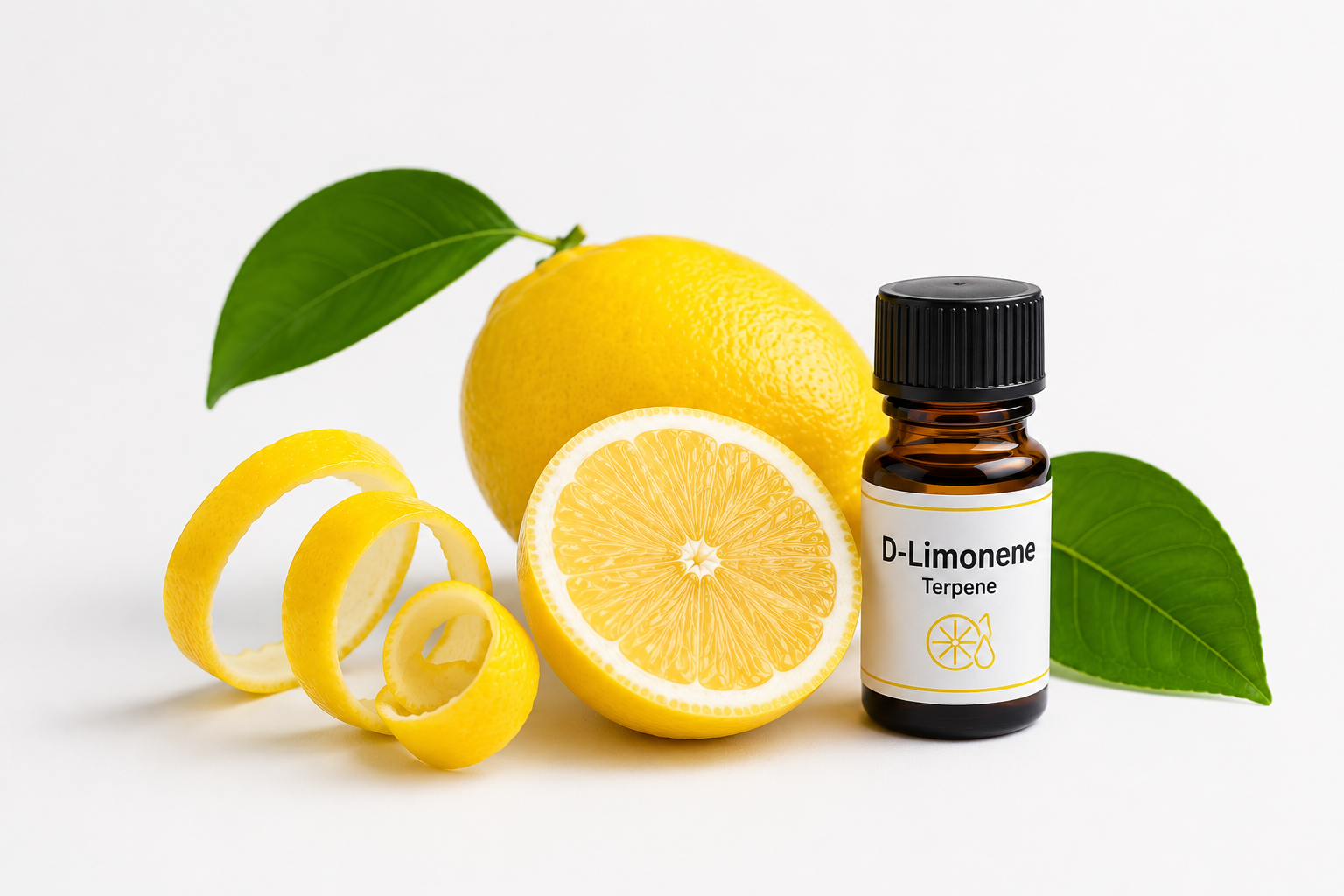
D-Limonene terpene is one of the most abundant and widely recognized naturally occurring terpenes found in nature. Known for its refreshing citrus aroma, D-Limonene is commonly extracted from the peels of oranges, lemons, limes, grapefruits, and other citrus fruits. This powerful terpene is not only responsible for the characteristic scent of citrus but also offers numerous therapeutic, industrial, and commercial benefits.
As consumer interest in natural wellness products continues to grow, D-Limonene terpene has gained significant attention in industries ranging from aromatherapy and pharmaceuticals to food production and cannabis cultivation. Its unique properties make it a valuable ingredient in many formulations designed to promote health, enhance flavor, and improve overall well-being.
Understanding the Chemistry of D-Limonene
D-Limonene belongs to a class of organic compounds called monoterpenes, which are made up of two isoprene units. It has the molecular formula C₁₀H₁₆ and appears as a clear, colorless liquid with a strong citrus fragrance.
There are two primary forms of limonene:
- D-Limonene – emits a sweet orange-like scent.
- L-Limonene – has a piney, turpentine-like aroma.
Among these, D-Limonene terpene is the most commercially valuable due to its pleasant fragrance and extensive applications.
Natural Sources of D-Limonene Terpene
The primary source of D-Limonene is citrus fruit peels, including:
- Oranges
- Lemons
- Limes
- Grapefruits
- Mandarins
Additionally, D-Limonene terpene can be found in various herbs, plants, and cannabis strains. Certain cannabis cultivars contain elevated levels of this terpene, contributing to their uplifting aroma and mood-enhancing effects.
Aroma and Flavor Profile of D-Limonene
One of the defining characteristics of D-Limonene terpene is its vibrant sensory profile. It delivers:
- Bright citrus notes
- Sweet orange aroma
- Fresh lemon fragrance
- Slightly tangy undertones
- Refreshing flavor experience
Because of these qualities, D-Limonene is widely used in food flavorings, perfumes, cleaning products, and essential oils.
Why Is D-Limonene Terpene So Popular?
Several factors contribute to the growing popularity of D-Limonene:
- Pleasant citrus aroma
- Natural origin
- Versatile applications
- Potential wellness benefits
- Consumer preference for plant-based ingredients
- Broad industrial utility
As demand for natural products increases globally, D-Limonene terpene continues to gain recognition as one of the most valuable terpenes available.
2) Natural Sources and Chemical Composition

D-Limonene terpene is one of the most abundant and commercially important terpenes found in nature. Recognized for its fresh citrus aroma and versatile applications, D-Limonene occurs naturally in a wide variety of plants, fruits, and herbs. It is particularly concentrated in the rinds of citrus fruits, making these fruits the primary commercial source for D-Limonene extraction.
Primary Natural Sources of D-Limonene Terpene
Citrus Fruits: The Richest Source of D-Limonene
The most significant natural source of D-Limonene terpene is citrus fruit peel. In fact, citrus peels can contain up to 95% D-Limonene oil, making them highly valuable for industrial extraction.
Common citrus sources include:
- Oranges
- Lemons
- Limes
- Grapefruits
- Mandarins
- Tangerines
- Bergamot
- Pomelos
Among these, orange peels contain the highest concentration of D-Limonene, making sweet oranges the dominant commercial source for global production.
D-Limonene in Essential Oils
Many essential oils naturally contain significant amounts of D-Limonene. These oils are extracted through cold pressing or steam distillation processes and are widely used in aromatherapy, cosmetics, and natural health products.
Examples include:
- Orange essential oil
- Lemon essential oil
- Lime essential oil
- Grapefruit essential oil
- Mandarin essential oil
The refreshing scent associated with these oils is largely due to the presence of D-Limonene terpene.
D-Limonene in Cannabis Plants
The cannabis industry has shown increasing interest in D-Limonene-rich cannabis strains. This terpene contributes to the distinct citrus aroma and may influence the overall effects and flavor profile of cannabis products.
Popular cannabis strains containing high levels of D-Limonene include:
- Super Lemon Haze
- Wedding Cake
- Lemon Skunk
- Sour Diesel
- Banana OG
In cannabis, D-Limonene terpene is often associated with uplifting, energetic, and mood-enhancing experiences.
Herbs and Other Plant Sources
Although citrus fruits remain the dominant source, D-Limonene is also found in several herbs and botanical species, including:
- Mint
- Rosemary
- Juniper
- Dill
- Caraway
- Fennel
These plants naturally produce terpenes as part of their defense mechanisms against pests and environmental stressors.
How Plants Produce D-Limonene
Plants synthesize D-Limonene terpene through complex biochemical pathways involving isoprene units. The compound is produced in specialized structures known as glandular trichomes and oil glands.
The biological functions of D-Limonene in plants include:
- Protecting against insects
- Deterring herbivores
- Preventing microbial infections
- Attracting pollinators
- Supporting plant communication
These natural protective properties explain why D-Limonene terpene is frequently used in eco-friendly pesticides and natural cleaning products.
Chemical Composition of D-Limonene
Molecular Formula of D-Limonene
The chemical formula of D-Limonene is:
C₁₀H₁₆
This formula identifies D-Limonene as a hydrocarbon composed of ten carbon atoms and sixteen hydrogen atoms.
As a member of the monoterpene family, D-Limonene terpene is formed from two isoprene units, making it one of the simplest yet most biologically active terpenes found in nature.
Molecular Structure
The molecular structure of D-Limonene consists of:
- A six-membered carbon ring
- A double bond within the ring
- An isopropenyl side group
This unique arrangement contributes to the compound's:
- Citrus fragrance
- Solvent properties
- Biological activity
- Volatility
The structure also enables D-Limonene terpene to interact effectively with various natural and industrial compounds.
Physical Properties of D-Limonene
Several physical characteristics make D-Limonene highly valuable across multiple industries.
Appearance
D-Limonene terpene appears as:
- Clear liquid
- Colorless to pale yellow
- Highly aromatic
Aroma
The scent profile includes:
- Sweet orange notes
- Fresh citrus fragrance
- Bright lemon undertones
- Clean and refreshing aroma
These sensory properties make D-Limonene one of the most desirable natural fragrance ingredients available today.
Solubility
D-Limonene is:
- Insoluble in water
- Soluble in alcohol
- Soluble in oils
- Soluble in organic solvents
Its excellent solvent characteristics make it useful in industrial cleaning products and extraction processes.
Isomers of Limonene
Limonene exists in two distinct optical isomer forms:
D-Limonene
Also called:
- (+)-Limonene
- R-Limonene
Characteristics:
- Sweet citrus scent
- Orange-like aroma
- Most common commercial form
- Widely used in food and fragrance industries
L-Limonene
Also known as:
- (-)-Limonene
- S-Limonene
Characteristics:
- Piney aroma
- Turpentine-like scent
- Less commonly used commercially
The majority of products marketed as Limonene contain the D-Limonene terpene form due to its pleasant fragrance and broader commercial applications.
Extraction Methods for D-Limonene
Cold Press Extraction
The most common method for obtaining D-Limonene from citrus peels is cold pressing.
Benefits include:
- Preserves natural compounds
- Maintains purity
- Retains aroma profile
- Environmentally friendly process
Steam Distillation
Steam distillation is another widely used extraction technique for producing high-purity D-Limonene terpene.
Advantages include:
- Efficient oil recovery
- High yield
- Industrial scalability
Advanced Extraction Technologies
Modern production facilities may use:
- Supercritical CO₂ extraction
- Solvent extraction
- Molecular distillation
These methods help manufacturers obtain pharmaceutical-grade and food-grade D-Limonene products.
3) Aroma Profile and Sensory Characteristics

The aroma profile of D-Limonene is one of the main reasons this terpene is so widely used. From essential oils and perfumes to cleaning products and cannabis strains, D-Limonene terpene provides a clean, sweet, and energizing sensory experience that appeals to consumers around the world.
Key Sensory Characteristics of D-Limonene
The sensory characteristics of D-Limonene go beyond smell. This terpene also influences taste, freshness, product perception, and emotional response.
1. Fresh Citrus Aroma
The most dominant feature of D-Limonene terpene is its fresh citrus aroma. It delivers the scent of orange peel, lemon zest, and grapefruit rind. This aroma is commonly used to create a feeling of cleanliness, brightness, and natural freshness.
2. Sweet and Fruity Notes
In addition to citrus sharpness, D-Limonene also contains sweet and fruity undertones. These notes make it suitable for food flavoring, beverages, candies, gummies, and wellness products.
3. Zesty and Tangy Impression
The zesty quality of D-Limonene terpene gives products a lively and energetic character. This tangy impression is especially important in citrus-flavored products, terpene blends, and cannabis aroma profiles.
4. Clean and Refreshing Sensation
Many consumers associate D-Limonene aroma with cleanliness. That is why it is widely used in natural cleaning products, soaps, detergents, room sprays, and surface cleaners.
5. Uplifting Emotional Effect
The bright scent of D-Limonene is often linked with an uplifting sensory experience. In aromatherapy, citrus aromas are commonly used to support a fresh, positive, and energetic atmosphere.
D-Limonene in Fragrance Formulations
D-Limonene terpene is a highly valued ingredient in the fragrance industry because it adds a natural citrus top note. Top notes are the first scents people notice when smelling a perfume, essential oil blend, or scented product.
In fragrance formulas, D-Limonene is commonly used to create:
- Citrus perfumes
- Fresh body sprays
- Natural deodorants
- Shampoos
- Soaps
- Lotions
- Air fresheners
- Cleaning fragrances
Because of its light and volatile nature, D-Limonene terpene evaporates quickly and creates an immediate burst of freshness.
Flavor Profile of D-Limonene Terpene
The flavor profile of D-Limonene is closely related to its aroma. It provides a citrusy, sweet, and slightly tangy taste that is commonly used in the food and beverage industry.
Products that may contain D-Limonene flavoring include:
- Soft drinks
- Candies
- Chewing gum
- Baked goods
- Citrus desserts
- Nutritional supplements
- Functional beverages
- Gummies
Its pleasant taste makes D-Limonene terpene useful in products that need a natural orange, lemon, or citrus flavor.
D-Limonene in Aromatherapy
In aromatherapy, D-Limonene terpene is valued for its clean, cheerful, and energizing scent. It is often found in citrus essential oils used for diffusers, massage oils, candles, and wellness blends.
The aromatherapy benefits of D-Limonene are often associated with:
- A refreshing environment
- Mood support
- Stress relief
- Mental clarity
- Relaxation
- Increased freshness
Its citrus aroma helps create a bright and welcoming atmosphere in homes, spas, wellness centers, and personal care spaces.
D-Limonene Terpene in Cannabis Aroma Profiles
D-Limonene is one of the most important cannabis terpenes because it contributes to the citrus scent found in many popular cannabis strains. Cannabis products rich in D-Limonene terpene often have aromas similar to lemon peel, orange zest, and sweet citrus fruit.
Common sensory traits of D-Limonene-rich cannabis strains include:
- Lemon aroma
- Orange flavor
- Sweet citrus notes
- Fresh fruit scent
- Bright terpene profile
- Uplifting aroma
Many consumers associate D-Limonene cannabis strains with daytime use, freshness, and a more energetic sensory experience.
Applications Based on Sensory Characteristics
The unique sensory characteristics of D-Limonene terpene make it useful in many industries.
Personal Care Products
D-Limonene is used in shampoos, body washes, soaps, lotions, creams, and deodorants because it gives products a fresh citrus scent.
Household Cleaning Products
The clean aroma of D-Limonene terpene makes it ideal for eco-friendly cleaners, surface sprays, degreasers, and air fresheners.
Food and Beverage Products
Its sweet citrus flavor makes D-Limonene suitable for beverages, candies, desserts, and natural flavor systems.
Cannabis and Hemp Products
In cannabis, D-Limonene terpene improves aroma, flavor, and the overall terpene profile of strains, vape products, oils, and concentrates.
Wellness and Aromatherapy Products
D-Limonene is commonly used in essential oils, diffuser blends, candles, massage oils, and natural wellness products.
4) Physical and Chemical Properties of D-Limonene

D-Limonene terpene is one of the most abundant and commercially valuable natural terpenes found in plants. Known for its refreshing citrus aroma and versatile applications, D-Limonene plays an essential role in industries such as cannabis, food and beverage, cosmetics, pharmaceuticals, cleaning products, and aromatherapy.
Understanding the physical and chemical properties of D-Limonene is crucial for manufacturers, researchers, formulators, and consumers who work with terpene-based products. These properties determine how D-Limonene terpene behaves during extraction, storage, formulation, and industrial processing.
Chemical Formula of D-Limonene
The molecular formula of D-Limonene terpene is:
C₁₀H₁₆
This formula indicates that each molecule contains:
- 10 carbon atoms
- 16 hydrogen atoms
The simple hydrocarbon structure contributes to the compound's volatility, aroma, solvent capabilities, and biological activity.
Molecular Structure of D-Limonene
The molecular structure of D-Limonene consists of:
- A six-membered carbon ring
- One internal double bond
- One external double bond
- An isopropenyl side chain
This unique arrangement is responsible for many of the physical and chemical properties that make D-Limonene terpene valuable across multiple industries.
The structural flexibility of D-Limonene also contributes to its interactions with other terpenes, essential oils, and organic compounds.
Physical Properties of D-Limonene Terpene
Appearance
Pure D-Limonene typically appears as:
- Clear liquid
- Colorless to pale yellow
- Transparent
- Highly fluid
The appearance may vary slightly depending on purity level and extraction method.
Aroma
One of the defining physical characteristics of D-Limonene terpene is its distinctive aroma.
The scent profile includes:
- Sweet orange notes
- Fresh lemon aroma
- Citrus zest fragrance
- Fruity undertones
- Clean refreshing character
This pleasant aroma contributes significantly to the popularity of D-Limonene in fragrance and flavor applications.
Molecular Weight
The molecular weight of D-Limonene is approximately:
136.24 g/mol
This relatively low molecular weight contributes to its volatility and ease of evaporation.
Boiling Point
The boiling point of D-Limonene terpene is approximately:
176°C (349°F)
This boiling point makes D-Limonene suitable for various industrial applications involving controlled heating and extraction processes.
Melting Point
The melting point of D-Limonene is approximately:
-74°C (-101°F)
This extremely low melting point allows the compound to remain liquid under most environmental conditions.
Density
The density of D-Limonene terpene is approximately:
0.84 g/cm³
Because its density is lower than water, D-Limonene typically floats when mixed with aqueous solutions.
Refractive Index
The refractive index of D-Limonene generally ranges between:
1.470 – 1.475
This optical property is commonly used for quality control and purity assessment.
Solubility Properties of D-Limonene
Water Solubility
One of the most important physical characteristics of D-Limonene terpene is its poor water solubility.
D-Limonene is:
- Practically insoluble in water
- Hydrophobic
- Non-polar
This property influences its use in formulations and industrial applications.
Solubility in Organic Solvents
D-Limonene dissolves readily in:
- Ethanol
- Acetone
- Ether
- Vegetable oils
- Organic solvents
Its strong solvent capabilities make D-Limonene terpene an environmentally friendly alternative to petroleum-based solvents.
Volatility and Evaporation Characteristics
As a volatile terpene, D-Limonene evaporates relatively quickly when exposed to air.
This volatility contributes to:
- Strong aroma release
- Effective fragrance dispersion
- Rapid scent perception
- Efficient cleaning performance
The volatility of D-Limonene terpene is one reason it is widely used in air fresheners, perfumes, and aromatherapy products.
Chemical Properties of D-Limonene
Hydrocarbon Nature
D-Limonene is classified as a hydrocarbon because it contains only carbon and hydrogen atoms.
This hydrocarbon structure contributes to:
- High stability
- Solvent capabilities
- Compatibility with oils
- Non-polar behavior
Optical Activity
A unique chemical property of D-Limonene terpene is its optical activity.
The compound exists in different stereoisomer forms:
- D-Limonene (R-Limonene)
- L-Limonene (S-Limonene)
The D-Limonene isomer produces the familiar sweet citrus aroma associated with oranges.
Oxidation Behavior
When exposed to oxygen, light, and heat, D-Limonene can undergo oxidation.
Oxidation may produce:
- Carveol
- Carvone
- Limonene oxide
- Other oxygenated compounds
These reactions can alter the aroma, flavor, and performance characteristics of D-Limonene terpene.
Combustibility
Like many organic compounds, D-Limonene is flammable under certain conditions.
Proper storage and handling procedures are essential in industrial environments to ensure safety.
Solvent Properties of D-Limonene
One of the most commercially important features of D-Limonene terpene is its exceptional solvent power.
It effectively dissolves:
- Oils
- Greases
- Resins
- Adhesives
- Waxes
- Certain polymers
Because of these properties, D-Limonene is widely used in:
- Industrial cleaners
- Degreasers
- Paint removers
- Adhesive removers
- Eco-friendly solvents
Stability of D-Limonene
The stability of D-Limonene terpene depends on environmental conditions.
Factors affecting stability include:
Light Exposure
Ultraviolet light can accelerate degradation and oxidation.
Oxygen Exposure
Air exposure may lead to chemical changes over time.
Temperature
Elevated temperatures can increase evaporation and oxidation rates.
Moisture
Although water does not dissolve D-Limonene, excessive humidity can affect product formulations.
Proper storage significantly improves the shelf life of D-Limonene.
Industrial Importance of Physical and Chemical Properties
The unique physical and chemical properties of D-Limonene contribute directly to its widespread industrial use.
Fragrance Industry
Its pleasant citrus aroma makes D-Limonene terpene ideal for perfumes, soaps, and personal care products.
Food Industry
The citrus flavor profile supports use in:
- Beverages
- Candies
- Nutritional supplements
- Flavor systems
Cannabis Industry
D-Limonene contributes to aroma, flavor, and terpene profiles in cannabis products.
Cleaning Products
Its solvent properties make D-Limonene terpene highly effective in eco-friendly cleaning solutions.
Pharmaceutical Applications
Researchers continue exploring the chemical behavior and therapeutic potential of D-Limonene in various formulations.
Quality Control and Purity Testing
Manufacturers often evaluate D-Limonene terpene quality using:
- Gas chromatography (GC)
- Mass spectrometry (MS)
- Refractive index measurements
- Density testing
- Purity analysis
These methods help ensure consistency, safety, and product performance.
5) Commercial Applications Across Industries

As consumers increasingly seek eco-friendly ingredients, natural compounds, and sustainable products, the demand for D-Limonene terpene continues to grow worldwide. Its ability to function as a fragrance ingredient, flavor enhancer, solvent, cleaning agent, and wellness compound makes it one of the most commercially significant terpenes available today.
Why Industries Prefer D-Limonene Terpene
The widespread use of D-Limonene stems from several key advantages:
- Natural plant-based origin
- Pleasant citrus aroma
- Biodegradable properties
- Strong solvent capabilities
- Versatile formulation potential
- Renewable sourcing
- Consumer-friendly image
- Broad regulatory acceptance
These benefits have positioned D-Limonene terpene as a preferred ingredient in both traditional and emerging industries.
D-Limonene in the Food and Beverage Industry
One of the largest commercial markets for D-Limonene terpene is the food and beverage industry.
Natural Flavoring Agent
Because of its sweet citrus taste and aroma, D-Limonene is widely used as a natural flavoring ingredient in:
- Soft drinks
- Fruit juices
- Energy drinks
- Candies
- Gummies
- Baked goods
- Desserts
- Chewing gum
Manufacturers use food-grade D-Limonene to create authentic citrus flavor profiles while meeting consumer demand for natural ingredients.
Functional Foods and Supplements
The popularity of functional foods and nutraceutical products has increased interest in D-Limonene terpene as an ingredient that supports natural wellness formulations.
It is commonly found in:
- Dietary supplements
- Wellness beverages
- Nutritional gummies
- Digestive support products
- Citrus extract formulations
Applications in the Cosmetics and Personal Care Industry
The cosmetics industry relies heavily on D-Limonene because of its fragrance properties and natural appeal.
Fragrance Ingredient
Many personal care products contain D-Limonene terpene to provide a fresh and clean citrus scent.
Common applications include:
- Perfumes
- Body sprays
- Shampoos
- Conditioners
- Soaps
- Face cleansers
- Body washes
- Deodorants
Skincare Products
Cosmetic formulators often include D-Limonene in skincare products due to its aromatic and formulation-enhancing properties.
Products may include:
- Moisturizers
- Creams
- Lotions
- Facial cleansers
- Exfoliating products
Consumers increasingly seek natural cosmetic ingredients, making D-Limonene terpene a valuable addition to modern formulations.
D-Limonene Terpene in the Cleaning Products Industry
One of the most important commercial applications of D-Limonene is in eco-friendly cleaning products.
Natural Solvent
The exceptional solvent properties of D-Limonene terpene make it effective for dissolving:
- Grease
- Oil
- Adhesives
- Wax
- Tar
- Residue buildup
Because of these capabilities, it is widely used in:
- Degreasers
- Surface cleaners
- Industrial cleaners
- Kitchen cleaners
- Automotive cleaners
Green Cleaning Solutions
As businesses move toward sustainable products, D-Limonene-based cleaners have become popular alternatives to harsh petroleum-derived chemicals.
Benefits include:
- Biodegradability
- Renewable sourcing
- Pleasant aroma
- Reduced environmental impact
This makes D-Limonene terpene a key ingredient in the growing green cleaning market.
Applications in the Cannabis Industry
The cannabis industry has become one of the fastest-growing markets for D-Limonene terpene.
Cannabis Aroma and Flavor Enhancement
D-Limonene contributes significantly to the aroma and flavor profiles of cannabis products.
Its sensory characteristics include:
- Citrus aroma
- Lemon notes
- Orange zest flavor
- Sweet fruit undertones
Cannabis Product Formulation
Manufacturers use D-Limonene terpene in:
- Cannabis flower
- Vape cartridges
- Concentrates
- Extracts
- Edibles
- Tinctures
- Terpene blends
Consumers often seek D-Limonene-rich cannabis strains because of their refreshing aroma and uplifting sensory experience.
Pharmaceutical Industry Applications
Researchers continue to explore the potential of D-Limonene in pharmaceutical and healthcare applications.
Drug Formulation
D-Limonene terpene is sometimes used as:
- Solubilizing agent
- Formulation enhancer
- Carrier compound
- Pharmaceutical ingredient
Ongoing Research
Scientific interest in D-Limonene continues to expand due to studies investigating its:
- Antioxidant properties
- Anti-inflammatory potential
- Digestive support capabilities
- Biological activity
As research advances, new commercial opportunities may emerge within the pharmaceutical sector.
D-Limonene in Aromatherapy and Wellness Products
The global wellness industry has embraced D-Limonene terpene because of its bright citrus scent and consumer appeal.
Essential Oils
D-Limonene is a major component of:
- Orange essential oil
- Lemon essential oil
- Grapefruit essential oil
- Lime essential oil
Wellness Products
Applications include:
- Aromatherapy blends
- Diffuser oils
- Massage oils
- Candles
- Wellness sprays
- Natural air fresheners
Its refreshing aroma makes D-Limonene one of the most recognizable compounds in the wellness marketplace.
Agricultural Applications of D-Limonene Terpene
The agricultural sector also benefits from the natural properties of D-Limonene.
Botanical Pest Control
Plants naturally produce D-Limonene as part of their defense mechanisms.
Commercial agricultural uses include:
- Natural insect repellents
- Botanical pesticides
- Crop protection products
- Organic farming solutions
Sustainable Agriculture
As demand for environmentally friendly farming increases, D-Limonene terpene provides a renewable and plant-based alternative to certain synthetic agricultural chemicals.
Industrial Manufacturing Applications
Industrial Solvents
Many industrial manufacturers use D-Limonene as a safer alternative to petroleum-based solvents.
Applications include:
- Paint removal
- Adhesive removal
- Equipment cleaning
- Surface preparation
- Manufacturing processes
Chemical Processing
Its chemical stability and solvent properties make D-Limonene terpene useful in specialized industrial formulations and production systems.
Household Products Market
The pleasant scent and cleaning effectiveness of D-Limonene have made it popular in household consumer goods.
Examples include:
- Air fresheners
- Fabric sprays
- Carpet cleaners
- Dishwashing liquids
- Laundry products
- Multipurpose cleaners
Consumers often associate the aroma of D-Limonene terpene with cleanliness and freshness, making it highly attractive in household products.
Applications in the Fragrance Industry
The fragrance industry relies extensively on D-Limonene as a top-note ingredient.
Perfume Manufacturing
Perfumers use D-Limonene terpene to create:
- Citrus fragrances
- Fresh scent profiles
- Natural perfume blends
- Luxury fragrances
Scented Consumer Products
Applications include:
- Candles
- Air fresheners
- Body care products
- Household fragrances
Its bright and uplifting aroma helps enhance overall fragrance performance.
Sustainability and Environmental Benefits
One major reason for the growing popularity of D-Limonene terpene is its sustainability profile.
Renewable Resource
D-Limonene is primarily sourced from citrus peel byproducts generated during juice production, making it an excellent example of resource utilization and waste reduction.
Biodegradability
Unlike many synthetic chemicals, D-Limonene is biodegradable and breaks down naturally in the environment.
Reduced Environmental Impact
Companies increasingly use D-Limonene terpene to support:
- Green chemistry initiatives
- Sustainable manufacturing
- Eco-friendly product development
- Corporate environmental goals
Future Market Growth of D-Limonene
The global market for D-Limonene terpene continues to expand due to increasing demand across multiple industries.
Growth drivers include:
- Natural ingredient trends
- Clean-label products
- Sustainable manufacturing
- Expanding cannabis markets
- Wellness product demand
- Green cleaning solutions
- Natural fragrance applications
As businesses seek environmentally responsible ingredients, D-Limonene is expected to remain a highly valuable commercial compound.
6) Benefits of Using D-Limonene in Formulations

The use of D-Limonene in formulations continues to grow as brands seek natural ingredients, plant-based compounds, clean-label solutions, and eco-friendly alternatives to synthetic chemicals. Whether used in cosmetics, cleaning products, food flavoring, cannabis products, aromatherapy blends, or industrial formulations, D-Limonene offers a unique combination of performance, sensory appeal, and commercial value.
What Makes D-Limonene Valuable in Product Formulation?
The popularity of D-Limonene terpene comes from its ability to serve multiple functions in a single formulation. It can act as a fragrance ingredient, natural solvent, flavoring agent, terpene enhancer, degreasing agent, and bio-based compound.
This multifunctional nature allows formulators to create products that are effective, pleasant to use, and aligned with consumer demand for natural product formulations.
1. Natural Citrus Aroma and Sensory Appeal
One of the biggest benefits of using D-Limonene in formulations is its fresh, sweet, and recognizable citrus aroma. This scent is strongly associated with cleanliness, freshness, energy, and natural wellness.
Products formulated with D-Limonene terpene often smell:
- Fresh
- Clean
- Citrusy
- Bright
- Fruity
- Refreshing
- Uplifting
This makes D-Limonene ideal for:
- Cosmetic formulations
- Personal care products
- Aromatherapy products
- Cleaning products
- Air fresheners
- Cannabis terpene blends
The pleasant scent of D-Limonene improves the overall consumer experience and increases product appeal.
2. Excellent Natural Solvent Properties
Another major advantage of D-Limonene terpene is its strong solvent capability. As a natural solvent, D-Limonene can dissolve oils, grease, adhesives, waxes, resins, and other hydrophobic materials.
This makes it highly useful in:
- Industrial cleaners
- Degreasers
- Adhesive removers
- Paint removers
- Surface cleaners
- Automotive cleaning products
- Eco-friendly cleaning formulations
Unlike many petroleum-based solvents, D-Limonene is derived from renewable citrus sources, making it a popular choice for green cleaning products and sustainable formulations.
3. Supports Eco-Friendly and Sustainable Product Development
Sustainability is one of the strongest reasons manufacturers choose D-Limonene in formulations. Since D-Limonene terpene is commonly obtained from citrus peel byproducts, it supports the use of renewable resources and waste valorization.
Benefits for sustainable brands include:
- Renewable plant-based origin
- Biodegradable profile
- Citrus peel waste utilization
- Reduced dependence on petroleum-based chemicals
- Strong consumer acceptance
For companies developing eco-friendly formulations, natural cleaning products, or green chemistry solutions, D-Limonene offers both performance and sustainability advantages.
4. Enhances Flavor in Food and Beverage Products
D-Limonene is widely used in the food and beverage industry because of its sweet citrus flavor and aroma. In flavor formulations, D-Limonene terpene helps create fresh orange, lemon, lime, and grapefruit notes.
It is commonly used in:
- Beverages
- Candies
- Gummies
- Chewing gum
- Baked goods
- Desserts
- Nutritional supplements
- Functional drinks
The use of food-grade D-Limonene allows brands to develop appealing citrus flavor profiles while supporting consumer demand for natural flavoring ingredients.
5. Improves Fragrance Formulations
In the fragrance industry, D-Limonene is commonly used as a bright citrus top note. It provides an immediate burst of freshness when added to perfumes, body sprays, candles, soaps, and scented household products.
Fragrance formulators use D-Limonene terpene to create:
- Citrus perfumes
- Fresh fragrance blends
- Natural deodorants
- Scented candles
- Room sprays
- Personal care fragrances
- Household fragrance products
Because it blends well with other terpenes and essential oil components, D-Limonene is highly valuable in complex aroma systems.
6. Boosts Performance in Cleaning Formulations
D-Limonene in cleaning formulations provides both fragrance and functional cleaning power. It helps dissolve tough residues while leaving behind a fresh citrus scent.
It is especially useful for removing:
- Grease
- Oil
- Tar
- Gum
- Adhesive residue
- Wax
- Dirt buildup
This makes D-Limonene terpene a preferred ingredient in natural degreasers, industrial cleaning products, kitchen cleaners, and multipurpose surface cleaners.
7. Useful in Cosmetic and Personal Care Formulations
The cosmetic industry uses D-Limonene primarily for fragrance and sensory enhancement. It gives personal care products a refreshing citrus profile that consumers associate with cleanliness and freshness.
Common personal care formulations containing D-Limonene terpene include:
- Shampoos
- Body washes
- Soaps
- Lotions
- Face cleansers
- Deodorants
- Hair care products
- Bath products
Its natural origin also makes D-Limonene attractive for brands focused on natural cosmetics, botanical skincare, and clean beauty formulations.
8. Enhances Cannabis and Hemp Product Profiles
D-Limonene terpene is highly valued in the cannabis industry because it contributes to citrus aroma, flavor, and overall terpene complexity. In cannabis formulations, it may be used to improve the sensory quality of extracts, vape products, edibles, oils, tinctures, and terpene blends.
Cannabis products formulated with D-Limonene often feature:
- Lemon aroma
- Orange flavor
- Sweet citrus notes
- Fresh terpene profile
- Uplifting sensory impression
For brands developing cannabis terpene blends or hemp product formulations, D-Limonene is one of the most important terpenes to consider.
9. Compatible With Other Terpenes and Essential Oils
Another important benefit of D-Limonene in formulations is its compatibility with many other natural aromatic compounds.
It blends well with:
- Myrcene
- Pinene
- Linalool
- Beta-Caryophyllene
- Terpinolene
- Geraniol
- Citral
- Essential oils
This compatibility makes D-Limonene terpene useful in creating balanced aroma, flavor, and wellness-oriented products.
10. Supports Clean-Label Product Marketing
Consumers increasingly look for products made with recognizable, natural, and plant-derived ingredients. Because D-Limonene is extracted from citrus fruits, it fits well into clean-label formulations and natural product positioning.
Brands may use D-Limonene terpene to support claims related to:
- Natural origin
- Plant-based ingredients
- Citrus-derived compounds
- Eco-conscious formulation
- Sustainable sourcing
- Clean fragrance systems
This makes D-Limonene valuable not only from a technical perspective but also from a marketing and branding standpoint.
11. Helps Reduce Reliance on Synthetic Chemicals
Many manufacturers use D-Limonene in formulations as an alternative to synthetic solvents, artificial fragrances, and petroleum-derived ingredients. This can help create products that feel more natural and environmentally responsible.
Industries benefiting from this include:
- Cleaning product manufacturing
- Cosmetics and personal care
- Fragrance development
- Food and beverage production
- Agricultural products
- Industrial maintenance products
12. Offers Strong Consumer Recognition
The citrus scent of D-Limonene terpene is instantly recognizable. Consumers often associate citrus aromas with:
- Cleanliness
- Freshness
- Energy
- Natural health
- Purity
- Pleasant fragrance
This strong sensory recognition can improve customer satisfaction and encourage repeat product use.
7) Future Market Trends and Demand
The global market for D-Limonene terpene is experiencing significant growth as industries increasingly shift toward natural ingredients, sustainable solutions, and plant-based compounds. Derived primarily from citrus fruit peels, D-Limonene has become one of the most commercially valuable terpenes due to its versatility, eco-friendly profile, and broad range of applications.
As consumer preferences evolve and regulatory environments increasingly support green chemistry initiatives, the future demand for D-Limonene terpene is expected to rise across sectors such as food and beverages, cosmetics, cleaning products, pharmaceuticals, cannabis, agriculture, and industrial manufacturing.
The growing focus on sustainability, wellness, and clean-label products positions D-Limonene as a key ingredient in the next generation of consumer and industrial products.
Rising Global Demand for Natural Terpenes
One of the strongest market drivers for D-Limonene terpene is the increasing demand for natural terpenes and plant-derived ingredients.
Modern consumers are actively seeking products that contain:
- Natural ingredients
- Botanical extracts
- Plant-based compounds
- Clean-label formulations
- Sustainable raw materials
- Eco-friendly additives
Because D-Limonene is naturally sourced from citrus fruit peels, it aligns perfectly with these consumer preferences.
As awareness of ingredient transparency continues to grow, manufacturers are expected to increase their use of D-Limonene terpene in both existing and newly developed products.
Expansion of the Clean Label Movement
The global clean label market has become a major growth opportunity for D-Limonene.
Consumers increasingly scrutinize product labels and prefer ingredients they recognize and understand. Since D-Limonene terpene is derived from natural citrus sources, it is often viewed more favorably than synthetic alternatives.
Industries benefiting from this trend include:
- Food and beverage manufacturers
- Cosmetic brands
- Personal care companies
- Nutritional supplement producers
- Wellness product developers
The continued expansion of the clean-label industry is expected to significantly boost demand for D-Limonene terpene over the coming decade.
Growth in the Natural Fragrance Industry
The global fragrance market is undergoing a transformation as consumers seek more natural and sustainable scent ingredients.
Because of its:
- Fresh citrus aroma
- Pleasant sensory profile
- Renewable sourcing
- Consumer familiarity
D-Limonene is becoming an increasingly important ingredient in:
- Natural perfumes
- Body sprays
- Essential oil blends
- Home fragrances
- Candles
- Air fresheners
As synthetic fragrance concerns continue to drive demand for plant-derived alternatives, the use of D-Limonene terpene in fragrance formulations is expected to increase substantially.
Increasing Use in Green Cleaning Products
One of the fastest-growing markets for D-Limonene is the eco-friendly cleaning products sector.
Consumers and businesses are increasingly replacing harsh chemical cleaners with safer, biodegradable alternatives.
The natural solvent properties of D-Limonene terpene make it highly effective for:
- Degreasing
- Surface cleaning
- Adhesive removal
- Industrial maintenance
- Household cleaning
Future demand for D-Limonene-based cleaners is expected to rise as environmental regulations become stricter and sustainability initiatives gain momentum.
Future Growth in the Cannabis Industry
The rapidly expanding cannabis industry represents a major growth opportunity for D-Limonene terpene.
Consumers are becoming increasingly educated about the importance of terpene profiles in cannabis products. As a result, demand for premium terpene-rich products continues to grow.
Applications include:
- Cannabis flower
- Vape cartridges
- Concentrates
- Extracts
- Edibles
- Tinctures
- Terpene blends
Many consumers specifically seek D-Limonene-rich cannabis strains because of their citrus aroma and appealing sensory characteristics.
As global cannabis legalization expands, demand for D-Limonene terpene within the cannabis market is expected to accelerate significantly.
Increased Adoption in the Cosmetics and Personal Care Industry
The beauty industry continues to move toward natural cosmetic ingredients and plant-based formulations.
This trend is creating new opportunities for D-Limonene in products such as:
- Shampoos
- Body washes
- Facial cleansers
- Lotions
- Creams
- Deodorants
- Hair care products
Consumers increasingly associate D-Limonene terpene with freshness, cleanliness, and natural wellness, making it an attractive ingredient for beauty brands worldwide.
Growing Interest in Wellness and Aromatherapy
The global wellness market is expanding rapidly, creating additional demand for D-Limonene.
Consumers are purchasing more:
- Essential oils
- Diffuser blends
- Aromatherapy products
- Natural wellness solutions
- Home spa products
Because of its uplifting citrus aroma, D-Limonene terpene remains one of the most sought-after ingredients in the wellness sector.
As self-care and mental wellness continue to influence consumer purchasing decisions, the demand for D-Limonene-based aromatherapy products is likely to grow.
Advancements in Pharmaceutical Research
Scientific research continues to explore the biological properties of D-Limonene terpene, opening new possibilities within the pharmaceutical industry.
Areas of ongoing investigation include:
- Antioxidant activity
- Anti-inflammatory potential
- Digestive support applications
- Drug delivery systems
- Bioactive compound development
As research progresses, pharmaceutical companies may identify new commercial uses for D-Limonene, further increasing market demand.
Sustainability Driving Market Expansion
Sustainability is perhaps the most important long-term growth factor for D-Limonene terpene.
Circular Economy Benefits
Most commercial D-Limonene is extracted from citrus peel waste generated during juice production. This supports:
- Waste reduction
- Resource efficiency
- Circular economy practices
- Sustainable manufacturing
Renewable Resource Advantage
Unlike petroleum-derived ingredients, D-Limonene comes from renewable agricultural sources.
This advantage supports corporate sustainability goals and appeals to environmentally conscious consumers.
Biodegradability
The biodegradable nature of D-Limonene terpene makes it particularly attractive in industries seeking alternatives to persistent synthetic chemicals.
Technological Innovations Supporting Demand
Advancements in extraction and processing technologies are expected to improve the availability and quality of D-Limonene.
Emerging technologies include:
- Supercritical CO₂ extraction
- Advanced distillation systems
- Precision terpene isolation
- Sustainable extraction methods
- Enhanced purification processes
These innovations will help manufacturers produce higher-quality D-Limonene terpene while reducing environmental impact.
Emerging Trends Shaping the Future of D-Limonene
Several trends are expected to define the next decade for D-Limonene terpene.
Trend 1: Bio-Based Chemicals
Manufacturers are increasingly replacing synthetic chemicals with renewable alternatives like D-Limonene.
Trend 2: Sustainable Consumer Products
Demand for environmentally responsible products continues to grow globally.
Trend 3: Terpene-Based Product Innovation
The popularity of terpenes in cannabis, wellness, and fragrance markets is creating new commercial opportunities.
Trend 4: Green Manufacturing
Companies are adopting sustainable production methods that favor renewable compounds such as D-Limonene terpene.
Trend 5: Advanced Functional Formulations
Product developers are incorporating D-Limonene into increasingly sophisticated formulations designed for performance, sustainability, and consumer appeal.


