

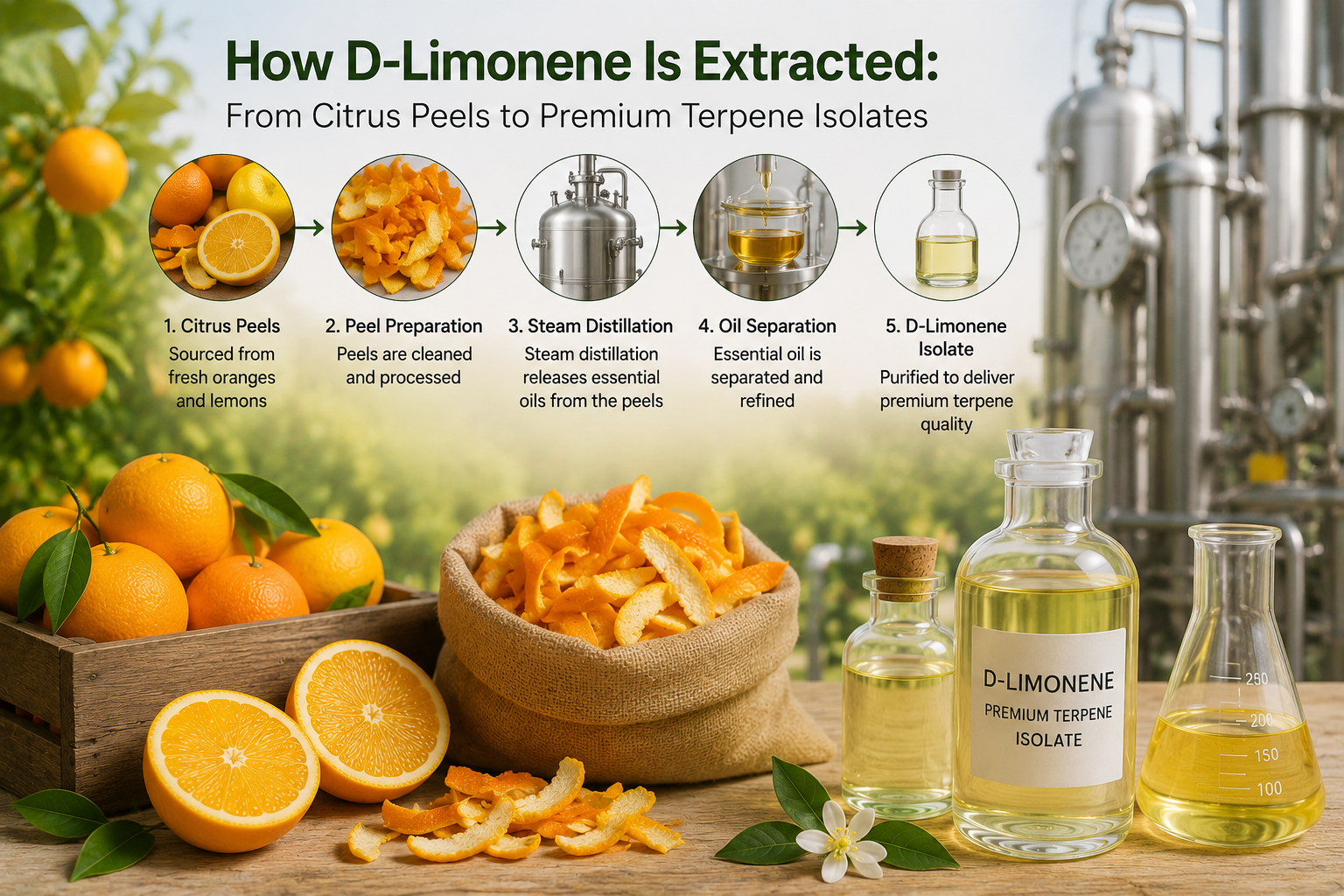
Table of Contents:
1. Introduction to D-Limonene Extraction
2. Citrus Peels as the Primary Raw Material
3. Extraction Methods and Technologies
4. Purification and Isolation Processes
5. Quality Control and Purity Assessment
6. Challenges in Commercial Production
7. Sustainable Manufacturing Practices
The growing demand for natural solvents, bio-based chemicals, and sustainable extraction technologies has increased the importance of D-Limonene extraction across multiple industries. D-Limonene is a naturally occurring terpene primarily found in citrus fruit peels, especially oranges, lemons, limes, and grapefruits. Known for its pleasant citrus aroma, excellent solvent properties, and environmentally friendly profile, D-Limonene has become a valuable ingredient in the food industry, pharmaceutical sector, cosmetics manufacturing, and industrial cleaning products.
As consumers and industries shift toward eco-friendly alternatives, the extraction and utilization of high-purity D-Limonene have gained significant attention.
1) Introduction to D-Limonene Extraction

D-Limonene is a naturally occurring monocyclic monoterpene with the chemical formula C₁₀H₁₆. It is the major component of citrus essential oils, accounting for approximately 90–95% of orange peel oil.
This versatile compound is widely recognized for its:
- Strong citrus fragrance
- Excellent solvent capabilities
- Biodegradable nature
- Low toxicity profile
- Renewable plant-based origin
Due to these characteristics, D-Limonene serves as a sustainable replacement for many petroleum-derived chemicals and solvents.
Natural Sources of D-Limonene
The primary sources of D-Limonene extraction include:
Orange Peels
Orange peels are the most abundant source of D-Limonene, often containing up to 95% limonene within their essential oil composition.
Lemon Peels
Lemons provide a significant amount of natural limonene, making them a valuable raw material for extraction processes.
Lime Peels
Lime peel oils contain substantial concentrations of D-Limonene, contributing to the commercial production of citrus extracts.
Grapefruit Peels
Grapefruit processing industries generate peel waste that can be effectively utilized for limonene recovery.
The use of citrus processing by-products supports the principles of circular economy, reducing waste while generating valuable chemical products.
Importance of D-Limonene Extraction
The extraction of D-Limonene is essential because it transforms agricultural waste into a high-value industrial product. Modern industries seek sustainable alternatives to synthetic chemicals, and D-Limonene extraction technology offers an environmentally responsible solution.
Key benefits include:
- Waste valorization
- Reduced environmental impact
- Renewable raw material utilization
- Lower dependence on petroleum-based solvents
- Enhanced sustainability in chemical manufacturing
Major Methods of D-Limonene Extraction
Several techniques are used for D-Limonene extraction depending on the desired purity, production scale, and economic considerations.
1. Steam Distillation
Steam distillation is one of the most commonly used methods for extracting D-Limonene from citrus peels.
Process Overview
- Citrus peels are placed in a distillation chamber.
- Steam passes through the plant material.
- Essential oils vaporize with steam.
- Vapors condense into liquid form.
- Oil and water are separated.
Advantages
- Widely established technology
- Relatively simple operation
- Suitable for large-scale production
Limitations
- High energy consumption
- Possible thermal degradation of sensitive compounds
2. Cold Press Extraction
Cold pressing is particularly popular in the citrus juice industry.
Process Overview
- Fresh citrus peels are mechanically pressed.
- Essential oils are released from oil glands.
- Oil-water mixtures are separated through centrifugation.
Advantages
- No heat exposure
- Preserves natural aroma compounds
- Produces high-quality citrus oils
Limitations
- Lower extraction efficiency compared to some advanced methods
3. Solvent Extraction
In this method, organic solvents are used to dissolve and recover D-Limonene.
Common Solvents
- Hexane
- Ethanol
- Food-grade extraction solvents
Advantages
- High extraction yield
- Suitable for industrial production
Limitations
- Additional solvent removal steps
- Environmental and safety concerns
4. Supercritical CO₂ Extraction
Supercritical CO₂ extraction is among the most advanced and environmentally friendly methods available today.
Process Overview
Carbon dioxide is compressed above its critical temperature and pressure, creating a supercritical fluid capable of extracting D-Limonene efficiently.
Advantages
- Solvent-free extraction
- High purity products
- Minimal thermal degradation
- Environmentally friendly process
Limitations
- High equipment investment
- Technical complexity
5. Microwave-Assisted Extraction
Modern researchers increasingly use microwave-assisted extraction (MAE) to improve efficiency.
Benefits
- Faster extraction times
- Reduced energy consumption
- Higher extraction yields
- Improved process sustainability
Factors Affecting D-Limonene Extraction Efficiency
Several variables influence the success of D-Limonene extraction:
Raw Material Quality
Fresh citrus peels typically provide higher limonene yields than aged or degraded materials.
Moisture Content
Optimal moisture levels improve extraction efficiency and product quality.
Temperature
Excessive temperatures can degrade volatile compounds and reduce product purity.
Extraction Time
Insufficient extraction may lower yields, while excessive extraction can increase operational costs.
Particle Size
Smaller peel particles generally increase extraction surface area and improve recovery rates.
Applications of D-Limonene
The growing popularity of D-Limonene extraction is driven by its extensive industrial applications.
Food and Beverage Industry
D-Limonene is widely used as:
- Flavoring agent
- Fragrance component
- Natural food additive
Pharmaceutical Industry
In pharmaceutical formulations, D-Limonene serves as:
- Drug delivery enhancer
- Therapeutic ingredient
- Anti-inflammatory compound
Cosmetic Industry
Many cosmetic products incorporate D-Limonene due to its:
- Pleasant citrus scent
- Natural origin
- Solvent properties
Applications include:
- Perfumes
- Lotions
- Creams
- Essential oil blends
Cleaning Products
One of the largest markets for D-Limonene solvents is industrial and household cleaning.
Benefits include:
- Effective grease removal
- Natural degreasing capability
- Reduced environmental toxicity
Agricultural Industry
Agricultural formulations utilize D-Limonene as:
- Bio-based pesticide ingredient
- Insect repellent
- Crop protection additive
Environmental Benefits of D-Limonene Extraction
Sustainability remains a major driver behind the expansion of the D-Limonene market.
Renewable Resource
Unlike petroleum-based chemicals, D-Limonene is derived from renewable citrus biomass.
Biodegradability
D-Limonene breaks down naturally in the environment, reducing long-term ecological impact.
Waste Reduction
Extraction processes utilize citrus processing waste, supporting waste minimization strategies.
Green Chemistry
The adoption of green extraction technologies aligns with global sustainability objectives and environmental regulations.
Market Trends and Future Outlook
The global demand for D-Limonene extraction technologies continues to grow due to increasing awareness of environmental sustainability and natural product applications.
Key growth drivers include:
- Rising demand for bio-based solvents
- Expansion of the essential oils market
- Growth in natural cosmetics
- Increased use in pharmaceutical products
- Adoption of green industrial cleaning solutions
Researchers are also exploring innovative extraction methods that improve yield, reduce energy consumption, and lower production costs.
Challenges in D-Limonene Extraction
Despite its benefits, the industry faces several challenges:
- Seasonal variability of citrus production
- Raw material availability
- Extraction equipment costs
- Product quality consistency
- Market price fluctuations
Addressing these challenges will require continued innovation in D-Limonene extraction processes and supply chain management.
2) Citrus Peels as the Primary Raw Material

The increasing demand for natural solvents, bio-based chemicals, and sustainable extraction processes has placed significant attention on citrus peels as the primary raw material for D-Limonene extraction. Every year, millions of tons of citrus fruits are processed worldwide for juice, concentrates, and other food products, generating substantial quantities of peel waste. Rather than being discarded, these peels serve as a rich and valuable source of D-Limonene, a naturally occurring terpene widely used across multiple industries.
As industries seek environmentally friendly alternatives to petroleum-based chemicals, the utilization of citrus peel waste has emerged as an efficient and sustainable solution. The extraction of D-Limonene from citrus peels not only creates economic value but also supports waste reduction and circular economy initiatives.
What Are Citrus Peels?
Citrus peels are the outer protective layers of citrus fruits such as:
- Oranges
- Lemons
- Limes
- Grapefruits
- Mandarins
- Tangerines
These peels contain specialized oil glands that store large amounts of citrus essential oils, with D-Limonene being the dominant component. In many citrus varieties, D-Limonene concentration can account for over 90% of the total essential oil composition.
Because of their high oil content, citrus peels are considered the most economical and sustainable raw material for commercial limonene extraction.
Why Citrus Peels Are Ideal for D-Limonene Extraction
High D-Limonene Content
One of the primary reasons citrus peels are preferred is their exceptionally high concentration of D-Limonene. Orange peels, in particular, are among the richest natural sources.
The essential oil present in citrus peels contains:
- D-Limonene
- Terpenes
- Aldehydes
- Esters
- Alcohols
- Other aromatic compounds
Among these constituents, D-Limonene is the most commercially valuable component.
Abundant Availability
The global citrus industry produces millions of tons of peel waste annually. Juice manufacturing facilities generate large volumes of leftover peels that can be converted into valuable products through D-Limonene extraction technologies.
This abundant availability makes citrus peel biomass an economically viable raw material for industrial-scale production.
Renewable and Sustainable Resource
Unlike fossil-derived feedstocks, citrus peels are a renewable agricultural by-product. Their use in bio-based chemical production supports sustainability goals while reducing dependence on non-renewable resources.
Low-Cost Feedstock
Since citrus peels are often considered waste products, they provide a relatively inexpensive source of raw material. This helps lower the production costs associated with natural limonene extraction.
Types of Citrus Peels Used for Extraction
Orange Peels
Orange peels are the most commonly used raw material in commercial D-Limonene production. They contain exceptionally high levels of limonene and are readily available from juice processing facilities worldwide.
Benefits of orange peels include:
- High oil yield
- High limonene concentration
- Consistent availability
- Cost-effective processing
Lemon Peels
Lemon peels are another important source of citrus essential oils. While they contain slightly lower limonene concentrations than oranges, they remain valuable for extraction operations.
Lime Peels
The essential oils derived from lime peels contain substantial amounts of D-Limonene and contribute to the global supply of citrus-based extracts.
Grapefruit Peels
Grapefruit peels are frequently utilized in regions with significant grapefruit processing industries. They provide both limonene and other commercially valuable aromatic compounds.
Mandarin and Tangerine Peels
These citrus varieties also serve as suitable raw materials for essential oil extraction, especially in countries with large mandarin production sectors.
Structure of Citrus Peels and Oil Glands
Understanding the structure of citrus peels is essential for efficient extraction.
The peel consists of two main layers:
Flavedo
The outer colored layer of the peel, known as the flavedo, contains thousands of microscopic oil glands. These glands are rich in D-Limonene-rich essential oil.
Albedo
The inner white layer, called the albedo, contains lower oil concentrations but contributes to the overall biomass utilized during processing.
Most extraction technologies focus on recovering oils from the flavedo due to its high limonene content.
Citrus Peel Waste: From By-Product to Valuable Resource
Historically, citrus peel waste was considered an environmental burden. Disposal of large quantities of peels often created waste management challenges for juice manufacturers.
Today, advances in citrus waste valorization have transformed these by-products into valuable industrial resources.
Recovered products include:
- D-Limonene
- Citrus essential oils
- Pectin
- Animal feed ingredients
- Biofuels
- Natural flavorings
This integrated approach maximizes resource efficiency while minimizing environmental impact.
Extraction of D-Limonene from Citrus Peels
Several technologies are used to recover D-Limonene from citrus peels.
Steam Distillation
Steam distillation remains one of the most widely used techniques for extracting citrus oils. Steam ruptures the oil glands, releasing D-Limonene-rich vapors that are subsequently condensed and collected.
Cold Pressing
Cold pressing mechanically ruptures oil glands without applying heat. This method preserves the natural aroma and quality of the extracted oil.
Solvent Extraction
In industrial applications, solvent extraction can improve recovery rates and maximize limonene yield from citrus biomass.
Supercritical CO₂ Extraction
Modern facilities increasingly employ supercritical CO₂ extraction to obtain high-purity D-Limonene while minimizing environmental impact.
Environmental Benefits of Using Citrus Peels
Waste Reduction
Utilizing citrus peel waste prevents large volumes of organic material from entering landfills and disposal sites.
Circular Economy Support
The conversion of peel waste into valuable products exemplifies the principles of a circular economy, where waste streams become productive resources.
Reduced Carbon Footprint
Replacing petroleum-based chemicals with bio-based D-Limonene helps lower greenhouse gas emissions and supports sustainable manufacturing.
Resource Efficiency
The extraction of valuable compounds from existing agricultural waste improves overall resource utilization across the citrus industry.
Industrial Importance of Citrus Peels
The role of citrus peels as a raw material extends beyond D-Limonene extraction.
Industries benefiting from citrus peel processing include:
Food Industry
- Natural flavor production
- Beverage additives
- Food preservatives
Cosmetics Industry
- Fragrances
- Skincare products
- Hair care formulations
Pharmaceutical Industry
- Drug formulations
- Therapeutic ingredients
- Delivery systems
Cleaning Products Industry
- Natural degreasers
- Eco-friendly solvents
- Household cleaners
Chemical Industry
- Green solvents
- Bio-based intermediates
- Sustainable manufacturing materials
3) Extraction Methods and Technologies

The demand for D-Limonene extraction, natural solvents, and bio-based chemicals continues to grow as industries move toward cleaner, safer, and more sustainable production systems. D-Limonene is a valuable terpene found mainly in citrus peel essential oils, especially from oranges, lemons, limes, and grapefruits. Because citrus peels are rich in oil glands, they serve as an ideal raw material for extracting high-purity D-Limonene.
Modern extraction methods and technologies are designed to improve yield, reduce energy consumption, protect product quality, and support green chemistry principles. From traditional techniques such as steam distillation and cold pressing to advanced methods like supercritical CO₂ extraction and microwave-assisted extraction, each technology plays an important role in the commercial production of D-Limonene.
Importance of Extraction Methods in D-Limonene Production
Choosing the right D-Limonene extraction method directly affects product quality, extraction yield, purity level, production cost, and environmental impact. An efficient extraction process helps manufacturers recover more natural limonene from citrus peels while minimizing waste and preserving the compound’s valuable properties.
The main goals of modern limonene extraction technologies include:
- Increasing D-Limonene yield
- Improving essential oil purity
- Reducing energy consumption
- Lowering solvent use
- Preserving natural aroma compounds
- Supporting sustainable extraction processes
1. Steam Distillation
Steam distillation is one of the oldest and most widely used methods for D-Limonene extraction. It is commonly applied in the production of citrus essential oils and other plant-based aromatic compounds.
How Steam Distillation Works
In this process, steam passes through prepared citrus peel material. The heat causes the oil glands in the peel to rupture, releasing volatile compounds such as D-Limonene. The vapor mixture is then cooled and condensed. After condensation, the essential oil separates from the water and can be collected.
Advantages of Steam Distillation
Steam distillation is popular because it is simple, reliable, and suitable for large-scale industrial operations. It does not require harsh chemical solvents, making it more environmentally friendly than some conventional solvent-based methods.
Limitations of Steam Distillation
The main disadvantage is high energy consumption. Excessive heat may also affect sensitive aroma compounds, which can influence the final quality of citrus essential oil.
2. Cold Press Extraction
Cold press extraction, also known as mechanical expression, is widely used in the citrus industry. This method is especially suitable for extracting oils from fresh orange, lemon, and lime peels.
How Cold Press Extraction Works
During cold pressing, citrus peels are mechanically pressed or scraped to rupture the oil glands. The released oil is mixed with juice and water, then separated through filtration or centrifugation.
Advantages of Cold Press Extraction
The biggest advantage of cold press extraction is that it does not require heat. This helps preserve the natural fragrance, flavor, and chemical composition of D-Limonene-rich essential oil.
Key benefits include:
- Natural oil quality
- Fresh citrus aroma
- Low thermal degradation
- Chemical-free process
Limitations of Cold Press Extraction
Although the quality is high, the extraction yield may be lower compared to some advanced technologies. The method also requires fresh raw materials for best results.
3. Solvent Extraction
Solvent extraction is another method used to recover D-Limonene from citrus peel biomass. It involves using a solvent to dissolve and separate oil compounds from the raw material.
Common Solvents Used
Solvents may include ethanol, hexane, or other food-grade and industrial extraction solvents. The selected solvent depends on the required product quality and final application.
Advantages of Solvent Extraction
Solvent extraction can provide high recovery rates and is useful when maximum oil extraction is required. It is often used in industrial settings where yield is a major priority.
Limitations of Solvent Extraction
This method requires careful solvent removal after extraction. Residual solvents may affect product safety, purity, and regulatory acceptance. Environmental concerns also make this technique less attractive than green extraction technologies.
4. Supercritical CO₂ Extraction
Supercritical CO₂ extraction is one of the most advanced technologies for producing high-purity D-Limonene. It uses carbon dioxide under high pressure and controlled temperature to extract valuable compounds from citrus peels.
How Supercritical CO₂ Extraction Works
Carbon dioxide is converted into a supercritical fluid, which behaves like both a gas and a liquid. In this state, CO₂ can penetrate citrus peel material and dissolve D-Limonene efficiently. After extraction, pressure is reduced and the CO₂ separates from the product, leaving behind a clean extract.
Advantages of Supercritical CO₂ Extraction
This method is highly valued because it is clean, efficient, and environmentally friendly.
Major advantages include:
- No toxic solvent residue
- High product purity
- Low thermal damage
- Selective extraction
- Environmentally responsible process
- Suitable for premium natural ingredients
Limitations of Supercritical CO₂ Extraction
The main limitation is the high cost of equipment and operation. It also requires technical expertise and precise process control.
5. Microwave-Assisted Extraction
Microwave-assisted extraction is an innovative technology designed to improve extraction speed and efficiency. It uses microwave energy to heat citrus peel material internally, helping release D-Limonene more rapidly.
Advantages of Microwave-Assisted Extraction
This method offers several benefits for modern D-Limonene production:
- Shorter extraction time
- Reduced energy consumption
- Improved yield
- Lower solvent requirement
- Better process efficiency
Limitations of Microwave-Assisted Extraction
Industrial adoption may require specialized equipment and process optimization. Improper temperature control can affect product quality.
6. Ultrasound-Assisted Extraction
Ultrasound-assisted extraction uses sound waves to disrupt plant cell structures and improve the release of essential oils. This technology is gaining attention as a sustainable option for limonene recovery.
How Ultrasound-Assisted Extraction Works
Ultrasound waves create cavitation bubbles in the extraction medium. These bubbles collapse and generate mechanical force, breaking citrus peel cell walls and improving oil release.
Benefits of Ultrasound-Assisted Extraction
- Faster extraction
- Lower temperature requirements
- Improved mass transfer
- Reduced solvent use
- Enhanced D-Limonene yield
This method supports the development of cleaner and more efficient citrus peel extraction technologies.
7. Hydro distillation
Hydro distillation is similar to steam distillation, but the plant material is directly immersed in water and heated. It is commonly used for laboratory-scale extraction of essential oils.
Advantages of Hydro distillation
This method is simple and inexpensive. It is suitable for small-scale research, quality testing, and essential oil analysis.
Limitations of Hydro distillation
For large-scale D-Limonene extraction, hydro distillation may be less efficient due to longer processing times and potential thermal degradation.
Comparison of D-Limonene Extraction Technologies
Each extraction technology has unique benefits depending on the production goal.
Steam distillation is suitable for large-scale and traditional production.
Cold press extraction is ideal for high-quality citrus oils with fresh aroma.
Solvent extraction provides high yield but may involve environmental concerns.
Supercritical CO₂ extraction delivers high purity and clean extracts.
Microwave-assisted extraction improves speed and energy efficiency.
Ultrasound-assisted extraction supports sustainable and low-temperature extraction.
The best method depends on raw material quality, desired purity, production scale, cost, and environmental requirements.
Factors Affecting Extraction Efficiency
Several factors influence the performance of D-Limonene extraction methods.
Raw Material Quality
Fresh, high-quality citrus peels generally provide better oil yield and higher D-Limonene content.
Particle Size
Smaller peel particles increase surface area, improving oil release and extraction efficiency.
Moisture Content
Moisture level affects heat transfer, solvent penetration, and oil recovery.
Temperature
Controlled temperature is essential to prevent degradation of volatile compounds.
Extraction Time
Longer extraction may improve yield, but excessive processing can increase cost and reduce quality.
Pressure
For supercritical CO₂ extraction, pressure plays a major role in determining extraction selectivity and efficiency.
Role of Green Extraction Technologies
The future of D-Limonene extraction is strongly connected to green extraction technologies. These methods aim to reduce environmental impact while improving product quality and process efficiency.
Important green technologies include:
- Supercritical CO₂ extraction
- Microwave-assisted extraction
- Ultrasound-assisted extraction
- Solvent-free extraction systems
- Energy-efficient distillation methods
These technologies support sustainable manufacturing, circular economy, and renewable chemical production.
Industrial Applications of Extracted D-Limonene
Once extracted, D-Limonene is used in many industries.
Cleaning Products
D-Limonene solvent is used in degreasers, surface cleaners, and industrial cleaning products.
Food and Beverage Industry
It is used as a natural flavoring agent in foods, beverages, and confectionery products.
Cosmetics and Personal Care
Natural D-Limonene is valued for its citrus fragrance in perfumes, creams, lotions, and skincare products.
Pharmaceutical Industry
D-Limonene is studied and used in formulations for its potential therapeutic and formulation-enhancing properties.
Chemical Industry
It serves as a renewable alternative to petroleum-based solvents in several chemical processes.
4) Purification and Isolation Processes

The growing demand for high-purity D-Limonene, natural solvents, bio-based chemicals, and citrus essential oils has increased the importance of efficient purification and isolation processes. While extraction methods such as steam distillation, cold pressing, and supercritical CO₂ extraction are responsible for recovering D-Limonene from citrus peels, the extracted material often contains impurities, moisture, waxes, pigments, and other volatile compounds.
To achieve commercial-grade quality, the crude extract must undergo advanced D-Limonene purification and D-Limonene isolation processes. These steps are essential for improving purity, enhancing performance, meeting regulatory standards, and ensuring suitability for applications in the food industry, pharmaceutical industry, cosmetics industry, and industrial cleaning sector.
As industries increasingly demand high-quality D-Limonene, purification technologies have become a critical component of modern D-Limonene production systems.
What Is Purification and Isolation of D-Limonene?
Purification refers to the removal of unwanted substances, contaminants, and non-target compounds from crude citrus oil extracts.
Isolation refers to the separation and concentration of D-Limonene from other naturally occurring compounds present in citrus essential oils.
Together, these processes ensure that the final product contains the desired concentration of pure D-Limonene while maintaining its chemical integrity and performance characteristics.
Why Purification and Isolation Are Important
The crude oil obtained after extraction contains multiple components besides D-Limonene.
These may include:
- Terpenes
- Aldehydes
- Alcohols
- Esters
- Pigments
- Wax compounds
- Moisture
- Plant residues
Without proper D-Limonene purification, product quality may be inconsistent, limiting its use in high-value applications.
Benefits of Purification and Isolation
- Improved D-Limonene purity
- Enhanced product stability
- Better fragrance quality
- Increased solvent performance
- Compliance with industry standards
- Higher commercial value
- Improved storage life
These advantages make purification a vital step in the overall D-Limonene manufacturing process.
Characteristics of Crude D-Limonene Extract
Following extraction, crude citrus oil generally contains a mixture of compounds with varying molecular structures and boiling points.
Typical components include:
D-Limonene
The primary target compound, often representing a large percentage of citrus oil.
Other Terpenes
Natural citrus oils may contain compounds such as:
- α-Pinene
- β-Pinene
- Myrcene
- Terpinene
Oxygenated Compounds
These contribute to aroma and flavor but may affect solvent applications.
Water and Moisture
Residual water is commonly present after extraction and must be removed during purification.
Solid Particles
Small plant particles and organic residues may remain suspended within the crude extract.
The purpose of D-Limonene isolation technologies is to separate and concentrate the desired compound while eliminating unwanted materials.
Primary Purification Methods for D-Limonene
Several technologies are used to purify and isolate D-Limonene on both laboratory and industrial scales.
1. Fractional Distillation
Fractional distillation is one of the most widely used methods for D-Limonene purification.
How Fractional Distillation Works
This process separates compounds based on differences in their boiling points.
When crude citrus oil is heated:
- Lower-boiling compounds evaporate first.
- Higher-boiling compounds remain behind.
- Vapors are condensed and collected separately.
Because D-Limonene has a specific boiling point range, it can be effectively isolated from other citrus oil components.
Advantages of Fractional Distillation
- High purification efficiency
- Suitable for large-scale production
- Proven industrial technology
- Consistent product quality
Limitations
- Energy-intensive process
- Potential thermal degradation if temperatures are not carefully controlled
2. Vacuum Distillation
Vacuum distillation is an advanced form of distillation used to improve product quality.
How Vacuum Distillation Works
By reducing pressure inside the distillation system, the boiling point of D-Limonene decreases.
This allows purification at lower temperatures, reducing thermal damage.
Advantages
- Better preservation of product quality
- Lower energy requirements
- Reduced oxidation
- Improved aroma retention
Applications
Vacuum distillation is commonly used when producing high-purity D-Limonene for pharmaceutical and cosmetic applications.
3. Molecular Distillation
Molecular distillation is a specialized purification technology used for premium-grade products.
Process Overview
This technique operates under extremely low pressure and allows separation based on molecular behavior rather than conventional boiling points.
Benefits
- Ultra-high purity levels
- Minimal thermal degradation
- Excellent product stability
- Superior quality control
Industrial Importance
Molecular distillation is increasingly utilized in advanced essential oil purification systems and specialty chemical production.
4. Solvent-Based Purification
In some applications, selective solvents are used to remove impurities and concentrate D-Limonene.
How It Works
Specific solvents dissolve unwanted compounds while preserving the target molecule.
The solvent is then removed, leaving a purified product.
Advantages
- Effective impurity removal
- Enhanced concentration of target compounds
- Flexible processing options
Limitations
- Additional solvent recovery steps
- Regulatory considerations
- Increased operational complexity
5. Adsorption Purification
Adsorption technology is frequently used as a polishing step after primary purification.
Common Adsorbents
- Activated carbon
- Silica gel
- Alumina
- Specialized purification resins
Purpose
Adsorbents remove:
- Color impurities
- Odor compounds
- Trace contaminants
- Oxidation by-products
Benefits
- Improved product appearance
- Enhanced fragrance quality
- Increased product stability
Moisture Removal Processes
Water removal is a critical stage in D-Limonene purification.
Excess moisture can:
- Reduce product stability
- Promote oxidation
- Affect storage performance
- Lower overall purity
Drying Techniques
Anhydrous Sodium Sulfate
Widely used in laboratory-scale purification.
Vacuum Drying
Effective for industrial production.
Molecular Sieves
Used to achieve extremely low moisture levels in high-purity applications.
Proper drying improves shelf life and product consistency.
Filtration and Clarification
Before final purification, crude extracts often undergo filtration and clarification processes.
Purpose of Filtration
Filtration removes:
- Plant particles
- Wax residues
- Suspended solids
- Extraction debris
Filtration Technologies
- Pressure filtration
- Membrane filtration
- Microfiltration
- Cartridge filtration
These technologies help protect downstream purification equipment and improve final product quality.
Advanced Membrane Separation Technologies
Modern D-Limonene isolation technologies increasingly incorporate membrane systems.
Types of Membrane Processes
- Nanofiltration
- Ultrafiltration
- Reverse osmosis
- Membrane-assisted separation
Benefits
- Lower energy consumption
- High separation efficiency
- Reduced environmental impact
- Improved process sustainability
Membrane systems support the development of green purification technologies.
Quality Control During Purification
Maintaining consistent quality requires continuous monitoring throughout the purification process.
Key Quality Parameters
Purity Percentage
Measures concentration of D-Limonene in the final product.
Moisture Content
Determines residual water levels.
Density
Used as an indicator of product consistency.
Optical Rotation
Confirms the presence of the correct D-Limonene isomer.
Color and Appearance
Important for cosmetic and food applications.
Aroma Profile
Critical for fragrance and flavor industries.
Advanced analytical techniques help ensure compliance with quality standards.
Analytical Techniques Used in D-Limonene Isolation
Gas Chromatography (GC)
One of the most important tools for analyzing D-Limonene purity.
Gas Chromatography-Mass Spectrometry (GC-MS)
Provides detailed identification of impurities and chemical composition.
High-Performance Liquid Chromatography (HPLC)
Used for specialized quality assessments.
Spectroscopic Analysis
Helps verify product identity and purity.
These technologies play an essential role in modern D-Limonene quality control systems.
Industrial Applications Requiring High-Purity D-Limonene
Many industries require purified D-Limonene with strict quality specifications.
Pharmaceutical Industry
Requires highly purified material for formulation and therapeutic applications.
Food Industry
Uses food-grade D-Limonene for flavoring and processing applications.
Cosmetics Industry
Demands consistent fragrance quality and product stability.
Cleaning Products Industry
Relies on purified D-Limonene solvent for effective degreasing and cleaning performance.
Chemical Manufacturing
Uses high-purity D-Limonene as a renewable feedstock and specialty solvent.
Sustainability in Purification Processes
Modern industries are increasingly focused on sustainable purification technologies.
Key trends include:
- Energy-efficient distillation systems
- Solvent recovery technologies
- Waste minimization strategies
- Membrane-based separation systems
- Green chemistry approaches
These innovations support environmentally responsible D-Limonene production while maintaining high product quality.
5) Quality Control and Purity Assessment

As the global demand for D-Limonene, natural solvents, bio-based chemicals, and citrus essential oils continues to rise, maintaining consistent product quality has become a top priority for manufacturers. Whether D-Limonene is used in the food industry, pharmaceutical industry, cosmetics industry, or industrial cleaning sector, strict quality control and purity assessment procedures are essential to ensure safety, effectiveness, and regulatory compliance.
The commercial value of high-purity D-Limonene depends heavily on its chemical composition, purity level, physical properties, and overall consistency. Even minor variations in quality can affect product performance, shelf life, aroma profile, and suitability for specific applications. Therefore, modern D-Limonene quality control systems employ advanced testing methods and analytical technologies to monitor every stage of production.
What Is Quality Control in D-Limonene Production?
Quality control (QC) refers to the systematic process of monitoring, testing, and verifying the quality of D-Limonene throughout extraction, purification, storage, and distribution.
The primary objectives of quality control in D-Limonene production include:
- Ensuring product purity
- Maintaining batch consistency
- Detecting impurities
- Verifying chemical composition
- Meeting industry specifications
- Ensuring regulatory compliance
- Protecting consumer safety
Effective quality assurance programs help manufacturers deliver reliable and high-performance products to global markets.
Understanding Purity Assessment
Purity assessment is the process of determining the concentration of D-Limonene in a sample and identifying the presence of contaminants or unwanted compounds.
Purity evaluation helps answer important questions such as:
- How much D-Limonene is present?
- Are impurities within acceptable limits?
- Does the product meet customer specifications?
- Is the material suitable for food, pharmaceutical, or cosmetic applications?
Accurate purity assessment is critical for maintaining product integrity and ensuring customer satisfaction.
Why Quality Control Is Important
Product Performance
The effectiveness of D-Limonene solvent, flavoring agent, fragrance ingredient, or chemical intermediate depends on its purity and consistency.
Regulatory Compliance
Many industries require compliance with national and international quality standards. Proper quality control testing ensures that products meet these requirements.
Consumer Safety
Impurities and contaminants may compromise product safety. Continuous monitoring reduces potential risks.
Brand Reputation
Manufacturers that consistently deliver high-purity D-Limonene build trust and strengthen their market position.
Process Optimization
Quality monitoring helps identify production issues and supports continuous process improvement.
Key Quality Parameters in D-Limonene Assessment
Several critical parameters are evaluated during D-Limonene quality control.
1. Purity Percentage
The most important quality indicator is the percentage of D-Limonene present in the final product.
Importance
Higher purity levels generally indicate:
- Better performance
- Greater stability
- Enhanced commercial value
- Improved application suitability
Industrial-grade and pharmaceutical-grade products often require strict purity specifications.
2. Chemical Composition
Natural citrus extracts contain numerous compounds besides D-Limonene.
Quality assessments evaluate the concentration of:
- D-Limonene
- α-Pinene
- β-Pinene
- Myrcene
- Terpinene
- Oxygenated terpenes
Understanding the complete chemical profile helps ensure product consistency.
3. Moisture Content
Excess moisture can negatively affect product stability and storage life.
Why Moisture Testing Matters
High water content may:
- Promote oxidation
- Encourage degradation
- Reduce shelf life
- Impact product performance
Monitoring moisture content is a critical aspect of purity assessment.
4. Density Measurement
Density testing provides valuable information about product consistency and quality.
Unexpected density values may indicate:
- Contamination
- Adulteration
- Improper purification
- Batch inconsistency
Density analysis is routinely performed during quality control inspections.
5. Optical Rotation
Because D-Limonene is an optically active compound, measuring optical rotation helps verify authenticity and chemical identity.
Benefits
Optical rotation testing:
- Confirms the correct isomer
- Detects adulteration
- Supports product authentication
- Ensures regulatory compliance
This parameter is especially important in pharmaceutical and food applications.
6. Refractive Index
The refractive index is another important physical property used to assess product quality.
It helps verify:
- Product identity
- Purity level
- Batch consistency
Changes in refractive index may indicate contamination or formulation issues.
7. Color and Appearance
Visual inspection remains an essential component of quality control procedures.
Quality assessments examine:
- Color uniformity
- Clarity
- Transparency
- Presence of particles
- Sedimentation
A clear and consistent appearance often indicates effective purification and handling.
8. Aroma and Sensory Evaluation
Since D-Limonene is widely used in flavor and fragrance applications, sensory testing is often conducted.
Key Sensory Characteristics
High-quality D-Limonene should exhibit:
- Fresh citrus aroma
- Clean fragrance profile
- Absence of off-odors
- Consistent sensory characteristics
Sensory analysis complements laboratory testing methods.
Major Analytical Techniques for Purity Assessment
Modern laboratories utilize advanced analytical technologies to evaluate D-Limonene purity and product quality.
Gas Chromatography (GC)
Gas Chromatography (GC) is one of the most important analytical tools used in D-Limonene quality control.
How GC Works
The sample is vaporized and separated into individual components. Each compound produces a characteristic signal that allows identification and quantification.
Benefits of GC Analysis
- Accurate purity measurement
- Detection of impurities
- Chemical composition analysis
- High sensitivity
- Fast testing
GC is widely regarded as the industry standard for D-Limonene purity assessment.
Gas Chromatography-Mass Spectrometry (GC-MS)
GC-MS combines chromatographic separation with mass spectrometric identification.
Advantages
- Detailed impurity identification
- Trace contaminant detection
- Comprehensive chemical analysis
- High analytical precision
GC-MS is commonly used in advanced quality assurance laboratories.
High-Performance Liquid Chromatography (HPLC)
HPLC is employed for specialized chemical analysis when additional separation capabilities are required.
Applications
- Quality verification
- Trace compound analysis
- Research and development
- Regulatory testing
HPLC provides reliable results for complex sample evaluations.
Fourier Transform Infrared Spectroscopy (FTIR)
FTIR spectroscopy identifies compounds based on their molecular vibrations.
Benefits
- Rapid analysis
- Non-destructive testing
- Product authentication
- Chemical fingerprint verification
FTIR is frequently used alongside chromatographic methods.
Nuclear Magnetic Resonance (NMR) Spectroscopy
NMR spectroscopy offers detailed structural information about chemical compounds.
Importance
NMR helps:
- Confirm molecular structure
- Verify compound identity
- Assess chemical purity
- Detect structural variations
This technique is particularly valuable for pharmaceutical-grade products.
Detection of Impurities and Contaminants
An important objective of quality control testing is identifying unwanted substances.
Common contaminants include:
Residual Solvents
Improper purification may leave traces of extraction solvents.
Oxidation Products
Exposure to air, heat, or light can generate degradation compounds.
Moisture
Residual water can reduce stability and increase spoilage risks.
Foreign Particles
Plant debris, dust, and processing residues may contaminate the product.
Adulterants
Unauthorized additives or synthetic compounds can compromise product authenticity.
Comprehensive testing helps eliminate these quality concerns.
Industry Standards and Regulatory Compliance
Manufacturers must often comply with strict regulations depending on the intended application.
Food Industry Standards
Food-grade D-Limonene must meet purity and safety specifications established by regulatory authorities.
Pharmaceutical Standards
Pharmaceutical applications require rigorous testing and documentation procedures.
Cosmetic Industry Requirements
Cosmetic-grade products must demonstrate stability, purity, and safety.
Industrial Product Specifications
Industrial users require consistent performance characteristics and quality assurance documentation.
Meeting these standards enhances market acceptance and customer confidence.
Quality Assurance Throughout the Production Process
Quality control is not limited to final product testing. Effective quality assurance systems monitor every stage of production.
Raw Material Inspection
Quality begins with the evaluation of incoming citrus peels and other raw materials.
Process Monitoring
Extraction and purification parameters are continuously monitored to maintain consistency.
Intermediate Product Testing
Samples are analyzed throughout production to identify deviations early.
Final Product Verification
Comprehensive testing confirms compliance before product release.
Storage and Distribution Monitoring
Proper handling and storage conditions help preserve D-Limonene quality during transportation and long-term storage.
Challenges in D-Limonene Quality Control
Despite technological advances, manufacturers face several challenges.
Raw Material Variability
Different citrus varieties may contain varying chemical compositions.
Oxidation Risks
Exposure to oxygen can affect product stability.
Environmental Factors
Temperature, humidity, and light influence storage performance.
Regulatory Changes
Evolving quality standards require continuous adaptation and compliance efforts.
Addressing these challenges requires robust testing and process control systems.
6) Challenges in Commercial Production

The global demand for D-Limonene, natural solvents, bio-based chemicals, citrus essential oils, and renewable industrial ingredients has increased significantly in recent years. As industries seek environmentally friendly alternatives to petroleum-derived products, commercial D-Limonene production has emerged as a rapidly growing sector. Extracted primarily from citrus peels, D-Limonene is widely used in the food industry, pharmaceutical industry, cosmetics industry, agricultural sector, and industrial cleaning applications.
Despite its growing market potential, manufacturers face numerous obstacles throughout the D-Limonene production process. From raw material sourcing and extraction efficiency to purification, quality control, and regulatory compliance, various factors can impact profitability and operational success.
Understanding the major challenges in commercial production is essential for improving efficiency, reducing costs, and ensuring a stable supply of high-purity D-Limonene.
Overview of Commercial D-Limonene Production
Commercial production begins with the collection and processing of citrus peel waste, primarily from:
- Oranges
- Lemons
- Limes
- Grapefruits
- Mandarins
These citrus by-products undergo various D-Limonene extraction methods, including:
- Steam distillation
- Cold press extraction
- Solvent extraction
- Supercritical CO₂ extraction
- Microwave-assisted extraction
After extraction, the product undergoes purification and isolation processes, followed by quality control and purity assessment before reaching end users.
Although the production pathway appears straightforward, numerous operational and technical challenges can affect overall efficiency.
1. Raw Material Availability and Supply Chain Challenges
One of the most significant challenges in commercial D-Limonene production is maintaining a consistent supply of high-quality citrus peels.
Seasonal Dependence
The citrus industry is highly seasonal. Production volumes vary throughout the year depending on harvesting schedules and climatic conditions.
This seasonality can create:
- Supply shortages
- Fluctuating raw material costs
- Inconsistent production capacity
- Inventory management difficulties
Geographic Dependence
Many manufacturers rely heavily on citrus-producing regions for their raw materials.
Major citrus-producing countries include:
- Brazil
- United States
- China
- India
- Mexico
- Spain
Natural disasters, droughts, hurricanes, or crop diseases in these regions can disrupt the D-Limonene supply chain.
Competition for Citrus By-Products
Citrus peels are increasingly used for:
- Pectin production
- Animal feed
- Biofuel manufacturing
- Essential oil extraction
This growing competition can reduce the availability of raw materials for D-Limonene extraction.
2. Variability in Raw Material Quality
The quality of citrus peel feedstock directly affects D-Limonene yield and final product purity.
Citrus Variety Differences
Different citrus species contain varying levels of D-Limonene.
For example:
- Orange peels typically contain higher limonene concentrations.
- Lemon and grapefruit peels may contain additional aromatic compounds.
Agricultural Conditions
Factors such as:
- Soil quality
- Irrigation practices
- Climate conditions
- Fertilizer use
- Harvest timing
can influence citrus oil composition and extraction efficiency.
Storage Conditions
Poor storage can lead to:
- Oil degradation
- Oxidation
- Moisture accumulation
- Reduced extraction yields
Maintaining consistent raw material quality remains a major challenge for manufacturers.
3. Extraction Efficiency Challenges
Efficient recovery of D-Limonene is essential for profitability.
Low Extraction Yield
Some extraction methods may fail to recover the maximum amount of available limonene from citrus peels.
Common causes include:
- Inadequate equipment design
- Poor process optimization
- Insufficient extraction time
- Improper temperature control
Energy Consumption
Traditional steam distillation requires significant energy input.
High energy costs can:
- Increase production expenses
- Reduce profitability
- Impact environmental sustainability
Equipment Performance
Extraction equipment must operate efficiently to maximize yield while minimizing product degradation.
Equipment failures can result in:
- Production downtime
- Product losses
- Increased maintenance costs
4. Purification and Isolation Difficulties
After extraction, crude citrus oil contains multiple compounds that must be separated from D-Limonene.
Complex Chemical Composition
Crude extracts often contain:
- Terpenes
- Aldehydes
- Alcohols
- Esters
- Waxes
- Moisture
Separating these compounds while maintaining product quality requires advanced purification technologies.
High Purity Requirements
Industries such as pharmaceuticals and cosmetics demand high-purity D-Limonene.
Achieving strict purity specifications may require:
- Multiple purification stages
- Advanced distillation systems
- Specialized filtration equipment
These processes increase operational complexity and cost.
5. Quality Control and Consistency Issues
Maintaining consistent product quality across production batches is a major commercial challenge.
Batch-to-Batch Variation
Variations in raw materials and processing conditions can affect:
- Purity levels
- Aroma profiles
- Color
- Density
- Chemical composition
Regulatory Testing Requirements
Manufacturers must conduct extensive:
- Purity assessment
- Chemical composition analysis
- Moisture testing
- Contaminant screening
Quality assurance programs require significant investment in laboratory infrastructure and skilled personnel.
Product Authentication
Growing demand for natural D-Limonene increases the need for authentication testing to prevent adulteration and counterfeit products.
6. Oxidation and Storage Stability Problems
D-Limonene is sensitive to environmental factors.
Exposure to Oxygen
Oxygen can trigger oxidation reactions that produce degradation compounds.
Potential consequences include:
- Reduced product quality
- Off-odors
- Color changes
- Lower shelf life
Temperature Sensitivity
Improper storage temperatures can accelerate chemical degradation.
Light Exposure
Ultraviolet light may affect product stability and purity.
Manufacturers must invest in specialized packaging and storage systems to preserve product quality.
7. High Production Costs
Commercial production involves multiple cost-intensive stages.
Major Cost Components
- Raw material procurement
- Extraction equipment
- Energy consumption
- Purification systems
- Quality control laboratories
- Packaging
- Logistics
Capital Investment
Advanced technologies such as supercritical CO₂ extraction require substantial initial investment.
Smaller manufacturers may struggle to justify these capital expenditures.
Operating Expenses
Ongoing expenses include:
- Maintenance
- Labor
- Utilities
- Regulatory compliance
Managing production costs while maintaining quality is a constant challenge.
8. Environmental and Sustainability Challenges
Although D-Limonene is considered a sustainable product, commercial production still faces environmental concerns.
Energy Usage
Many extraction and purification processes consume large amounts of energy.
Waste Management
Production facilities must properly manage:
- Citrus biomass residues
- Wastewater
- Filtration by-products
- Packaging waste
Carbon Footprint Reduction
Customers increasingly demand environmentally responsible products.
Manufacturers are under pressure to adopt:
- Green extraction technologies
- Renewable energy systems
- Waste reduction programs
- Circular economy practices
9. Regulatory Compliance Challenges
Different markets have varying requirements for D-Limonene products.
Food Industry Regulations
Food-grade products must comply with strict safety and purity standards.
Pharmaceutical Regulations
Pharmaceutical applications require detailed documentation and extensive quality verification.
Cosmetic Industry Requirements
Manufacturers must demonstrate product safety, stability, and consistency.
International Trade Compliance
Exporting D-Limonene to global markets requires adherence to numerous regulatory frameworks.
Maintaining compliance across multiple jurisdictions can be complex and costly.
10. Market Volatility and Price Fluctuations
The D-Limonene market is influenced by several external factors.
Citrus Crop Production
Poor harvests can reduce supply and increase prices.
Global Demand Changes
Growing demand from:
- Cleaning product manufacturers
- Cosmetic companies
- Food processors
- Pharmaceutical producers
can affect market dynamics.
Economic Conditions
Economic uncertainty may influence industrial demand and investment decisions.
Price volatility creates planning challenges for both producers and buyers.
11. Technological Limitations
Many manufacturers continue using traditional extraction systems that may not offer optimal performance.
Process Inefficiencies
Older technologies often result in:
- Lower yields
- Higher energy use
- Increased waste generation
Limited Automation
Manual operations can increase labor costs and introduce variability.
Need for Innovation
Continuous investment in:
- Process optimization
- Automation
- Advanced extraction technologies
- Digital monitoring systems
is necessary to remain competitive.
12. Workforce and Technical Expertise
Successful production requires skilled professionals with expertise in:
- Extraction technology
- Chemical processing
- Quality control
- Process engineering
- Regulatory compliance
Finding and retaining qualified personnel can be challenging, particularly in emerging production regions.
Emerging Solutions to Commercial Production Challenges
To overcome these obstacles, many companies are investing in:
Advanced Extraction Technologies
- Supercritical CO₂ extraction
- Microwave-assisted extraction
- Ultrasound-assisted extraction
Digital Manufacturing Systems
- Real-time monitoring
- AI-driven process optimization
- Automated quality control
Sustainable Production Practices
- Renewable energy integration
- Waste valorization
- Circular economy models
Supply Chain Diversification
- Multiple sourcing strategies
- Strategic partnerships
- Improved inventory management
These innovations are helping improve efficiency and competitiveness across the industry.
7) Sustainable Manufacturing Practices

The production of D-Limonene is naturally connected to sustainability because it uses citrus processing by-products as raw material. Instead of allowing citrus peels to become waste, manufacturers extract valuable compounds such as D-Limonene, citrus essential oils, and other bioactive materials.
This approach supports:
- Circular economy
- Green chemistry
- Renewable chemical production
- Bio-based solvent manufacturing
- Agricultural waste utilization
- Low-waste industrial processing
Sustainable production also helps companies meet increasing customer demand for environmentally friendly ingredients and cleaner industrial solutions.
1. Use of Citrus Peel Waste as Renewable Raw Material
One of the most important sustainable manufacturing practices in D-Limonene production is the use of citrus peel waste as a renewable feedstock.
Large volumes of peels are generated by juice processing industries every year. These peels contain oil glands rich in D-Limonene, making them an ideal source for extraction.
Benefits of Using Citrus Peel Waste
Using citrus by-products provides several advantages:
- Reduces landfill waste
- Creates value from agricultural residues
- Lowers raw material costs
- Supports zero-waste processing
- Reduces dependence on fossil resources
- Improves sustainability of the citrus industry
By transforming waste into valuable products, manufacturers contribute directly to circular economy practices.
2. Green Extraction Technologies
Traditional extraction methods can consume significant amounts of energy and water. To improve sustainability, manufacturers are increasingly adopting green extraction technologies.
Supercritical CO₂ Extraction
Supercritical CO₂ extraction is one of the most sustainable methods for producing high-purity D-Limonene. It uses carbon dioxide under controlled pressure and temperature to extract valuable compounds without toxic solvent residues.
Benefits include:
- Clean extraction process
- Reduced solvent waste
- High purity product
- Lower environmental impact
- Improved product quality
Microwave-Assisted Extraction
Microwave-assisted extraction uses microwave energy to release D-Limonene from citrus peels more efficiently.
Advantages include:
- Shorter processing time
- Lower energy consumption
- Improved extraction yield
- Reduced solvent requirement
Ultrasound-Assisted Extraction
Ultrasound-assisted extraction improves oil recovery by breaking down plant cell structures using sound waves.
Key benefits include:
- Enhanced D-Limonene yield
- Lower operating temperature
- Faster extraction
- Reduced chemical use
These technologies help support sustainable extraction processes and improve commercial production efficiency.
3. Energy Efficiency in Manufacturing
Energy consumption is one of the major sustainability challenges in commercial D-Limonene production. Processes such as steam distillation, fractional distillation, and purification can require significant heat and electricity.
Energy-Saving Strategies
Manufacturers can improve energy efficiency through:
- Heat recovery systems
- Insulated processing equipment
- Energy-efficient boilers
- Optimized distillation cycles
- Automated process controls
- Renewable energy integration
Reducing energy use lowers production costs and decreases the carbon footprint of D-Limonene manufacturing.
4. Water Conservation and Wastewater Management
Water is commonly used in cleaning, steam generation, cooling, and extraction operations. Sustainable facilities must manage water carefully to reduce waste and environmental impact.
Water Conservation Methods
Effective practices include:
- Closed-loop water systems
- Condensate recovery
- Water recycling
- Efficient cleaning systems
- Wastewater treatment
- Reduced steam losses
Proper wastewater management prevents contamination and supports compliance with environmental regulations.
5. Waste Valorization and By-Product Recovery
Sustainable production does not focus only on D-Limonene extraction. It also aims to recover additional valuable materials from citrus peels.
Valuable By-Products from Citrus Peels
Citrus peel residues can be used to produce:
- Pectin
- Animal feed ingredients
- Biofuels
- Organic fertilizers
- Flavonoids
- Essential oil fractions
- Natural antioxidants
This integrated approach increases profitability while reducing waste.
6. Solvent Reduction and Solvent Recovery
Some extraction and purification processes use solvents. To improve sustainability, manufacturers must reduce solvent use and recover solvents wherever possible.
Sustainable Solvent Management
Best practices include:
- Using safer solvents
- Recycling extraction solvents
- Installing solvent recovery systems
- Reducing solvent losses
- Replacing hazardous solvents with greener alternatives
- Monitoring residual solvent levels
This supports safer production and improves the environmental profile of D-Limonene manufacturing.
7. Emission Control and Carbon Footprint Reduction
Commercial production may generate emissions from boilers, heating systems, transportation, and processing operations. Sustainable manufacturers focus on reducing greenhouse gas emissions and volatile organic compound losses.
Emission Reduction Practices
Important strategies include:
- Closed processing systems
- Vapor recovery units
- Efficient condensation systems
- Renewable energy use
- Low-emission boilers
- Optimized logistics
- Carbon footprint monitoring
Reducing emissions improves environmental performance and strengthens brand reputation.
8. Sustainable Purification Technologies
Purification is essential for producing high-purity D-Limonene, but it can consume significant energy. Sustainable purification focuses on efficiency and product quality.
Green Purification Methods
These may include:
- Vacuum distillation
- Molecular distillation
- Membrane separation
- Adsorption purification
- Energy-efficient filtration
- Low-temperature purification systems
These methods help reduce thermal degradation, energy use, and processing waste.
9. Quality Control for Sustainable Production
Sustainability also depends on consistent product quality. Poor-quality batches may lead to waste, reprocessing, customer complaints, and financial losses.
Key Quality Control Parameters
Manufacturers should monitor:
- D-Limonene purity
- Moisture content
- Optical rotation
- Density
- Refractive index
- Chemical composition
- Aroma profile
- Residual solvents
Strong quality control systems improve efficiency and reduce unnecessary material losses.
10. Sustainable Packaging and Storage
Packaging plays an important role in protecting D-Limonene from oxidation, light exposure, moisture, and contamination.
Sustainable Packaging Practices
Manufacturers can improve sustainability by using:
- Recyclable containers
- Reusable drums
- Properly sealed packaging
- Light-resistant storage materials
- Bulk shipment systems
- Reduced plastic packaging
Good packaging also extends shelf life and prevents product loss.
11. Worker Safety and Responsible Operations
A truly sustainable production system must protect both the environment and workers. Facilities handling D-Limonene, solvents, steam, and processing equipment must maintain strict safety standards.
Safety Practices
Important measures include:
- Proper ventilation
- Fire safety systems
- Personal protective equipment
- Worker training
- Safe chemical handling
- Emergency response planning
- Equipment maintenance
Responsible operations improve workplace safety and long-term production reliability.
12. Supply Chain Sustainability
The sustainability of D-Limonene production depends heavily on the supply chain.
Sustainable Supply Chain Practices
Companies can improve sustainability by:
- Sourcing peels from responsible citrus processors
- Reducing transport distances
- Building local supplier networks
- Ensuring traceability
- Supporting ethical sourcing
- Minimizing raw material waste
A transparent and efficient supply chain improves reliability and supports environmental goals.
13. Circular Economy in D-Limonene Manufacturing
The concept of circular economy is central to sustainable D-Limonene manufacturing. Instead of treating citrus peels as waste, producers recover useful compounds and return remaining materials to productive use.
Circular Economy Benefits
- Lower waste disposal costs
- Higher resource efficiency
- New revenue streams
- Reduced environmental impact
- Stronger sustainability positioning
- Better alignment with green market demand
This model helps turn citrus processing waste into a complete biorefinery opportunity.
14. Technology Innovation and Digital Monitoring
Modern sustainability depends on data-driven production systems. Digital monitoring helps manufacturers improve efficiency, reduce waste, and optimize extraction performance.
Useful Technologies
- Real-time process sensors
- Automated quality control
- AI-based process optimization
- Energy monitoring systems
- Digital traceability platforms
- Predictive maintenance tools
These innovations help manufacturers improve both productivity and sustainability.


