

Table of Contents:
- Introduction to D-Limonene
- What Is D-Limonene? Chemical Structure and Natural Sources
- Key Properties of D-Limonene
- Main Benefits of D-Limonene
- Industrial and Commercial Applications of D-Limonene
- D-Limonene in Food, Cosmetics and Cleaning Products
- Future Market Trends and Demand for D-Limonene
1) Introduction to D-Limonene

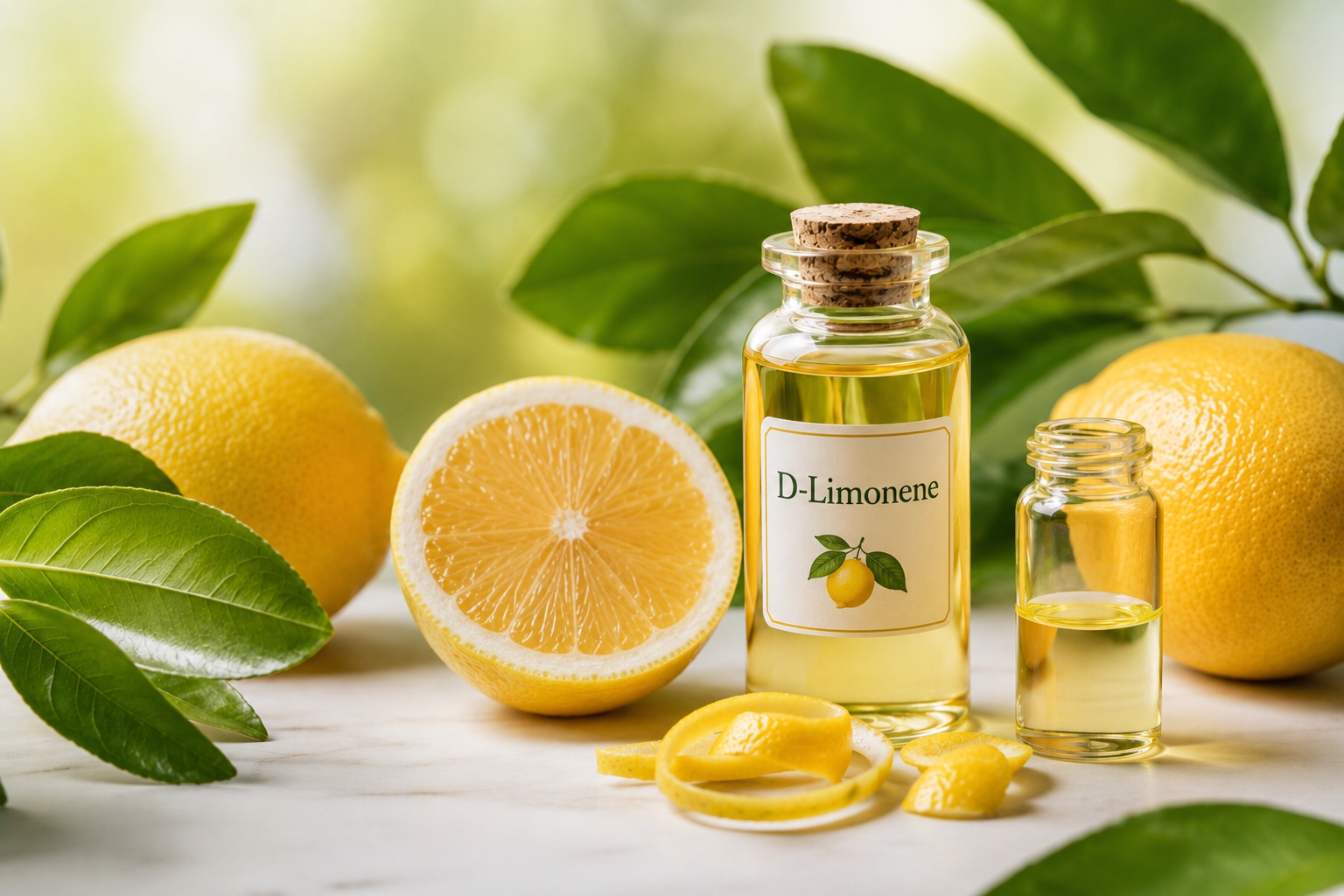
D-Limonene is a naturally occurring compound found primarily in the peels of citrus fruits such as oranges, lemons, limes, and grapefruits. This colorless liquid belongs to a class of compounds known as terpenes, which are responsible for the distinctive aroma and flavor of many plants. Due to its pleasant citrus scent and numerous beneficial properties, D-Limonene has become a valuable ingredient in industries ranging from food and beverages to cosmetics, cleaning products, and pharmaceuticals.
As consumer demand for natural ingredients and environmentally friendly solutions continues to grow, D-Limonene has gained significant attention as a sustainable and versatile compound. Its unique combination of aromatic, therapeutic, and industrial benefits makes it one of the most important naturally derived substances available today.
Chemical Structure and Properties of D-Limonene
D-Limonene is a monocyclic monoterpene with the molecular formula C10H16. It is one of two optical isomers of limonene, with the "D" form being responsible for the characteristic citrus fragrance commonly associated with oranges.
Key properties of D-Limonene include:
- Pleasant citrus aroma
- Clear, colorless liquid appearance
- Low toxicity
- Excellent solvent capabilities
- Biodegradable nature
- Renewable plant-based source
These characteristics make D-Limonene an attractive alternative to synthetic chemicals in various commercial applications.
Natural Sources of D-Limonene
The primary source of D-Limonene is citrus fruit peels, especially:
- Orange peels
- Lemon peels
- Lime peels
- Grapefruit peels
- Mandarin peels
During citrus juice production, large quantities of peel waste are generated. Manufacturers extract D-Limonene from this byproduct through steam distillation or cold-press extraction methods, creating a sustainable and eco-friendly supply chain.
Sweet orange peel oil typically contains between 90% and 95% D-Limonene, making it one of the richest natural sources available.
Industrial Applications of D-Limonene
1. Natural Cleaning Products
One of the most significant applications of D-Limonene is in eco-friendly cleaning products. Due to its powerful degreasing and solvent properties, it effectively removes:
- Grease
- Oil
- Adhesives
- Tar
- Wax residues
Many manufacturers use D-Limonene-based cleaners as alternatives to petroleum-derived solvents because they are biodegradable and have a lower environmental impact.
2. Food and Beverage Industry
In the food sector, D-Limonene serves as a natural flavoring agent. Its refreshing citrus profile enhances the taste and aroma of various products, including:
- Soft drinks
- Candies
- Baked goods
- Chewing gum
- Nutritional supplements
The increasing consumer preference for natural food additives has further boosted demand for D-Limonene in food formulations.
3. Cosmetics and Personal Care Products
The cosmetic industry widely utilizes D-Limonene because of its pleasant fragrance and functional benefits. It can be found in:
- Perfumes
- Lotions
- Shampoos
- Soaps
- Skin care products
As a naturally derived ingredient, D-Limonene aligns with the growing trend toward clean beauty products and botanical formulations.
4. Pharmaceutical Industry
Research into D-Limonene's health benefits has encouraged its inclusion in pharmaceutical and nutraceutical products. It is often used in formulations designed to support digestive health and overall wellness.
Scientists continue to investigate the therapeutic potential of D-Limonene, making it an area of ongoing interest within medical research.
Health Benefits of D-Limonene
Digestive Health Support
One of the most recognized benefits of D-Limonene is its ability to support digestive comfort. Some studies suggest that it may help reduce symptoms associated with occasional heartburn and acid reflux by promoting healthy digestive function.
Antioxidant Properties
D-Limonene exhibits antioxidant activity, helping protect cells from oxidative stress caused by free radicals. Antioxidants play an important role in supporting overall health and wellness.
Anti-Inflammatory Potential
Researchers have identified anti-inflammatory properties in D-Limonene, leading to increased interest in its potential role in supporting healthy inflammatory responses within the body.
Immune System Support
Preliminary studies suggest that D-Limonene may contribute to immune system health through its various biological activities. Continued research aims to better understand these effects and their practical applications.
Environmental Advantages of D-Limonene
The global shift toward sustainable products has highlighted the environmental benefits of D-Limonene.
Renewable Resource
Unlike petroleum-based chemicals, D-Limonene is derived from renewable agricultural sources, making it a more sustainable choice.
Biodegradable Solvent
D-Limonene naturally breaks down in the environment, reducing concerns related to long-term pollution and chemical accumulation.
Reduced Carbon Footprint
Because it is sourced from citrus processing byproducts, the production of D-Limonene contributes to waste reduction and supports circular economy initiatives.
Green Chemistry Applications
Many industries use D-Limonene as part of green chemistry programs aimed at replacing hazardous substances with safer, environmentally responsible alternatives.
Market Growth and Industry Trends
The global market for D-Limonene continues to expand due to increasing demand for:
- Natural ingredients
- Sustainable solvents
- Eco-friendly cleaning products
- Organic cosmetics
- Plant-based chemicals
Consumers are becoming more conscious of environmental and health concerns, encouraging manufacturers to adopt naturally derived ingredients like D-Limonene.
The growth of the green chemicals market, combined with rising interest in renewable resources, positions D-Limonene as a valuable ingredient for future industrial innovation.
Safety Considerations
Although D-Limonene is generally recognized as safe when used appropriately, proper handling is important in industrial settings. Concentrated forms may cause skin or eye irritation in sensitive individuals. Manufacturers should follow recommended safety guidelines and usage instructions when incorporating D-Limonene into products.
Regulatory agencies around the world continue to monitor and evaluate the safe use of D-Limonene across different industries.
Future Potential of D-Limonene
As sustainability becomes a central focus across global industries, the importance of D-Limonene is expected to grow significantly. Ongoing research is exploring new applications in:
- Advanced bio-based solvents
- Pharmaceutical development
- Agricultural products
- Sustainable manufacturing
- Green packaging solutions
Its versatility, environmental benefits, and natural origin make D-Limonene a promising compound for future innovation.
2) What Is D-Limonene? Chemical Structure and Natural Sources

D-Limonene is a cyclic monoterpene hydrocarbon that belongs to the terpene family, a large group of naturally occurring compounds found in plants. It is responsible for the characteristic citrus scent associated with oranges, lemons, limes, and other citrus fruits.
The "D" in D-Limonene refers to its dextrorotatory optical isomer, meaning it rotates polarized light in a clockwise direction. This specific form produces the sweet orange fragrance commonly recognized worldwide.
Because of its pleasant aroma and versatile functionality, D-Limonene is widely used as a natural flavoring agent, eco-friendly solvent, fragrance ingredient, and active component in numerous consumer products.
Chemical Structure of D-Limonene
The chemical structure of D-Limonene plays a crucial role in its unique properties and industrial applications.
Molecular Formula
The molecular formula of D-Limonene is:
C₁₀H₁₆
This formula indicates that the molecule contains:
- 10 carbon atoms
- 16 hydrogen atoms
Molecular Classification
D-Limonene belongs to the category of:
- Monoterpenes
- Terpene hydrocarbons
- Volatile organic compounds (VOCs) naturally produced by plants
Monoterpenes are formed from two isoprene units and contribute significantly to the aromas and biological functions of many essential oils.
Structural Characteristics
The molecular structure of D-Limonene consists of:
- One six-membered carbon ring
- Two double bonds
- Hydrophobic hydrocarbon framework
These structural features contribute to its:
- Excellent solvent properties
- High volatility
- Strong citrus fragrance
- Low water solubility
The unique arrangement of atoms within D-Limonene enables it to dissolve oils, greases, waxes, and other organic substances effectively, making it a popular green solvent alternative.
Physical and Chemical Properties of D-Limonene
Several important properties make D-Limonene suitable for industrial and commercial applications.
Physical Properties
- Colorless to pale yellow liquid
- Fresh citrus odor
- Low viscosity
- Insoluble in water
- Soluble in organic solvents
- Boiling point approximately 176°C
Chemical Properties
- Highly reactive double bonds
- Good oxidation potential
- Excellent solvent performance
- Biodegradable composition
- Renewable plant-based origin
These characteristics make D-Limonene one of the most widely used bio-based solvents available today.
Natural Sources of D-Limonene
One of the biggest advantages of D-Limonene is its abundance in nature. It is primarily extracted from citrus fruit peels, which are rich in essential oils.
Orange Peels
Orange peels are the richest natural source of D-Limonene. Sweet orange essential oil typically contains between 90% and 95% D-Limonene, making oranges the primary commercial source.
During juice production, orange peels are collected and processed to recover valuable citrus oils rich in D-Limonene.
Lemon Peels
Lemon peels also contain significant quantities of D-Limonene along with other beneficial citrus compounds. Lemon oil is widely used in cleaning products, aromatherapy, and flavoring applications.
Lime Peels
The essential oil extracted from lime peels contains substantial amounts of D-Limonene, contributing to the fruit's distinctive fresh aroma and flavor.
Grapefruit Peels
Grapefruit peel oil serves as another natural source of D-Limonene. The compound helps create the characteristic citrus scent and contributes to various industrial applications.
Mandarin and Tangerine Peels
Other citrus fruits, including mandarins and tangerines, contain appreciable concentrations of D-Limonene and are often utilized in citrus oil production.
Extraction of D-Limonene from Citrus Sources
Commercial production of D-Limonene typically involves extracting citrus essential oils from fruit peels.
Cold Press Extraction
Cold pressing is one of the most common methods used to obtain citrus oils rich in D-Limonene. This process preserves the natural properties and aroma of the compound.
Steam Distillation
Another widely used method is steam distillation, where steam helps release volatile compounds from citrus peels. The resulting essential oil is then separated and purified.
Sustainable Production
Because D-Limonene is derived from citrus processing waste, its production supports:
- Waste reduction
- Resource efficiency
- Circular economy initiatives
- Sustainable manufacturing practices
This environmentally friendly production process adds significant value to the global citrus industry.
Why Plants Produce D-Limonene
Plants naturally synthesize D-Limonene for several biological purposes.
Defense Mechanism
Many plants use D-Limonene as a natural defense against insects, pests, and microbial threats.
Attraction of Pollinators
The strong citrus aroma produced by D-Limonene helps attract pollinating insects that assist in plant reproduction.
Environmental Protection
Terpenes such as D-Limonene may help plants respond to environmental stress and support overall plant health.
These natural functions explain why D-Limonene is so abundant in citrus species.
Importance of D-Limonene in Modern Industries
The versatility of D-Limonene has made it an essential ingredient across numerous industries.
Food and Beverage Industry
Used as a natural flavoring agent in:
- Soft drinks
- Candy
- Baked goods
- Nutritional supplements
Cosmetics Industry
Commonly found in:
- Perfumes
- Soaps
- Lotions
- Shampoos
- Skin care products
Cleaning Products
Valued as an effective natural degreaser and eco-friendly solvent in:
- Industrial cleaners
- Household cleaners
- Adhesive removers
- Degreasers
Pharmaceutical Applications
Researchers continue studying D-Limonene for its potential therapeutic and wellness-related applications.
Environmental Benefits of D-Limonene
The increasing popularity of D-Limonene is closely tied to its sustainability advantages.
Renewable Resource
Unlike petroleum-based chemicals, D-Limonene comes from renewable agricultural materials.
Biodegradable Solvent
As a biodegradable solvent, D-Limonene breaks down naturally in the environment, reducing ecological impact.
Reduced Dependence on Petrochemicals
Industries increasingly use D-Limonene to replace synthetic solvents and support green chemistry initiatives.
Lower Environmental Footprint
The use of citrus byproducts reduces waste while creating valuable commercial products.
Future Outlook for D-Limonene
The future of D-Limonene looks promising as industries seek more sustainable and environmentally responsible ingredients. Growing demand for:
- Natural ingredients
- Bio-based chemicals
- Green solvents
- Eco-friendly cleaning products
- Sustainable manufacturing solutions
is expected to drive continued market expansion.
Advances in extraction technologies and ongoing research into new applications will likely increase the importance of D-Limonene across multiple sectors.
3) Key Properties of D-Limonene

The importance of D-Limonene comes from its natural origin and versatile performance. It is a monoterpene hydrocarbon with the molecular formula C10H16. This structure gives D-Limonene its strong fragrance, high volatility, and excellent ability to dissolve oils and grease.
Because it is derived mainly from citrus peel oil, D-Limonene is considered a renewable and sustainable material. It is often used as an alternative to petroleum-based solvents in products that require effective cleaning, fragrance, or formulation benefits.
Physical Properties of D-Limonene
The physical properties of D-Limonene make it useful in many commercial and industrial applications.
Appearance
D-Limonene is usually a clear, colorless to pale yellow liquid. Its clean appearance makes it suitable for use in household products, personal care formulations, and industrial solutions.
Aroma
One of the most recognizable properties of D-Limonene is its pleasant citrus fragrance. It has a fresh orange-like smell that makes it popular in fragrances, air fresheners, cosmetics, cleaning products, and personal care products.
Volatility
D-Limonene is a volatile compound, meaning it can evaporate relatively easily. This property makes it useful in fragrance applications and solvent-based formulations where quick evaporation is desirable.
Solubility
D-Limonene has low solubility in water but dissolves well in oils, fats, waxes, and many organic materials. This makes it an effective natural solvent and degreasing agent.
Boiling Point
The boiling point of D-Limonene is approximately 176°C. This property supports its use in applications where moderate heat stability and controlled evaporation are required.
Chemical Properties of D-Limonene
The chemical properties of D-Limonene are closely linked to its molecular structure. As a monoterpene, it contains carbon-carbon double bonds that contribute to its reactivity and functional performance.
Molecular Formula
The molecular formula of D-Limonene is C10H16. This simple hydrocarbon structure gives it strong solvent behavior and makes it useful in many chemical formulations.
Monoterpene Structure
D-Limonene belongs to the monoterpene family, a group of natural compounds commonly found in essential oils. Terpenes are known for their aromatic qualities and biological activity.
Hydrophobic Nature
D-Limonene is hydrophobic, meaning it does not mix easily with water. However, this same property allows it to dissolve oily and greasy substances effectively.
Oxidation Sensitivity
One important chemical characteristic of D-Limonene is that it can oxidize when exposed to air, light, or heat for long periods. Proper storage in sealed containers away from direct sunlight helps maintain product quality.
Solvent Properties of D-Limonene
One of the most valuable key properties of D-Limonene is its excellent solvent power. It can dissolve many non-polar substances, making it useful as a green solvent in industrial and household products.
Natural Degreasing Power
D-Limonene is widely used as a natural degreaser because it can break down grease, oil, wax, adhesives, and residues. This makes it useful in:
- Industrial cleaners
- Household cleaning sprays
- Adhesive removers
- Paint cleaning products
- Automotive degreasers
- Citrus-based cleaners
Alternative to Petroleum Solvents
Many manufacturers use D-Limonene solvent as an alternative to petroleum-derived solvents. Because it comes from citrus byproducts, it supports the demand for eco-friendly solvents and sustainable chemicals.
Cleaning Efficiency
The strong cleaning performance of D-Limonene makes it valuable in formulations that require both effectiveness and a natural image. It is especially popular in natural cleaning products and biodegradable cleaning solutions.
Fragrance Properties of D-Limonene
The fresh citrus scent of D-Limonene is one of the main reasons it is used in consumer products.
Citrus Aroma
D-Limonene provides a bright, clean, orange-like aroma. This makes it highly desirable in:
- Perfumes
- Soaps
- Lotions
- Shampoos
- Detergents
- Air fresheners
- Surface cleaners
Natural Fragrance Ingredient
As a plant-derived compound, D-Limonene is often used in products marketed as natural, botanical, or citrus-based. Its fragrance helps improve product appeal while supporting the use of natural ingredients.
Environmental Properties of D-Limonene
The environmental profile of D-Limonene is one of its strongest advantages.
Renewable Source
D-Limonene is mainly extracted from citrus peel waste, especially orange peels left over from juice production. This makes it a renewable chemical and supports better use of agricultural byproducts.
Biodegradability
D-Limonene is considered a biodegradable solvent, meaning it can break down naturally under suitable environmental conditions. This makes it more attractive than many conventional synthetic solvents.
Supports Green Chemistry
Because of its natural origin and solvent performance, D-Limonene is widely associated with green chemistry. It helps companies reduce dependence on petroleum-based chemicals and create more sustainable products.
Waste Reduction
Using citrus peels to produce D-Limonene adds value to food-processing byproducts and supports circular economy practices. Instead of being discarded, citrus waste becomes a source of high-value citrus essential oil and bio-based chemicals.
Safety Properties of D-Limonene
D-Limonene is commonly used in consumer products, but like many concentrated natural compounds, it should be handled properly.
General Safety
When used at appropriate levels, D-Limonene is widely accepted in flavor, fragrance, and cleaning applications. However, concentrated D-Limonene oil may cause skin or eye irritation in some individuals.
Storage Requirements
To preserve quality, D-Limonene should be stored in tightly sealed containers, away from heat, sunlight, and air exposure. This helps reduce oxidation and maintain its fresh citrus aroma.
Handling Precautions
In industrial settings, users should follow standard safety practices, including proper ventilation, protective gloves, and eye protection when handling concentrated material.
Functional Properties of D-Limonene
The functional benefits of D-Limonene make it valuable in many product formulations.
Flavoring Function
D-Limonene is used as a natural flavoring agent because of its citrus taste and aroma. It is commonly found in beverages, candies, baked goods, and food flavor systems.
Cleaning Function
Its ability to dissolve oily materials makes D-Limonene useful in surface cleaners, degreasers, and stain removers.
Fragrance Function
Its orange-like scent makes it useful in perfumes, cosmetics, soaps, and home-care products.
Formulation Function
In some formulations, D-Limonene can help dissolve or carry other ingredients, improving product performance and sensory quality.
D-Limonene in Cleaning Products
The use of D-Limonene in cleaning products has grown significantly due to its strong solvent power and natural image. It is especially effective in removing difficult residues such as oil, grease, gum, tar, and adhesive marks.
Many citrus cleaners rely on D-Limonene as a key active ingredient. These cleaners are popular because they combine strong cleaning performance with a pleasant citrus fragrance.
D-Limonene in Cosmetics and Personal Care
D-Limonene in cosmetics is commonly used as a fragrance ingredient. It helps create fresh, clean, and uplifting scent profiles in personal care products.
It can be found in:
- Body washes
- Facial cleansers
- Lotions
- Creams
- Shampoos
- Conditioners
- Perfumes
The demand for natural cosmetic ingredients continues to support the use of D-Limonene in beauty and personal care formulations.
D-Limonene in Food and Flavor Applications
In the food industry, D-Limonene is valued for its citrus flavor and aroma. It is often used in small amounts to enhance flavor profiles in food and beverage products.
Common applications include:
- Citrus beverages
- Candy
- Chewing gum
- Desserts
- Bakery products
- Nutritional supplements
As consumers increasingly prefer natural flavors, D-Limonene remains an important ingredient in flavor development.
D-Limonene in Industrial Applications
Beyond consumer goods, D-Limonene is widely used in industrial settings due to its solvent strength.
Industrial uses include:
- Metal cleaning
- Paint removal support
- Adhesive removal
- Parts cleaning
- Printing industry cleaners
- Automotive degreasers
Its performance as a bio-based solvent makes it useful for companies looking to improve sustainability while maintaining strong cleaning efficiency.
4) Main Benefits of D-Limonene

In today's world, businesses and consumers are increasingly seeking natural ingredients, eco-friendly chemicals, and sustainable solutions. One naturally occurring compound that has gained significant recognition across multiple industries is D-Limonene. Derived primarily from citrus fruit peels, D-Limonene is a powerful natural terpene known for its refreshing citrus aroma, exceptional solvent capabilities, and versatile industrial applications.
Found abundantly in orange peel oil, lemon peel oil, and other citrus essential oils, D-Limonene has become a preferred ingredient in cleaning products, cosmetics, food flavorings, pharmaceuticals, and green chemistry formulations. Its growing popularity is driven by its numerous functional, environmental, and commercial advantages.
Commercially, D-Limonene is extracted from citrus peels, particularly orange peels, through cold pressing or steam distillation processes. Because it is derived from renewable agricultural byproducts, it serves as a sustainable alternative to many synthetic chemicals and petroleum-based solvents.
Benefit #1: Natural and Renewable Source
One of the greatest advantages of D-Limonene is that it comes from a completely natural source.
Derived from Citrus Fruits
Unlike petroleum-derived chemicals, D-Limonene is extracted from:
- Orange peels
- Lemon peels
- Lime peels
- Grapefruit peels
- Mandarin peels
This natural origin makes D-Limonene highly attractive to manufacturers seeking cleaner and greener ingredients.
Supports Sustainability
The production of D-Limonene utilizes citrus processing byproducts that might otherwise become waste. This supports:
- Sustainable manufacturing
- Waste reduction
- Resource efficiency
- Circular economy initiatives
As sustainability becomes a key business priority, the demand for renewable chemicals like D-Limonene continues to grow.
Benefit #2: Powerful Natural Solvent
One of the most recognized benefits of D-Limonene is its exceptional solvent power.
Excellent Degreasing Ability
D-Limonene effectively dissolves:
- Grease
- Oil
- Wax
- Tar
- Adhesives
- Gum residues
Its strong cleaning performance makes it a preferred ingredient in natural degreasers and citrus-based cleaners.
Alternative to Petroleum Solvents
Many industries use D-Limonene solvent as an eco-friendly replacement for harsh petroleum-based chemicals. This helps reduce environmental impact while maintaining cleaning efficiency.
Industrial Cleaning Applications
The powerful solvent properties of D-Limonene make it useful in:
- Industrial cleaning
- Automotive maintenance
- Manufacturing facilities
- Equipment cleaning
- Adhesive removal
Its effectiveness and natural origin create a compelling combination for businesses seeking sustainable cleaning solutions.
Benefit #3: Eco-Friendly and Biodegradable
Environmental responsibility is one of the strongest reasons companies choose D-Limonene.
Biodegradable Solvent
D-Limonene is considered a biodegradable solvent, meaning it naturally breaks down under appropriate environmental conditions.
Compared to many conventional synthetic solvents, it leaves a significantly lower environmental footprint.
Supports Green Chemistry
D-Limonene plays an important role in green chemistry initiatives by helping manufacturers reduce dependence on fossil-based chemicals.
Organizations committed to sustainability often select D-Limonene as part of their environmental improvement strategies.
Reduced Environmental Impact
Because it is sourced from renewable citrus materials and biodegrades naturally, D-Limonene contributes to:
- Reduced pollution
- Lower chemical waste
- Improved sustainability
- Greener product formulations
Benefit #4: Pleasant Natural Citrus Fragrance
Another major benefit of D-Limonene is its naturally refreshing scent.
Fresh Citrus Aroma
The distinctive fragrance of D-Limonene is often described as:
- Fresh
- Clean
- Sweet
- Orange-like
- Energizing
This pleasant aroma makes it a highly desirable ingredient in both consumer and industrial products.
Fragrance Applications
D-Limonene is widely used in:
- Perfumes
- Air fresheners
- Soaps
- Shampoos
- Lotions
- Household cleaners
Its fragrance enhances product appeal while eliminating the need for some synthetic scent ingredients.
Benefit #5: Supports Natural Product Formulations
Consumer demand for natural ingredients continues to rise worldwide.
Clean Label Advantage
Many brands now prefer naturally derived ingredients over synthetic alternatives. D-Limonene helps companies create products that align with:
- Natural product trends
- Clean-label initiatives
- Eco-conscious consumer preferences
Plant-Based Ingredient
Because D-Limonene originates from citrus fruits, it fits perfectly into formulations emphasizing botanical and plant-based ingredients.
This makes it especially valuable in personal care, food, and household product markets.
Benefit #6: Versatile Industrial Applications
Few natural compounds are as versatile as D-Limonene.
Cleaning Industry
Used extensively in:
- Degreasers
- Surface cleaners
- Industrial solvents
- Adhesive removers
Cosmetic Industry
Found in:
- Skin care products
- Hair care products
- Fragrances
- Personal care formulations
Food Industry
Used as a natural flavoring agent in:
- Soft drinks
- Candy
- Baked goods
- Chewing gum
- Nutritional supplements
Pharmaceutical Industry
Researchers continue investigating potential applications of D-Limonene in health and wellness products.
Its broad range of uses demonstrates why D-Limonene is considered one of the most versatile natural terpenes available today.
Benefit #7: Effective Cleaning Performance
Cleaning performance is a critical factor when selecting solvents and cleaning ingredients.
Removes Tough Residues
D-Limonene is highly effective at removing:
- Sticky residues
- Grease deposits
- Oil stains
- Wax buildup
- Adhesive remnants
Improved Product Performance
The addition of D-Limonene often improves the cleaning power of formulations while providing a pleasant citrus scent.
This dual benefit makes it particularly attractive for household and industrial cleaning products.
Benefit #8: Renewable Alternative to Synthetic Chemicals
Many industries are actively seeking alternatives to petroleum-based materials.
Reduces Dependence on Fossil Resources
Because D-Limonene comes from citrus peels, it reduces reliance on non-renewable fossil fuels.
Supports Sustainable Manufacturing Goals
Businesses focused on environmental responsibility often incorporate D-Limonene into sustainability programs aimed at reducing carbon footprints and increasing renewable material usage.
Benefit #9: Valuable in Green Chemistry Innovations
The rise of green chemistry has significantly increased demand for D-Limonene.
Safer Chemical Processes
Researchers and manufacturers use D-Limonene to develop more environmentally friendly production methods.
Sustainable Product Development
As industries continue transitioning toward greener practices, D-Limonene remains a key ingredient in innovative sustainable solutions.
Its combination of effectiveness and environmental compatibility makes it highly valuable for future product development.
Benefit #10: Strong Market Demand and Future Growth
The global demand for D-Limonene continues to expand.
Growth Drivers
Several factors contribute to increasing demand:
- Rising interest in natural ingredients
- Growing sustainability awareness
- Expansion of green chemistry
- Demand for eco-friendly solvents
- Increased use of citrus-based cleaning products
Expanding Applications
New applications for D-Limonene continue to emerge in sectors such as:
- Biotechnology
- Agriculture
- Pharmaceuticals
- Advanced materials
- Sustainable packaging
These opportunities support long-term market growth and innovation.
5) Industrial and Commercial Applications of D-Limonene

In the modern era of sustainability, industries are increasingly searching for natural ingredients, eco-friendly solvents, and renewable chemicals that can replace traditional petroleum-based products. One compound that has emerged as a leading solution is D-Limonene. Derived primarily from citrus fruit peels, D-Limonene is a naturally occurring monoterpene known for its powerful solvent properties, pleasant citrus aroma, biodegradability, and versatility.
As demand grows for green chemistry solutions, bio-based chemicals, and sustainable industrial ingredients, D-Limonene has become an essential component in numerous sectors. From industrial cleaning and manufacturing to cosmetics, food processing, agriculture, and pharmaceuticals, the applications of D-Limonene continue to expand worldwide.
Why Industries Prefer D-Limonene
Before examining its applications, it is important to understand why industries increasingly rely on D-Limonene.
Key advantages include:
- Renewable raw material
- Biodegradable solvent
- Natural citrus fragrance
- Excellent degreasing performance
- Low environmental impact
- Versatile formulation capabilities
- Compatibility with green chemistry initiatives
- Alternative to petroleum-based solvents
These characteristics make D-Limonene a highly attractive ingredient for both industrial and commercial use.
D-Limonene in Industrial Cleaning Products
One of the largest industrial applications of D-Limonene is in cleaning and maintenance products.
Powerful Industrial Degreaser
D-Limonene is highly effective at dissolving:
- Oils
- Grease
- Wax
- Adhesives
- Tar
- Resin residues
Its exceptional solvent properties make it an ideal ingredient in industrial degreasers and heavy-duty cleaning formulations.
Equipment and Machinery Cleaning
Manufacturing facilities often use D-Limonene-based cleaners to remove contaminants from:
- Industrial equipment
- Production machinery
- Mechanical components
- Metal surfaces
The compound's cleaning efficiency helps maintain equipment performance while reducing dependence on harsh chemical solvents.
Maintenance and Repair Operations
Maintenance professionals use D-Limonene solvents for:
- Surface preparation
- Residue removal
- Adhesive cleaning
- Lubricant removal
Its effectiveness and pleasant citrus scent improve workplace cleaning processes.
D-Limonene in Commercial Cleaning Products
The commercial cleaning sector is one of the fastest-growing markets for D-Limonene.
Household Cleaning Products
Many household cleaners contain D-Limonene because it combines cleaning power with a refreshing natural fragrance.
Common products include:
- Multi-purpose cleaners
- Kitchen cleaners
- Bathroom cleaners
- Glass cleaners
- Floor cleaners
Citrus-Based Cleaning Solutions
Consumers increasingly prefer citrus-based cleaners due to their natural image and strong cleaning performance.
D-Limonene provides both the active cleaning action and the recognizable citrus scent associated with these products.
Adhesive and Gum Removers
Commercial cleaning companies often use D-Limonene to remove:
- Labels
- Stickers
- Tape residues
- Gum deposits
- Glue contamination
Its ability to dissolve sticky substances makes it highly valuable in professional cleaning services.
D-Limonene in the Cosmetics Industry
The global cosmetics industry widely utilizes D-Limonene due to its fragrance and formulation benefits.
Fragrance Ingredient
One of the primary uses of D-Limonene in cosmetics is as a fragrance component.
It contributes fresh citrus notes to:
- Perfumes
- Body sprays
- Lotions
- Creams
- Deodorants
Personal Care Products
Many personal care products incorporate D-Limonene because of its pleasant aroma and compatibility with natural formulations.
Applications include:
- Shampoos
- Conditioners
- Facial cleansers
- Body washes
- Moisturizers
Clean Beauty Formulations
As demand for natural cosmetic ingredients increases, manufacturers continue incorporating D-Limonene into clean-label beauty products.
Its plant-based origin aligns well with consumer preferences for naturally derived ingredients.
D-Limonene in the Food and Beverage Industry
The food industry has long utilized D-Limonene as a flavoring ingredient.
Natural Flavoring Agent
Because of its citrus flavor profile, D-Limonene is commonly used in:
- Soft drinks
- Candy
- Chewing gum
- Desserts
- Baked goods
Beverage Formulations
Many citrus-flavored beverages contain D-Limonene to enhance aroma and flavor authenticity.
Its natural origin supports growing demand for clean-label food ingredients and natural flavor additives.
Food Processing Applications
In some food-processing environments, D-Limonene may also be used in specialized cleaning systems designed for food production equipment.
D-Limonene in the Pharmaceutical Industry
The pharmaceutical sector has shown increasing interest in D-Limonene.
Research and Development
Scientists continue studying D-Limonene for its biological properties and potential health-related applications.
Research has explored areas such as:
- Digestive wellness
- Antioxidant activity
- Anti-inflammatory potential
- General health support
Pharmaceutical Formulations
In certain applications, D-Limonene serves as a formulation aid and flavoring component in pharmaceutical and nutraceutical products.
Its pleasant citrus profile improves product acceptability for consumers.
D-Limonene in Agricultural Applications
Agriculture represents another important commercial market for D-Limonene.
Natural Crop Protection Products
Because citrus-derived compounds possess natural biological activity, D-Limonene is used in certain agricultural formulations.
Sustainable Agriculture
The use of bio-based agricultural ingredients supports environmentally responsible farming practices.
Eco-Friendly Pest Management
Some pest-management products incorporate D-Limonene as part of naturally derived solutions that align with sustainable agriculture objectives.
D-Limonene in Paints, Coatings, and Surface Treatments
The coatings industry benefits significantly from the solvent properties of D-Limonene.
Solvent in Paint Formulations
D-Limonene can function as a solvent component in specialized coating systems.
Surface Preparation
Before painting or coating, surfaces often require cleaning and degreasing. D-Limonene-based products effectively remove contaminants that may interfere with coating adhesion.
Coating Removal Products
Certain paint and coating removal formulations use D-Limonene to improve performance while reducing reliance on more hazardous solvents.
D-Limonene in Printing and Ink Industries
The printing sector increasingly explores D-Limonene as a sustainable chemical alternative.
Printing Equipment Cleaning
Printing operations use D-Limonene cleaners to remove:
- Ink residues
- Oils
- Press contaminants
Sustainable Printing Solutions
The use of bio-based solvents supports environmental initiatives within the printing industry.
As sustainability standards become more important, interest in D-Limonene-based cleaning products continues to increase.
D-Limonene in Automotive Applications
The automotive sector utilizes D-Limonene in various maintenance and cleaning products.
Automotive Degreasers
Vehicle maintenance often requires removal of:
- Engine grease
- Oil residues
- Adhesive contamination
- Surface buildup
D-Limonene provides effective cleaning performance in automotive formulations.
Interior Cleaning Products
Many automotive interior cleaners utilize D-Limonene for its fragrance and cleaning capabilities.
Its citrus aroma enhances user experience while supporting product performance.
D-Limonene in Air Care and Fragrance Products
The natural scent of D-Limonene makes it highly desirable in fragrance applications.
Air Fresheners
Many air fresheners contain D-Limonene because it provides:
- Fresh citrus notes
- Odor-masking capabilities
- Natural fragrance appeal
Home Fragrance Products
Applications include:
- Diffusers
- Scented sprays
- Candles
- Room fragrances
Its widespread use demonstrates the commercial value of citrus essential oil components.
D-Limonene in Green Chemistry
One of the most important industrial applications of D-Limonene is within green chemistry initiatives.
Sustainable Chemical Manufacturing
Manufacturers increasingly seek alternatives to petroleum-derived chemicals.
D-Limonene supports this goal by providing:
- Renewable sourcing
- Biodegradability
- Lower environmental impact
Eco-Friendly Product Development
Companies developing environmentally responsible products often select D-Limonene because it combines effectiveness with sustainability.
Its role in green chemistry applications is expected to continue growing in the coming years.
D-Limonene in Bio-Based Product Innovation
The global movement toward bio-based chemicals has created new opportunities for D-Limonene.
Renewable Chemical Feedstock
Researchers are exploring ways to use D-Limonene as a starting material for:
- Specialty chemicals
- Sustainable materials
- Green industrial products
Circular Economy Applications
Because it originates from citrus processing waste, D-Limonene supports circular economy strategies that maximize resource utilization.
This creates additional value throughout the citrus supply chain.
Economic Importance of D-Limonene
The commercial significance of D-Limonene extends beyond its functional benefits.
Growing Global Demand
Demand for D-Limonene continues to increase due to:
- Expansion of natural product markets
- Growth of sustainable manufacturing
- Rising environmental awareness
- Increased adoption of green chemistry
High-Value Citrus Byproduct
The extraction of D-Limonene transforms citrus peel waste into a valuable commercial commodity, generating additional revenue for citrus-processing industries.
Future Industrial Opportunities for D-Limonene
The future of D-Limonene remains highly promising.
Emerging opportunities include:
- Advanced bio-based materials
- Sustainable packaging technologies
- Green manufacturing solutions
- Renewable industrial chemicals
- Environmentally friendly solvent systems
As industries continue prioritizing sustainability, D-Limonene is expected to play an increasingly important role in industrial innovation.
6) D-Limonene in Food, Cosmetics and Cleaning Products

One of the most common uses of D-Limonene in food is as a natural flavoring ingredient. Its citrus taste and aroma make it highly valuable in food and beverage formulations.
Natural Citrus Flavor
D-Limonene provides a fresh, orange-like flavor profile that enhances many food products. It is often used to improve citrus notes in beverages, sweets, baked goods, and nutritional products.
Common food applications include:
- Soft drinks
- Fruit-flavored beverages
- Candies
- Chewing gum
- Bakery products
- Desserts
- Dietary supplements
Because consumers increasingly prefer natural food additives, D-Limonene is widely used as a plant-derived alternative to artificial flavoring agents.
Clean-Label Food Ingredient
The food industry is shifting toward clean-label ingredients, and D-Limonene fits this trend well. It is naturally obtained from citrus peels and can support food brands that want to highlight natural flavor sources.
Using D-Limonene in food products helps manufacturers create products that appeal to health-conscious and environmentally aware consumers.
Aroma Enhancement
Flavor is not only about taste; aroma plays an important role in the overall food experience. D-Limonene improves the sensory profile of food and beverages by adding a refreshing citrus fragrance.
This makes it especially useful in citrus beverages, confectionery, and flavored supplements.
D-Limonene in Cosmetics
The cosmetic and personal care industry uses D-Limonene mainly for fragrance and formulation benefits. Its natural citrus aroma makes it a popular ingredient in cosmetics, skin care products, hair care products, and personal care formulations.
Natural Fragrance Ingredient
D-Limonene in cosmetics is commonly used to provide a fresh and clean citrus scent. It can be found in:
- Perfumes
- Body sprays
- Lotions
- Creams
- Facial cleansers
- Shampoos
- Conditioners
- Body washes
- Soaps
Its pleasant aroma helps improve product appeal and creates a refreshing sensory experience for consumers.
Supports Clean Beauty Trends
The demand for clean beauty products and natural cosmetic ingredients continues to rise. Since D-Limonene is derived from citrus fruits, it aligns well with brands promoting botanical, plant-based, and naturally inspired formulations.
Many personal care companies use D-Limonene to enhance fragrance while supporting a more natural product image.
Use in Skin Care and Hair Care
In skin care products, D-Limonene is often used as a fragrance component. In hair care products, it adds a fresh citrus aroma to shampoos, conditioners, and styling products.
However, because concentrated D-Limonene may cause sensitivity in some users, cosmetic manufacturers must use appropriate formulation levels and follow safety guidelines.
D-Limonene in Cleaning Products
One of the most important applications of D-Limonene is in cleaning products. Its strong solvent power makes it highly effective in removing grease, oil, wax, adhesives, and sticky residues.
Eco-Friendly Solvent
D-Limonene is widely used as an eco-friendly solvent because it is derived from renewable citrus sources. It is a popular alternative to many petroleum-based solvents in household and industrial cleaning formulations.
Its natural origin and strong performance make it valuable in green cleaning products and biodegradable cleaning solutions.
Natural Degreaser
As a natural degreaser, D-Limonene can dissolve tough oily substances. It is commonly used in:
- Kitchen cleaners
- Industrial degreasers
- Automotive cleaners
- Adhesive removers
- Surface cleaners
- Citrus-based cleaners
- Heavy-duty cleaning products
Its ability to remove difficult residues makes D-Limonene cleaning products highly effective for both household and professional use.
Citrus-Based Cleaners
Many citrus cleaners rely on D-Limonene as a key active ingredient. These products are popular because they combine strong cleaning power with a pleasant citrus fragrance.
Consumers often associate citrus scents with cleanliness, freshness, and natural performance, which increases the commercial value of D-Limonene-based cleaners.
Why D-Limonene Is Popular Across These Industries
The success of D-Limonene in food, cosmetics and cleaning products comes from its combination of performance, fragrance, and sustainability.
Natural Origin
D-Limonene is sourced mainly from citrus peel waste, making it a renewable and plant-based ingredient.
Pleasant Citrus Aroma
Its fresh orange-like scent makes it useful in food flavors, cosmetic fragrances, and cleaning products.
Strong Solvent Power
In cleaning applications, D-Limonene works as an effective green solvent and natural degreaser.
Sustainable Ingredient
Because it is obtained from citrus byproducts, D-Limonene supports sustainable manufacturing, waste reduction, and circular economy practices.
Versatile Functionality
Few natural compounds can function as a flavor, fragrance, and solvent. This versatility makes D-Limonene valuable across multiple product categories.
Benefits of D-Limonene in Food, Cosmetics and Cleaning Products
The major benefits of D-Limonene include:
- Natural citrus source
- Fresh and pleasant aroma
- Strong degreasing performance
- Renewable raw material
- Useful in clean-label products
- Suitable for green formulations
- Broad industrial and commercial use
- Supports demand for natural ingredients
- Helps replace some synthetic chemicals
- Adds value to citrus processing byproducts
These advantages explain why D-Limonene is widely used by manufacturers seeking effective and sustainable ingredients.
Safety and Handling Considerations
Although D-Limonene is widely used in consumer products, it must be handled properly. In concentrated form, it may cause skin or eye irritation in sensitive individuals. It can also oxidize when exposed to air, heat, or light for long periods.
For best results, manufacturers should store D-Limonene in sealed containers away from direct sunlight and use it according to recommended safety and formulation guidelines.
7) Future Market Trends and Demand for D-Limonene

The increasing demand for bio-based chemicals, green solvents, and environmentally responsible products is creating new opportunities for D-Limonene manufacturers, suppliers, and end-users. As governments implement stricter environmental regulations and consumers become more conscious of sustainability, the future outlook for the D-Limonene market remains highly positive.
Key Factors Driving Demand for D-Limonene
Growing Demand for Natural Ingredients
One of the strongest drivers of D-Limonene demand is the increasing preference for natural ingredients.
Consumers are actively choosing products that contain:
- Plant-based ingredients
- Natural flavors
- Natural fragrances
- Sustainable materials
- Renewable resources
Because D-Limonene is naturally derived from citrus fruits, it aligns perfectly with this growing trend.
Expansion of Green Chemistry
The global shift toward green chemistry is significantly boosting the demand for D-Limonene.
Manufacturers are replacing traditional solvents with:
- Eco-friendly solvents
- Biodegradable solvents
- Renewable chemicals
- Bio-based solvents
As one of the most effective naturally derived solvents, D-Limonene plays a critical role in sustainable chemical manufacturing.
Increasing Environmental Regulations
Governments worldwide are implementing stricter regulations regarding:
- Industrial emissions
- Hazardous chemicals
- Environmental pollution
- Sustainable manufacturing
These regulations encourage industries to adopt safer alternatives such as D-Limonene, which offers strong performance with a lower environmental impact.
Consumer Preference for Sustainable Products
Modern consumers are increasingly concerned about environmental issues.
This trend has increased demand for:
- Green cleaning products
- Natural cosmetics
- Clean-label foods
- Bio-based materials
- Sustainable household products
As a result, companies are incorporating D-Limonene into product formulations to meet consumer expectations.
Future Market Trends in the D-Limonene Industry
Rising Demand for Bio-Based Chemicals
One of the most significant future trends is the rapid growth of the bio-based chemicals market.
Industries are moving away from fossil fuel-derived ingredients and embracing renewable alternatives. D-Limonene is expected to benefit substantially from this transition due to its natural origin and broad functionality.
The future chemical industry will increasingly rely on:
- Renewable feedstocks
- Plant-based ingredients
- Sustainable solvents
- Circular economy materials
Growth in Green Cleaning Products
The global market for green cleaning products continues to expand.
Consumers increasingly prefer cleaning products that are:
- Non-toxic
- Biodegradable
- Environmentally friendly
- Plant-based
Since D-Limonene functions as a powerful natural degreaser and eco-friendly solvent, demand from the cleaning industry is expected to rise significantly.
Expansion of Clean Beauty Products
The beauty and personal care sector is undergoing a major transformation.
Future growth drivers include:
- Clean beauty
- Natural cosmetics
- Botanical ingredients
- Sustainable packaging
D-Limonene in cosmetics will continue to gain popularity due to its natural citrus fragrance and compatibility with plant-based formulations.
Increased Use in Food and Beverage Applications
The food industry is increasingly focused on natural flavoring agents and clean-label ingredients.
Consumers are paying closer attention to ingredient lists and seeking products with recognizable natural components.
Because D-Limonene is naturally derived from citrus fruits, its use in beverages, confectionery, bakery products, and supplements is expected to grow.
Emerging Opportunities for D-Limonene
Sustainable Packaging Solutions
Researchers are exploring new applications for D-Limonene in sustainable packaging materials.
As businesses seek alternatives to petroleum-based packaging, bio-based compounds like D-Limonene may contribute to innovative packaging technologies.
Renewable Industrial Solvents
Industrial manufacturers are searching for high-performance solvent alternatives.
Future opportunities include:
- Industrial degreasers
- Surface treatment products
- Coating formulations
- Adhesive removal solutions
- Manufacturing cleaners
The demand for D-Limonene solvent products is expected to increase as industries pursue sustainability goals.
Agricultural Applications
Agriculture is becoming a growing market for D-Limonene.
Potential applications include:
- Crop protection products
- Sustainable farming inputs
- Eco-friendly agricultural formulations
The demand for natural agricultural ingredients is likely to create new growth opportunities.
Pharmaceutical Research
Ongoing scientific research continues to investigate the properties of D-Limonene.
Future pharmaceutical applications may expand as researchers gain a deeper understanding of its potential uses in health-related formulations.
Regional Market Growth Trends
North America
North America remains a major market for D-Limonene due to:
- Strong demand for natural products
- Advanced green chemistry initiatives
- Growing sustainable manufacturing sector
Europe
European regulations supporting environmentally friendly chemicals continue driving demand for D-Limonene.
The region's emphasis on sustainability creates favorable conditions for market growth.
Asia-Pacific
The Asia-Pacific region is expected to experience significant growth due to:
- Expanding industrial production
- Rising consumer awareness
- Growth in personal care products
- Increasing food processing activities
Latin America
As a major citrus-producing region, Latin America plays an important role in the global supply of D-Limonene.
The availability of citrus raw materials supports future market expansion.
Challenges Facing the D-Limonene Market
Although the future outlook is positive, several challenges remain.
Raw Material Availability
Since D-Limonene is primarily sourced from citrus peels, production depends on citrus harvests and juice processing activities.
Changes in agricultural production may influence supply levels.
Price Fluctuations
Variations in citrus production and market demand can affect pricing and availability.
Manufacturers must manage these fluctuations to ensure stable supply chains.
Competition from Alternative Ingredients
The market for sustainable chemicals continues to evolve, creating competition from other bio-based solvents and renewable materials.
Nevertheless, D-Limonene remains highly competitive due to its versatility and established commercial use.
Why Businesses Are Investing in D-Limonene
Companies across industries are increasing investments in D-Limonene because it offers several strategic advantages:
- Renewable sourcing
- Strong market demand
- Broad application potential
- Environmental benefits
- Consumer appeal
- Regulatory support
- Compatibility with sustainability goals
These advantages make D-Limonene an attractive ingredient for future product development.
Impact of Circular Economy Initiatives
The global transition toward a circular economy is expected to further increase the demand for D-Limonene.
Because it is extracted from citrus peel waste, D-Limonene transforms agricultural byproducts into valuable commercial materials.
This approach supports:
- Waste reduction
- Resource efficiency
- Sustainable production
- Environmental responsibility
As circular economy principles become more widespread, the value of citrus-derived compounds will likely increase.
Future Innovations Involving D-Limonene
Research and development efforts continue to identify new uses for D-Limonene.
Future innovations may include:
- Advanced bio-based materials
- Sustainable polymers
- Renewable industrial chemicals
- Green manufacturing technologies
- Environmentally friendly consumer products
These innovations could significantly expand the market potential of D-Limonene over the coming decade.
Long-Term Market Outlook
The long-term outlook for the D-Limonene market remains extremely positive.
Key growth drivers include:
- Sustainability initiatives
- Demand for natural ingredients
- Expansion of green chemistry
- Growth of clean-label products
- Rising environmental awareness
- Increased industrial adoption
As industries continue prioritizing renewable and environmentally responsible solutions, D-Limonene is expected to become even more important in global manufacturing and product development.


